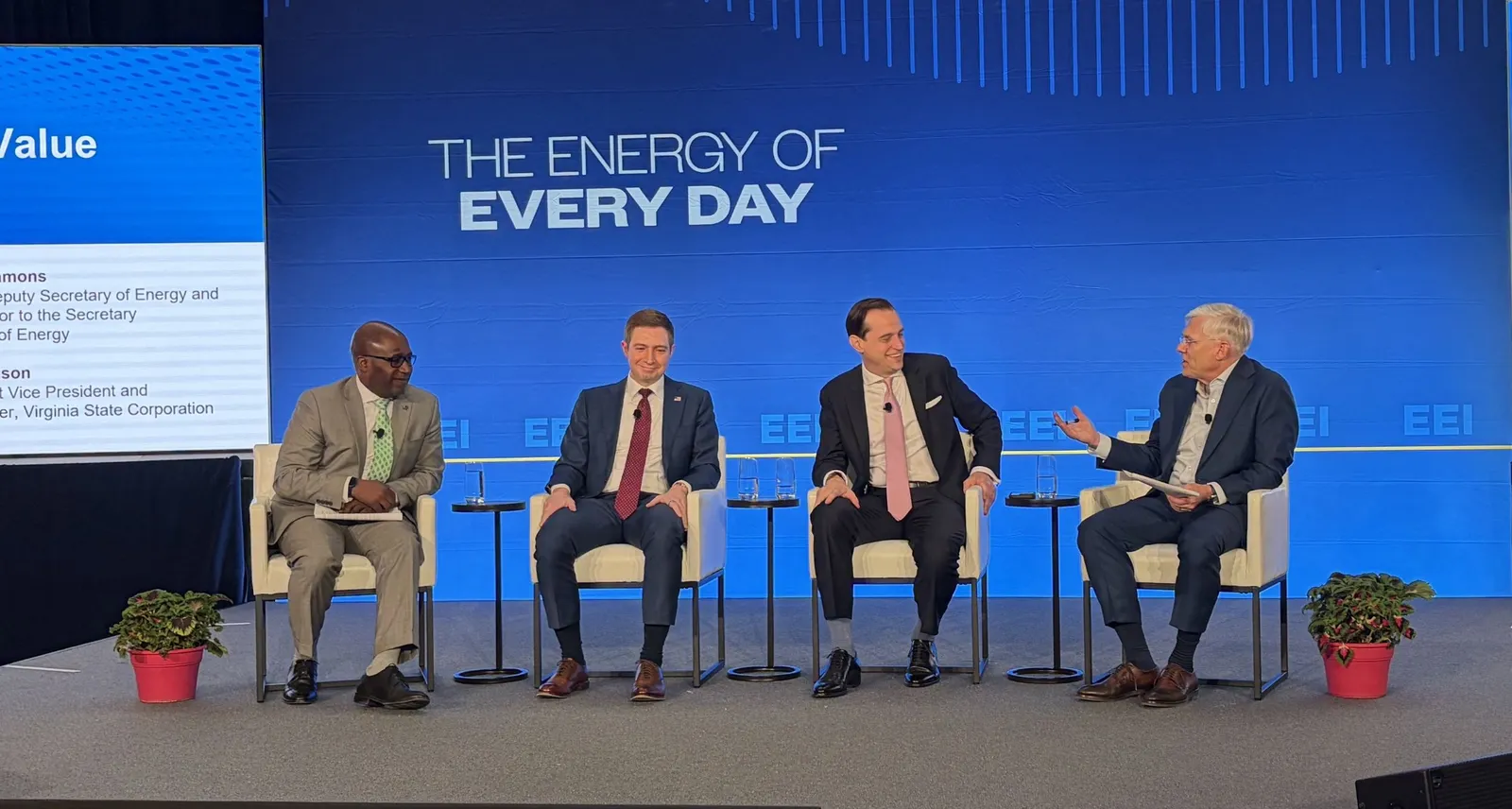
U.S. Department of Energy Associate Deputy Secretary of Energy Alex Fitzsimmons has a message for electric utilities from the Trump administration: “We all have the same goals” for affordable, reliable and secure energy systems.
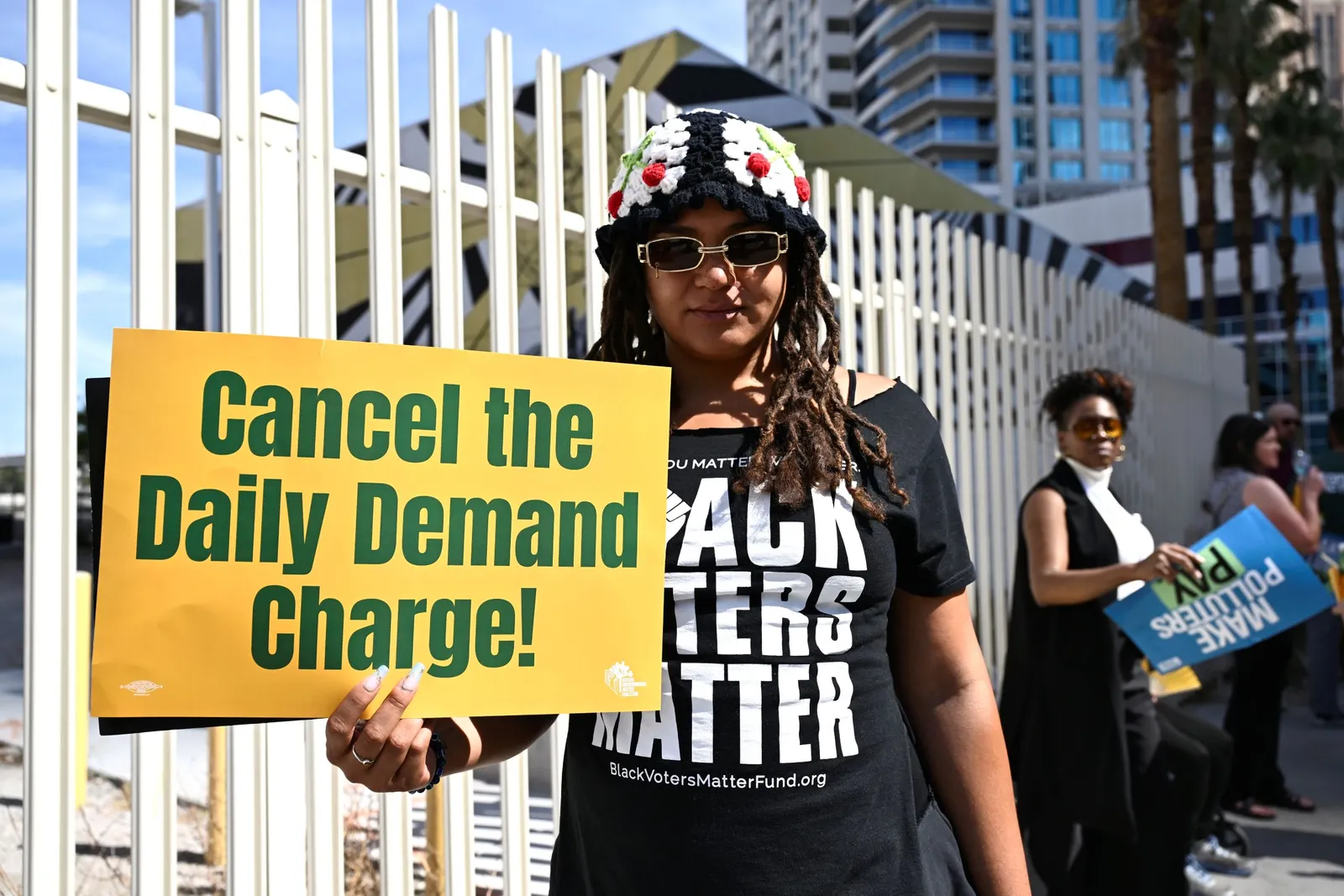
Fitzsimmons sought to deliver that message at the Edison Electric Institute’s annual conference in Las Vegas this week, where the dominant theme was balancing demand growth with affordability — underscored by the presence of dozens of protesters who disrupted the conference to demand action on rising electricity costs.
Utility Dive caught up with Fitzsimmons at the conference to talk electricity markets, rising demand, coal plant emergency orders and more. This interview has been edited for length and clarity.
UTILITY DIVE: DOE under this administration is taking a more direct role in pushing for changes that have implications for wholesale electricity markets. The proposed backstop auction in PJM is just one example. Should the executive branch play a more active role in wholesale electricity markets?

Alex Fitzsimmons: We look forward to seeing what [the Federal Energy Regulatory Commission] produces soon [on large-load interconnection]. We are focused on working collaboratively with the technology companies and the power sector to implement President Trump's ratepayer protection pledge, which is the framework to reindustrialize America, to win the AI race against China and to lower energy costs for the American people.
That's the main objective that we're pursuing. DOE is partnering with the energy industry and with the tech sector to achieve those goals. Some of it is things that we're doing in the federal government, some of it are actions that are happening at the state and local level. You're seeing a lot of large load tariffs being introduced and passed that are reflective of the president's pledge, that are implementing some of the core tenets around buying, bringing or building your own generation, paying for the network upgrade costs, entering into long-term take-or-pay agreements, and then making sure that you're investing in the local communities.
So we're pairing policies at the state and local level to implement the president's ratepayer protection pledge with the low-cost financing that we can provide through our Office of Energy Dominance Financing to deploy the capital and build the infrastructure that's needed to cost effectively achieve speed to power.
Speed to power, winning the AI race, energy dominance, sort of generally, has been identified as a national priority. Does having six — at least — major wholesale markets with totally different rules hold us back?
We are working within the system as it currently exists, and how the president's ratepayer protection pledge gets implemented will differ based on market structure, market design and local conditions, which is why it's important that we are working collaboratively with all of the counterparties to make sure that the principles in the pledge are being implemented, and there are some positive examples of where that's working.
Georgia Power and Alabama Power are setting up arrangements [to pass on savings from federally backed loans]. Those are obviously outside of RTOs, so they're unique and totally vertically integrated, so that's one model. Indiana Michigan Power is in MISO, obviously that's a different market. They're filing for a rate reduction this year, based in large part on load growth from AI data centers, so they're structuring it differently.
You look at a company like NiSource that has created an entirely different [generation company] where they are ring fencing all of the generation costs that are associated with new load growth from these data centers, keeping it out of the rate base, but then the load from the data centers is included in the rate base, so they have found a creative way in the markets that they operate in to implement some of the core principles of the president's pledge, which is to hold residential rate payers harmless as you build out this infrastructure.
In Nevada, NV Energy and Microsoft just introduced the ratepayer protection tariff, which, again, that's an entirely different market design, where they are including things like minimum charges for contracted capacity, paying for network upgrades, long-term take-or-pay agreements. So we're seeing a lot of positive examples across a lot of different market structures where this is working and will start to put downward pressure on prices.
One of the criticisms of our system is that utilities are incentivized through return on equity to build certain kinds of projects, which may or may not be the best projects for the grid or for ratepayers. Do you agree with that criticism, and does the administration have a position on the utility profit model?
I would say it's important that we keep the three goals of affordability, reliability and security front of mind in all rate making processes, and this is why we have public utility commissions that regulate the rate of return of utilities in their states. This is why the utilities have to justify the investments that they're making to their regulators.
We are focused on building the most reliable infrastructure as cost effectively as possible. We have actually found very constructive partnerships with a lot of power companies that are coming to us and asking for a lower cost of capital, and we're doing so. We had this $26 billion loan package with Georgia Power and Alabama Power — they didn't have to come to us and ask for that lower cost of capital, but they did, and as a result they are able to build the infrastructure that they need to meet future load growth, and they're doing it more cost effectively than they otherwise would be able to do, and they are returning those benefits directly to the ratepayers. So, we've had a very collaborative partnership with the power sector. I think everybody understands that we need to build the most reliable energy system possible at least cost.
On the subject of federal actions, DOE has issued a series of 202(c) orders to keep [coal, oil and gas] generation online and has renewed those as they expire. What would it take to stop issuing an order for a particular power plant?
We make individual decisions based on the particular set of facts and circumstances in each case. What we know from what [the North American Electric Reliability Corp.] has told us is that resource adequacy is worsening all across the country, and had been for several years due to the premature retirement of reliable dispatchable generation at the same time that energy demand is rising. We need to make sure that we have dispatchable generation to meet peak demand.
![A row of caps that say "I [heart] VPPs"](https://imgproxy.divecdn.com/TjRfAe8iKbWIbX8BW1FPX8SbP9wyqVqmpNxz-hhbTlc/g:ce/rs:fit:1600:0/Z3M6Ly9kaXZlc2l0ZS1zdG9yYWdlL2RpdmVpbWFnZS9JX2xvdmVfVlBQc19oYXRzLmpwZw==.webp)
Well, at least one of those generators is a coal plant that's slated for conversion to gas, so it would still be dispatchable in that sense.
Yes, but you have to ask over what period of time. This is why it's important to look at the individual circumstances. So, for example, there's a major backlog on gas turbines, so if you don't have a turbine today, you will likely not have one for several years, and so then if we allow a dispatchable plant to retire, and it's not going to be replaced by an equal or greater amount of dispatchable capacity, accredited capacity, for five years, then you have created a worse resource adequacy position than we had before. If the conversion were ready imminently, you had the parts ordered, you have the turbine in place, you are ready to do it — this is why we assess these units on a case by case basis.
You previously served as the deputy assistant secretary for energy efficiency. Given efforts by this administration to cut efficiency programs, including Energy Star, how would you describe the role of efficiency in the energy dominance strategy today?
I think energy efficiency is an important tool in the tool belt when you're talking about balancing supply and demand, especially as you're talking about rising energy demand. At the same time, we have to have reasonable policies in place to make sure that we are not imposing undue burdens on consumers through our regulatory process, which happened under the previous administration. [The Biden administration was] trying to, through these energy efficiency standards, effectively ban new gas appliances that tend to be more affordable. We are not in the business of regulating products out of the market that consumers want to buy. We want affordable, efficient products, and we want consumers to have a choice in the products that they use, and so we have tried to realign our energy efficiency program to achieve those goals.

This administration has declared an energy crisis, obviously, and at the same time, the president has been dismissive of the idea of an affordability crisis. Are we in an energy affordability crisis right now?
President Trump declared a national energy emergency on day one because of the previous administration's disastrous energy subtraction policies that had resulted in electricity prices that skyrocketed by about 30% on average over the four year period of the previous administration at a time when we're facing more demand for energy than we ever have before, and we were losing exactly the kind of reliable dispatchable generation that's needed to meet that demand. So that is what the president has been talking about from day one. He's been very clear about it.
We have been focused on reversing that energy subtraction agenda, replacing it with an agenda that's focused on energy addition. I mentioned some of the things that we were doing to stabilize, optimize and grow the energy system, prevent the premature retirement of dispatchable generation that's needed to meet load growth and peak demand, optimize the existing energy system that we have today.
So we're doing a lot to invest in reconductoring on the transmission system, for example, with both grants and loans. We're uprating a lot of our power plants — nuclear, hydropower, natural gas, coal — uprating that existing fleet. We're focused on cost-effectively building more dispatchable generation, everything from natural gas, hydropower, geothermal — historic investments in geothermal, a $175 million funding opportunity for advanced geothermal drilling projects; it's the largest single funding opportunity that DOE has ever issued on geothermal. We just had Fervo Energy go public, and so that is what we're focused on doing and the end result of that will be a more affordable, reliable and secure energy system for the American people.
You mentioned the previous administration's policy of subtraction. I would be remiss if I didn't ask about the efforts to block offshore and onshore wind and solar. Is that not also a policy of subtraction?
Well, it's important to recognize the energy system is built to meet peak demand ... One can build as much non-dispatchable generation as one wants. It does not obviate the need for more reliable dispatchable generation that gets its capacity accredited at peak.
This is what Secretary Wright has pointed out several times, that you're essentially building two separate energy systems. You're building an energy system that works some of the time, that can provide some electricity some of the time, but doesn't meaningfully contribute to peak demand. It doesn't mean you have to build any less dispatchable generation, like nuclear, natural gas, coal, or hydro power, geothermal, or energy storage. You still have to build just about as much of that, but then you're imposing other costs by adding resources that don't meaningfully contribute to peak demand. So we're focused on prioritizing resources that get their capacity accredited to meet system peaks.
But how does adding wind and solar block the addition of that firm dispatchable generation?
Well, in some cases, it can disrupt the economics. For example, the wind production tax credit used to drive wholesale prices negative in certain markets, which wrecked the economics of nuclear power plants and resulted in some of the premature retirement of those types of resources.
So there are some perverse incentives that you have, but I think more to the point is what resources do you want to prioritize to meet load growth? We know we have to hit a certain capacity number, and it's always a moving target. We have to hit a certain number, and we have to hit a reserve margin. All the organized markets, all the utilities, are trying to procure enough capacity to build for the future. If you mandate wind and solar get built, like inside of [renewable porfolio standards], then you are adding system cost that does not meaningfully contribute to peak demand and can wreck the economics of reliable dispatchable generation.
I would point you to the Lawrence Berkeley National Lab study that was published last year — some interesting findings about wind and solar. It found that wind and solar that was deployed outside of an RPS did not meaningfully increase wholesale power prices. The wind and solar that was mandated inside of an RPS did increase system cost, and so we've been focused on removing the mandates and subsidies so that grid operators and power companies can procure the resources that make the most sense and contribute the most to peak demand.