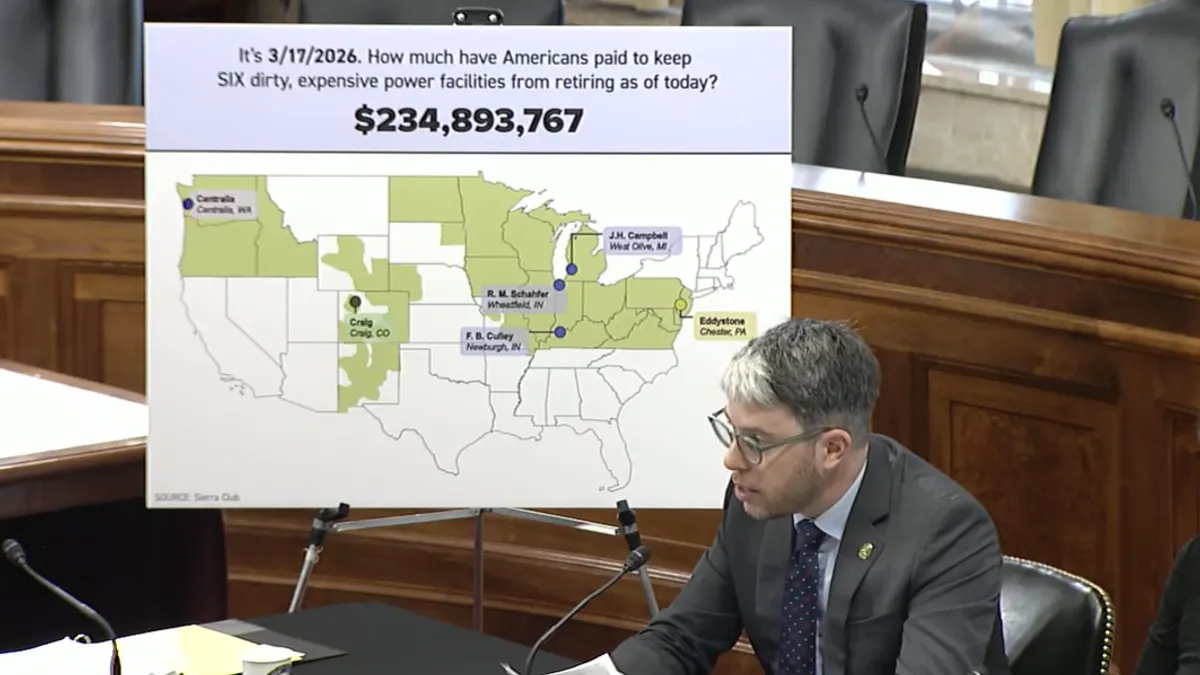
The Trump administration’s emergency orders to keep six retiring fossil-fueled power plants online have cost ratepayers more than $230 million, according to an analysis the Sierra Club presented to an energy price roundtable hosted by Senate Democrats on Tuesday.
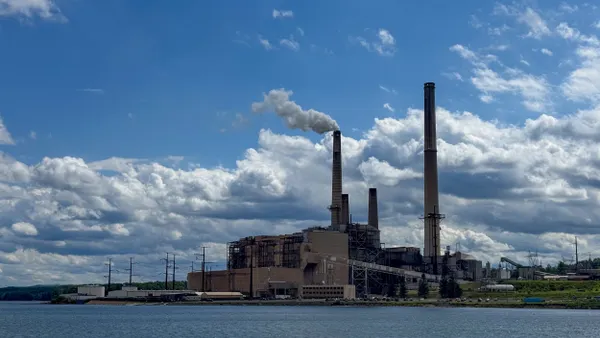
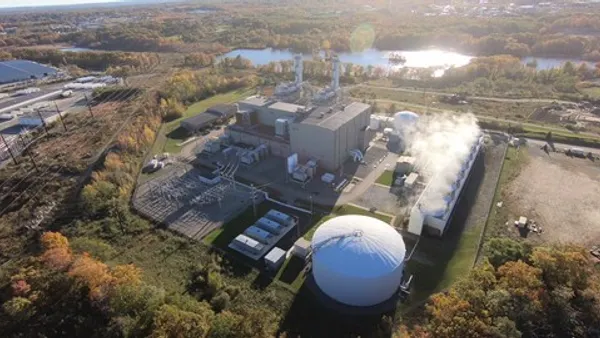
The U.S. Department of Energy issued the first 90-day emergency order of Trump’s second administration in May, to keep the J.H. Campbell coal plant in Michigan running past its scheduled retirement. Since then, that order has been extended multiple times. DOE has issued other emergency orders to four more coal plants and one gas plant, according to the analysis.
In total, Secretary of Energy Chris Wright has issued 13 orders relying on section 202(c) of the Federal Power Act to keep the six plants running for 90 days at a time, Sierra Club Senior Attorney Greg Wannier said.
In the past, 202(c) orders were used “sparingly” — in times of emergency, for brief periods of time and only when called on by regulators or operators, Wannier said. “Unfortunately, in the past 10 months, the Trump administration has twisted the use of this emergency authority beyond all recognition.”
None of the orders was requested by the relevant plant operator, grid operator or state regulator “whose responsibility it is to keep the lights on,” Wannier said. All of the plants had been considered safe to retire, without threatening reliability, he said.
The 90-day orders cover plants in five states: two in Indiana, and one each in Michigan, Pennsylvania, Washington and Colorado.
DOE has received pushback on its orders from at least one plant’s owners. The Tri-State Generation and Transmission Association and the Platte River Power Authority filed a request for clarification and rehearing with DOE in January, arguing a 202(c) order for a Colorado power unit violated their Constitutional rights. The Trump administration ordered them to continue running a coal-fired generator they had been planning to retire at the end of 2025.
Sierra Club’s analysis defines the net cost of running the plants as “the marginal additional costs that plant operators have asked consumers to pay, which can be understood as the extra costs that the 202(c) orders impose on ratepayers.”
“The coal sector is in decline because it is incredibly expensive to create electricity by burning coal,” Wannier said. “Grid-responsible entities had already determined that the plants could retire without destabilizing the grid, and in many cases linked retirement of the power plants with construction plans for cheaper and cleaner replacement.”
The Department of Energy did not immediately respond to a request for comment about the Sierra Club analysis.
Household electricity bills have gone up by 13% in the last year, according to a statement from Sen. Martin Heinrich, D-N.M., and the other roundtable sponsors.
“The rapid growth of data centers is driving up electricity costs for all of us and pushing our grid to the breaking point,” Sen. Chris Van Hollen, D-Md., said in a statement. “Not only has the Trump administration failed to meaningfully address this urgent and growing problem, they have made it worse by sabotaging clean energy projects.”