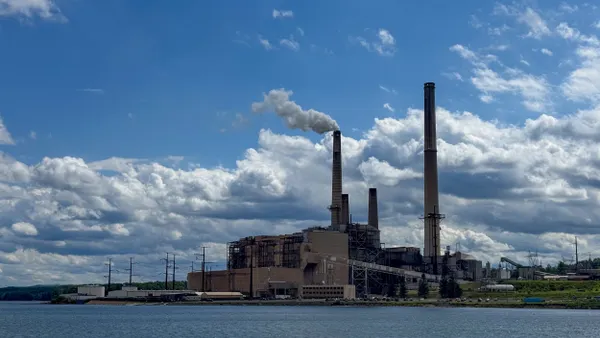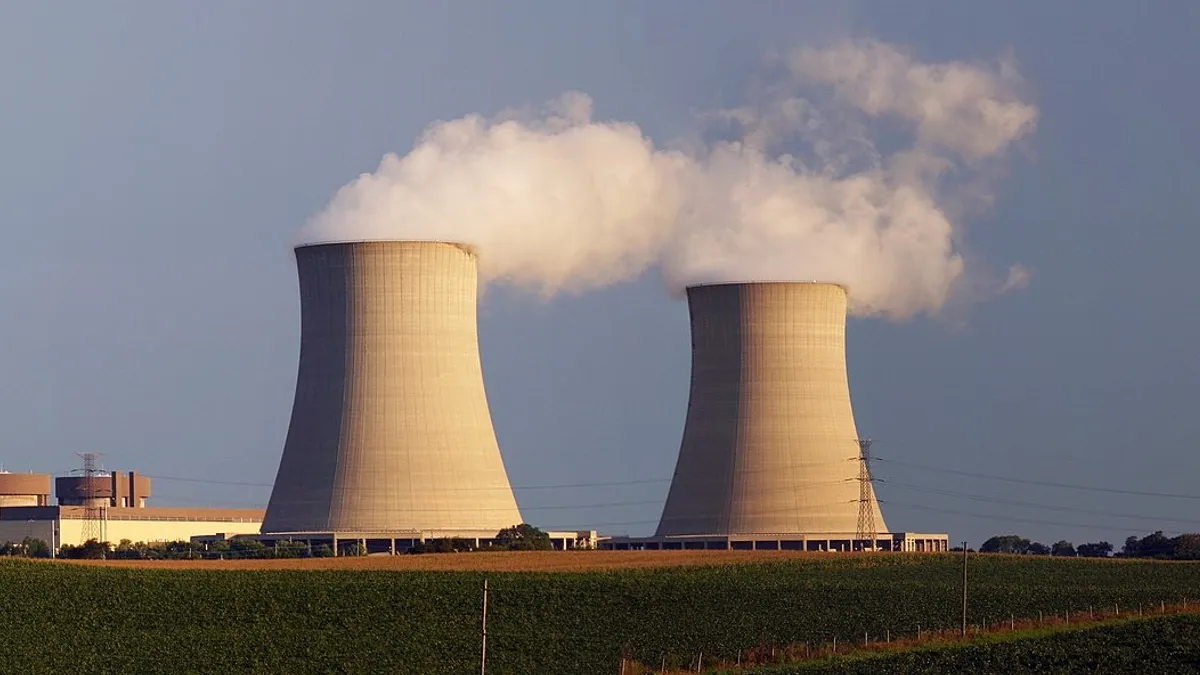
Despite the Ratepayer Protection Pledge’s call for planned data centers to supply their own new generation, existing power plants will play a major role in supplying them with power, according to Joseph Dominguez, Constellation president and CEO.
“We're never going to build this economy if … we have to wait for new power plants to be built before we can connect any data center,” Dominguez said Thursday during an earnings conference call. “The bedrock of building out at least this early phase of the data economy is going to rely heavily, in my view, on existing generation.”
Dominguez said there is significant available capacity in the transmission and generation system that can serve consumers more than 99% of all hours in a year.
“We have a peak capacity concern, not an energy concern,” he said. “The secret sauce here is to deal with the handful of peak hours that present reliability concerns, and at the same time to harvest the stranded capacity that exists every other hour of the year.”
The peak periods can be managed with batteries, demand response and peaking resources, according to Dominguez.
“[Potential customers] still have to figure out not just the peak, but what they're doing every other hour of the year,” he said. “That's where our fleet becomes extraordinarily valuable because it's a fixed-price, clean energy resource that they could count on for decades.”
The Baltimore-based independent power producer owns about 55 GW of generation, including about 22 GW of nuclear capacity.
Constellation has several projects that are tied to data centers that have been affected by the pause in Texas’ Batch Zero interconnection process, according to Dominguez.
The company doubts the state’s audit of proposed data centers will take long.
“All these folks, particularly coming into the midterm elections, they want to be responsive to their constituents, and Gov. [Greg] Abbott has asked for some pretty reasonable information to be included as part of Batch Zero,” Dave Dardis, chief of external affairs and growth officer, said on the conference call.
With large load interconnection requests — mostly data centers — totaling about 474 GW, Abbott asked that planned data centers provide information about their power supplies, expected electric and water use, and amount of public financial assistance.
The information can be provided quickly, and Constellation doubts there will be a “meaningful delay,” according to Dardis.
“We see this as a temporary measure that we think is manageable by the industry,” he said.
Meanwhile, Constellation expects the currently low wholesale power prices in ERCOT will rebound when data centers start coming online, according to Dominguez.
Battery storage and other resources are driving down electricity prices by coming online before the expected load, he said.
“The market will start to tighten up as data centers get built, and you start to see the market come into more or less equilibrium,” Dominguez said.
Also in Texas, after a bidding process, Constellation sold its 606-MW gas-fired Brazos Valley power plant to LS Power for $860 million, or about $1,420/kW.
“It was clear from a very competitive process that buyers recognize the long-term value of gas-fired assets with the potential for even higher utilization rates,” Shane Smith, Constellation CFO, said.
Once approved, the power plant sale will satisfy the Constellations settlement obligations for its Calpine purchase, he said.
The assets that Constellation had to sell under the agreement with the U.S. Department of Justice are expected to produce about $5.9 billion in gross proceeds, he said.