Dive Brief:
- The Department of Energy exceeded its authority when it ordered the owners of a coal-fired power plant in Michigan to run it past its retirement date, a lawyer for Michigan, Minnesota and Illinois and an Earthjustice attorney representing public interest groups told an appeals court panel on Friday.
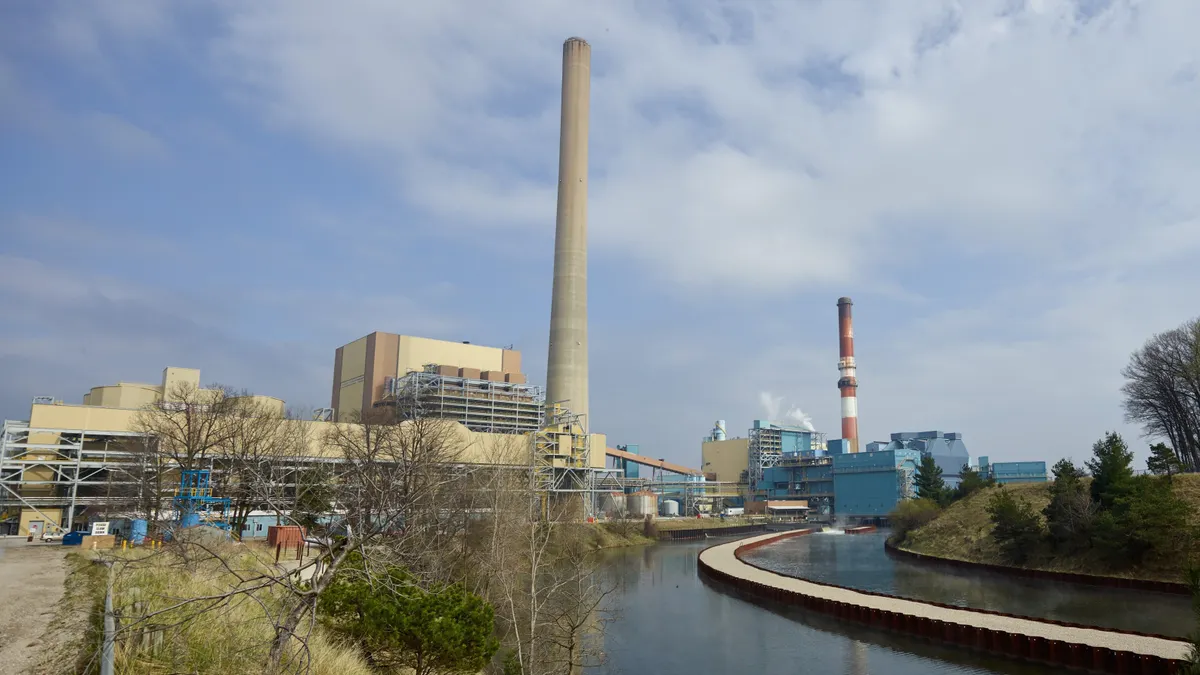
- A DOE lawyer told the panel for the U.S. Appeals Court for the District of Columbia Circuit that the department’s order directing Consumers Energy’s majority-owned 1,560-MW Campbell power to stay online past its May 31, 2025, planned shutdown was based on “substantial evidence” there was a grid emergency in the Midcontinent Independent System Operator’s footprint.
- The case is the first among the legal challenges to DOE orders keeping fossil-fueled power plants from retiring to reach oral arguments. A court decision expected later this year could set a precedent for the other pending cases. However, whichever side loses the case will likely appeal the decision to the U.S. Supreme Court, according to ClearView Energy Partners, a research firm.
Dive Insight:
Since the DOE issued its first 90-day order keeping the Campbell power plant from retiring, it has issued similar orders affecting five other power plants — all but one of which is coal-fired. DOE has reissued all the orders before they expire. It’s most recent order for the Campbell plant expires May 18.
The orders were issued under the Federal Power Act’s section 202(c), which gives the DOE secretary authority over power plants during emergencies. In the past, the orders were generally issued in response to extreme weather events and would often allow a power plant to exceed its air emissions limits so it could run.
Opponents of the orders contend DOE has failed to show that a grid emergency exists and that they interfere with grid planning.
“If unchecked, it would transform the structure of power for regulating resource planning, as it has been commonly understood for decades,” Lucas Wollenzien, Michigan assistant attorney general, said.
The DOE’s interpretation of section 202(c), would leave “all resource planning decisions subject to unilateral override by the secretary with no limiting principle,” Wollenzien said. “It would allow the department, as it has here, to interrupt and frustrate a finely calibrated system of overlapping regulatory processes, including the application of state statutes, the planning and cost recovery practices of utilities, and the entrenched rules of system operators, along with [the Federal Energy Regulatory Commission’s] regulation of those rules.
When issuing emergency orders, the DOE secretary has “sole discretion” to determine how much grid risk is too much risk and how much of a power supply shortage is too short, Robert Stander, Department of Justice deputy assistant attorney general, told the three-judge panel.
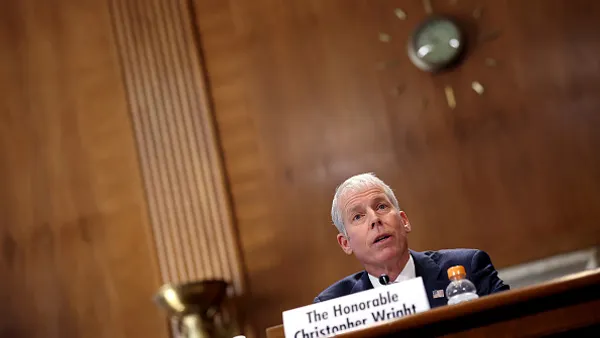
In the first Cambell order, DOE Secretary Chris Wright identified a combination of circumstances that called for immediate action, according to Stander. They were: Consumers’ plan to shutter the power plant — and the permanence of a shutdown — plus the need for electricity to serve planned data centers and the North American Electric Reliability Corp.’s 2025 summer assessment, which showed MISO was at elevated risk for shortfalls and potential blackouts, Stander said.
Judge Cornelia Pillard appeared skeptical of the argument.
“It seems to me that in your four factors … if you take out the elevated risk, according to NERC, that you don't have a basis for 202(c),” Pillard told Stander.
DOE overstated the reliability risks identified in the NERC report, according to Benjamin Chagnon, senior counsel for Earthjustice, which represents the Sierra Club, Natural Resources Defense Council, Michigan Environmental Council, Environmental Defense Fund, Environmental Law and Policy Center, Vote Solar, Union of Concerned Scientists, Ecology Center and Urban Core Collective.
The NERC report found that MISO’s reserve margin was shrinking — but the reserve is on top of what MISO expects it will need to reliably meet demand, Chagnon noted. Also, in tight conditions, MISO would be able to import electricity from neighboring grid systems, order power plant owners to delay maintenance shutdowns and engage its demand response programs, he said.
Pillard asked Chagnon what effect the 202(c) orders have on grid planning.
The “open-ended” Campbell order could skew the results of MISO’s capacity auctions, which send price signals when power supplies are needed, according to Chagnon. “It's very difficult for anyone to plan, because right now there's potentially up to 1,560 MW going to be on the grid that crowds out other investment,” he said.
Pillard also wanted to know what factors limit the DOE secretary under section 202(c) “so that this isn't just carte blanche for a very interested energy secretary to skydive into anywhere in the country.”
Any 202(c) order must be supported by “substantial evidence commensurate with the scope of the order,” Stander said. “ It's difficult because the statute is open-ended.”
The DOE’s other emergency orders delaying power plant retirements affect: TransAlta’s Centralia plant in Washington; CenterPoint Energy’s F.B. Culley Unit 2 in Indiana; Northern Indiana Public Service Co.’s R.M. Schahfer plant in Indiana; the jointly owned Craig Unit 1 in Colorado run by Tri-State Generation and Transmission Association; and Constellation Energy’s Eddystone plant in Pennsylvania.