
There was a piece in PV Magazine on May 4 that caught my attention. The argument is that the era of competing on a single battery benchmark is over. LFP, NMC, sodium-ion, and solid-state are advancing at the same time for different applications. Energy density in container-sized modules has roughly doubled in the last few years. The competitive frontier has moved off cell chemistry and onto system-level integration. It’s no longer about the newest technology breakthrough, but who can actually build and deliver a complete system at scale.
I think the argument is right, and it lands even harder for those in the U.S. trying to solve the storage demands of the grid in the face of turbulent market and supply chain conditions.
What utilities actually evaluate
Utilities are not asking what the cell chemistry is. They are asking how fast something deploys on their distribution system, whether it dispatches when called, what the cybersecurity posture looks like, who is accountable when an asset underperforms, what the bill of materials looks like from a sourcing standpoint, and how the system fits into their existing DERMS and grid operations workflow. Those questions get answered by a stack of hardware, software, security, and service that has been engineered to work as one system over a 10 to 20 year program.
When cells, packs, inverters, software, and supply chain get bundled into one platform, the cost per megawatt-hour drops. Deployment gets faster. The integration layer is where the advantage sits.
The 2026 procurement environment
Global instability in 2026 has made this issue even more important to utilities and businesses making purchasing decisions. New foreign entity of concern restrictions, tariff exposure, and tighter sourcing requirements have made it harder to deploy storage that depends on imported components. PJM's most recent capacity auction fell more than 6,600 megawatts short of its reliability requirement at the FERC-approved price cap, the first time in the RTO's history this has happened. The Department of Energy has rewritten its program selection language around firm, reliable power. AI infrastructure load growth is not slowing down.
So the procurement question utilities are working on right now is front and center. Where is the megawatt physically going to come from, who built it, who owns the integration, and is the supply chain it depends on going to hold?
Building the full stack here
The U.S. needs an answer that is not "import the integration from somewhere else." It needs domestic providers who own the full stack, manufacture the hardware here, and operate the asset over its life. A handful of providers are now building toward that model in the U.S. market. We have been heads-down on it at Torus for several years.
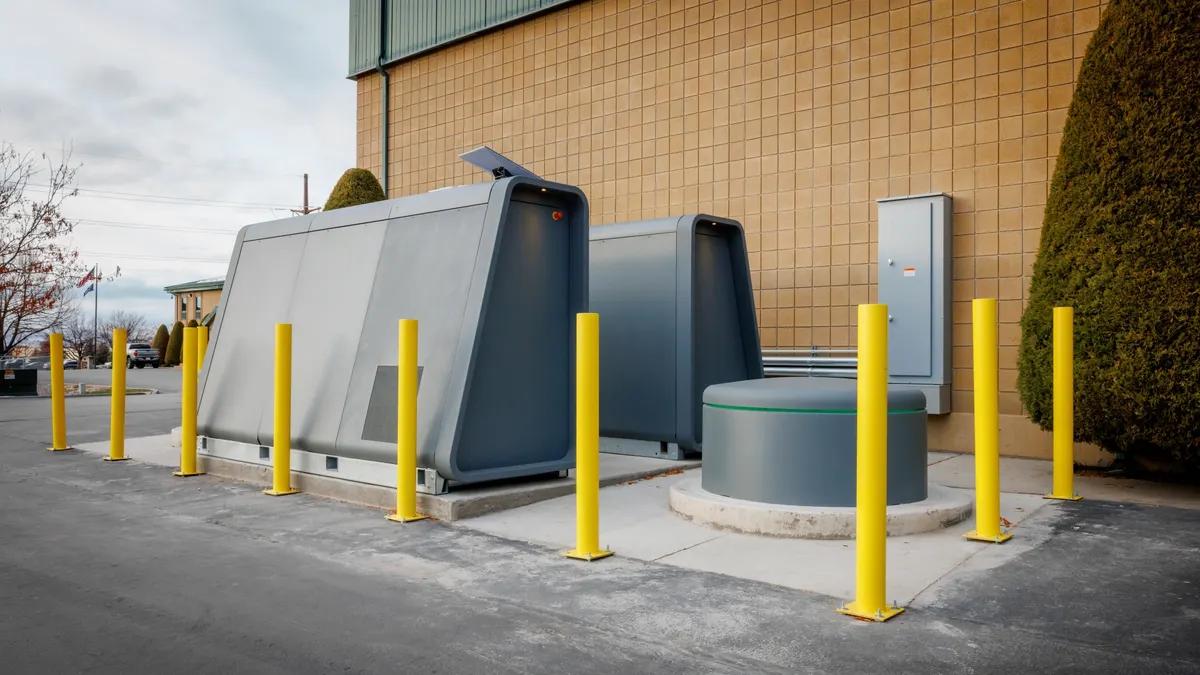
The hardware, both the flywheel and the battery components, is manufactured at GigaOne, our facility in Salt Lake City. Pairing both technologies in one platform matters operationally: the flywheel handles the sharp events that wear chemistry down, with sub-second response and high cycle life, while the battery delivers the energy duration utilities need for capacity-tier dispatch. Roughly 80 percent of the bill of materials in our flywheel platform is sourced in the United States. We own the software that monitors and dispatches the assets, the cybersecurity posture that protects the connection to the grid, and the service program that keeps the assets performing over the life of the program. Storage, software, security, and service, built and installed and maintained by one team. The whole stack sits under one roof and it is built domestically.
What this looks like in the field
The result, in the field, is firm capacity utilities can plan around. Customer-sited storage moves from contract to operation in 12 to 16 weeks, depending on system size and the local Authority Having Jurisdiction. Across 2025, our deployed fleet ran at 99.9 percent uptime across more than 300 dispatched demand response events under a 500 MW MOU with PacifiCorp. Portland General Electric runs the same kind of model through its Demand Side Generation Program. Utilities looking at 2027 and 2028 reliability gaps still have time to put domestic, integrated capacity into the field if procurement decisions are made now.
The storage game has changed. The U.S. needs domestically integrated providers building firm capacity for the grid, in the supply chain environment that exists, on the timelines utilities are actually working with. That is a manufacturing problem and a supply chain problem before it is anything else. The utilities and providers making systems decisions now will determine what the next decade of U.S. grid capacity looks like.