
Data center capacity continues to expand. This is driven largely by the rapid adoption of AI-powered technologies, such as predictive analytics and large language models like ChatGPT and Claude. Reflecting this growing demand, Goldman Sachs and BloombergNEF have revised their data center power forecasts upward in recent months, while EPRI now projects data centers could account for 9%-17% of the national electricity load by 2030, up from 4%-5% today.
Yet, there are headwinds slowing the industry down. Bloom Energy’s 2026 Data Center Power Report found that data center expansion is primarily constrained by power availability. Since that report was published in early 2026, a more nuanced picture has emerged. Bloom Energy's Mid-Year Pulse reveals that internal and external forces are driving rapid change across the industry. Power availability is no longer just about whether power is available — it also depends on permitting, community support and emissions constraints. Evolving AI workloads and the transition from AC to DC power architectures are also adding complexity as they reshape how data centers consume and manage power.
For forward-thinking utilities, these challenges present an opportunity to transform how power is delivered to large loads. By partnering directly with hyperscalers to build behind-the-meter solutions at or close to a customer’s load under a large load tariff, subscription model or similar structure, utilities can directly address many of the barriers identified in the report.
The Mid-Year Pulse found that developers are embracing the concept — about a third of all U.S. data centers are expected to run entirely on onsite power by 2030. “When grid power is a bottleneck, 61% of developers would deploy onsite power as their primary strategy, while only 12% would relocate to a site with power,” according to the report.
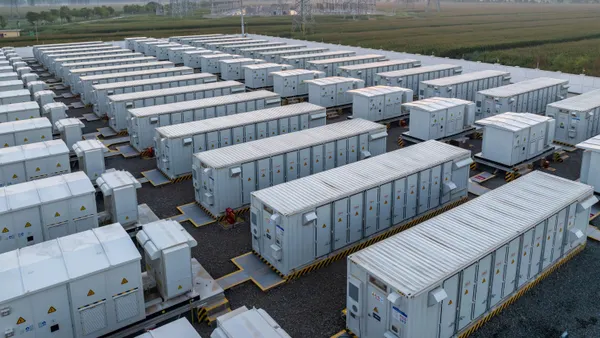
Fuel cell providers like Bloom Energy give utilities a way to build behind-the-meter solutions at speed and scale. Fuel cells are a leading onsite power solution because they simultaneously address power access, permitting, community support and emissions challenges at speed and scale for data center customers, while also supporting the adoption of new utility workloads and power architectures.
Power Demands are Evolving
Generative AI adoption has outpaced that of the personal computer and the internet. Given its popularity and the value it delivers to businesses and general consumers, the “composition of AI demand is changing faster than anticipated,” according to the Mid-Year Pulse.
AI compute falls into two categories: training, the intensive process of building a model; and inference, the process of AI applications powering real products. According to the Mid-Year Pulse, inference now is estimated to account for 50% of AI compute, a threshold the industry hadn't projected reaching until 2030.

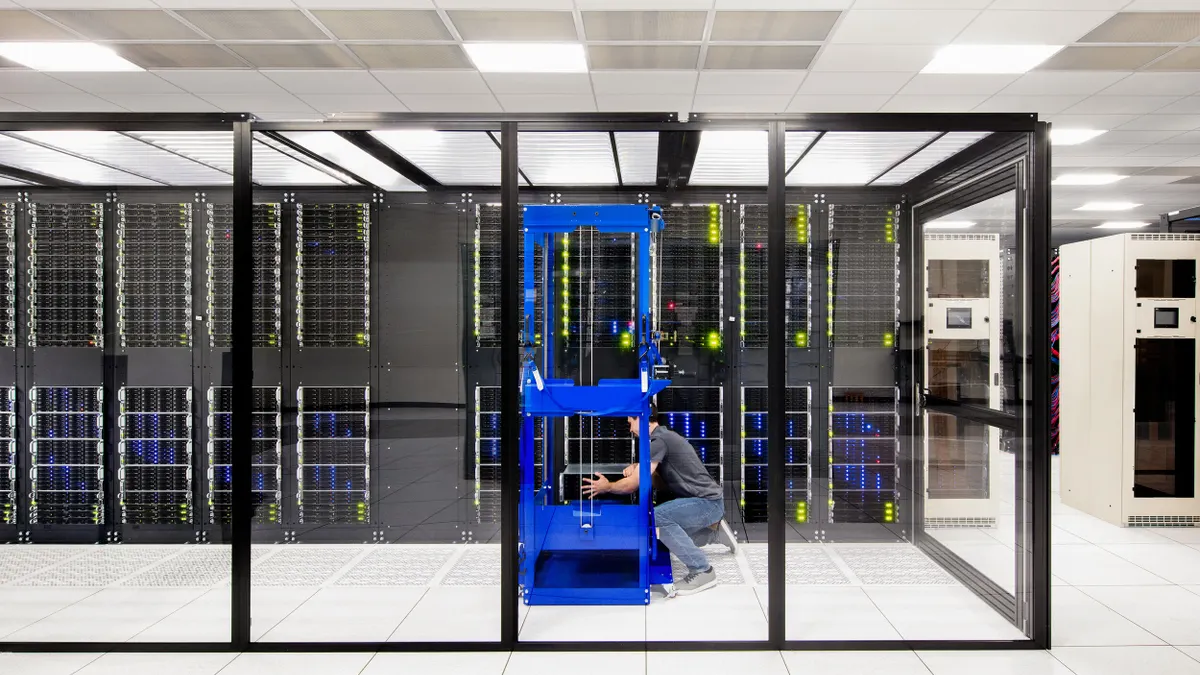
To meet the processing demands of AI, rack densities are increasing rapidly. Upcoming platforms are expected to reach ~300 kW per rack, with next-generation designs approaching 1 MW. At these densities, traditional alternating current (AC) architectures face practical limits due to conversion losses, heat dissipation and power delivery.
The survey revealed that developers are increasingly expecting to turn to more efficient direct current (DC) designs to support higher rack densities and next-generation AI chips. According to the report, DC-based architectures, including hybrid AC-DC and DC-native designs, will make up 58% of new deployments by 2030, becoming the leading data center architecture in under four years.

A Broader Set of Power-Related Constraints
The Mid-Year Pulse also revealed that power availability has evolved from a single constraint into a broader set of power-related challenges. Developers report that barriers around grid upgrade costs, equipment availability, and permitting and regulatory timelines have worsened since January. At the same time, it’s the increasing community scrutiny that is now threatening to derail many data center projects.
More than 70% of Americans oppose building AI data centers near their homes. Local opposition blocked or delayed $64 billion of data center projects between mid-2024 and mid-2025, and state and local construction moratoriums are on the rise. Survey respondents said communities are increasingly concerned about how a data center will impact local electricity prices and the environment.

Leading utilities are increasingly looking to fuel cells and onsite power to quickly serve large load customers. Fuel cells, in particular, stand out for utilities balancing grid reliability with community concerns, since they limit water consumption, air quality impacts, carbon emissions, and noise. More than just a bridge to deliver power while traditional infrastructure is built, 80% of utilities now view onsite power as a permanent solution for baseload or supplemental generation. By 2030, they expect behind-the-meter power to meet 34% of large load demand. By 2035, that number is expected to climb to 41%.
Nearly a third of US data center sites using onsite power are also expected to incorporate some carbon capture, utilization, and storage (CCUS) by 2030, rising to 41% by 2035. CCUS technologies capture CO2 emissions to prevent them from entering the atmosphere. The report found that “developers are likely to prioritize solutions that can be paired with firm, fast-to-deploy power at the scale required by data centers.”
A Smart Power Strategy
The next phase of data center development will depend on more than simply securing real estate and utility interconnection, and utilities have a critical role to play. As developers work to address community concerns, emissions and AI architecture readiness, utilities that can meet evolving data center power demands stand to become strategic partners.
Bloom Energy’s fuel cell systems offer flexible solutions, deployable either behind or in front of the meter, and are available through a variety of contracting models. Bloom’s solid oxide fuel cell systems provide ultra-resilient, highly scalable onsite electricity for Fortune 500 customers around the world, including data centers, large utilities and other commercial and industrial sectors.
To learn more, download the 2026 Mid-Year Power Report and the 2026 Utilities Insights Report.