
The flexibility industry has a proof problem. It's just not the one everyone keeps talking about.
For the better part of a decade, demand flexibility has had to fight for legitimacy. Does shifting load actually work? Will customers participate? Can utilities trust it to show up when the grid needs it? Those questions are answered. Pilots have run. Papers have been written. The results are in and they're good.
So why does flexibility still feel like it's stuck at the starting line in so many places?
Because proving a concept and deploying it at scale are two completely different problems. The industry has understandably focused on proving flexibility works. The next challenge is turning those proven approaches into something that can scale.
Growing electricity demand is now a recurring theme in integrated resource plans, earnings calls and industry conferences alike. Data centers, electrification, AI-driven load, all pulling in the same direction at the same time. What's less discussed is that the tools to answer it already exist and they're proven. Across the industry, leading flexibility providers have demonstrated that the technology to shift, store and orchestrate flexible load is now mature. Large-scale deployments across multiple utility territories have shown the technology is ready. The question is no longer whether flexibility works, but how quickly participation can scale.
That's a harder problem than it sounds and it's not an engineering one.
Many flexibility programs today still operate with the mechanics of a pilot: a thermostat program here, a battery incentive there, each managed by its own team with its own sign-up flow and customer touchpoint. That approach was exactly right for proving the model. It's a much harder fit for the scale utilities need next: millions of devices, coordinated, engaged and reliable enough to count on when the grid needs them.
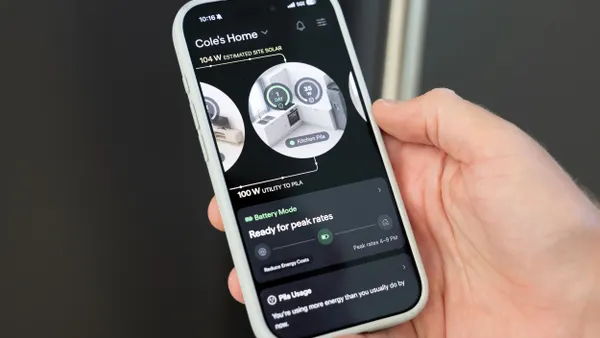
That's a customer experience problem as much as a grid one. While the industry has rightly invested heavily in forecasting, dispatch and verification, customer participation hasn't always received the same level of strategic attention. Far less energy has gone into the front end: the actual moment a customer decides whether signing up is worth their time and whether they stick around after.
That front end is where scale gets won or lost. A clunky sign-up process, a confusing app, a customer who enrolls once and never engages again - these are the things quietly capping how fast flexibility programs can grow, long after the technology stopped being the constraint.
Every percentage point increase in enrollment matters. A sign-up flow that converts 18% instead of 12% isn't just a better customer experience – it can determine whether a program delivers enough flexible capacity to defer infrastructure investment. Customers who stay engaged season after season become dependable capacity utilities can actually plan around. Those operational details rarely make conference agendas, but they increasingly determine whether flexibility succeeds at scale.
The utilities making the fastest progress are those treating customer participation as core infrastructure. That means single points of entry instead of a dozen disconnected sign-ups. It means engagement that continues after enrollment, not just at the moment of it. It means making the experience simple enough that a customer barely has to think about it, because the more friction there is, the fewer people show up and the slower the megawatts accumulate. Octopus Energy is one example, having grown a customer-first approach into the world's largest virtual power plant.
The utilities best positioned for rising demand won't necessarily be the ones with the strongest pilot results. They'll be the ones that can translate successful pilots into sustained customer participation at scale. Achieving that will require the same rigor the industry has spent a decade putting into proving flexibility works in the first place.
We've spent a decade proving flexibility belongs on the grid. The next decade will be defined by something much simpler: making participation effortless enough for millions of customers to join.