Dive Brief:
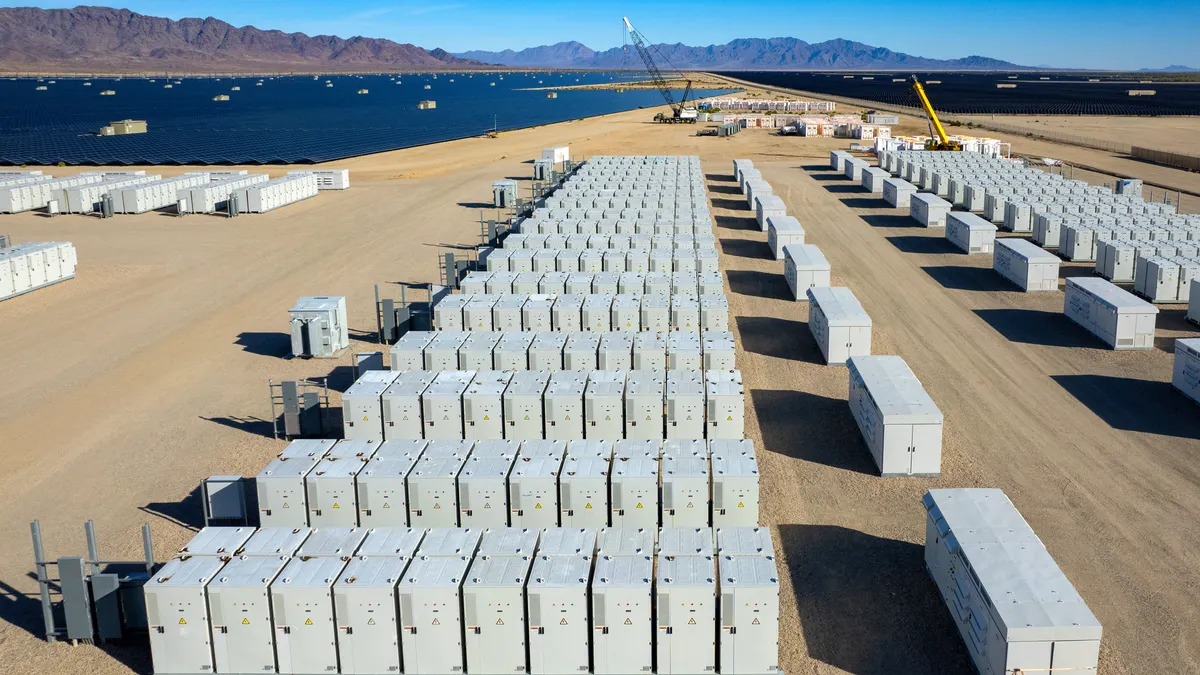
- The U.S. battery energy storage sector faces more near-term risk than other industries from President Donald Trump’s executive order last week restricting foreign-produced bulk power components, BloombergNEF analysts said in a note Friday.
- Deployment delays are likely for many grid-scale battery projects as developers await additional guidance from the administration, seek alternative suppliers or redesign projects, according to the BNEF note.
- Battery project developers and operators should map existing and planned assets that may be affected by the order, assess regulatory risk allocation in supply contracts, consider expanding supply chain diligence and prepare to mitigate or replace affected equipment that has already been installed, lawyers with Morgan Lewis’s energy practice said in a separate post Friday.
Dive Insight:
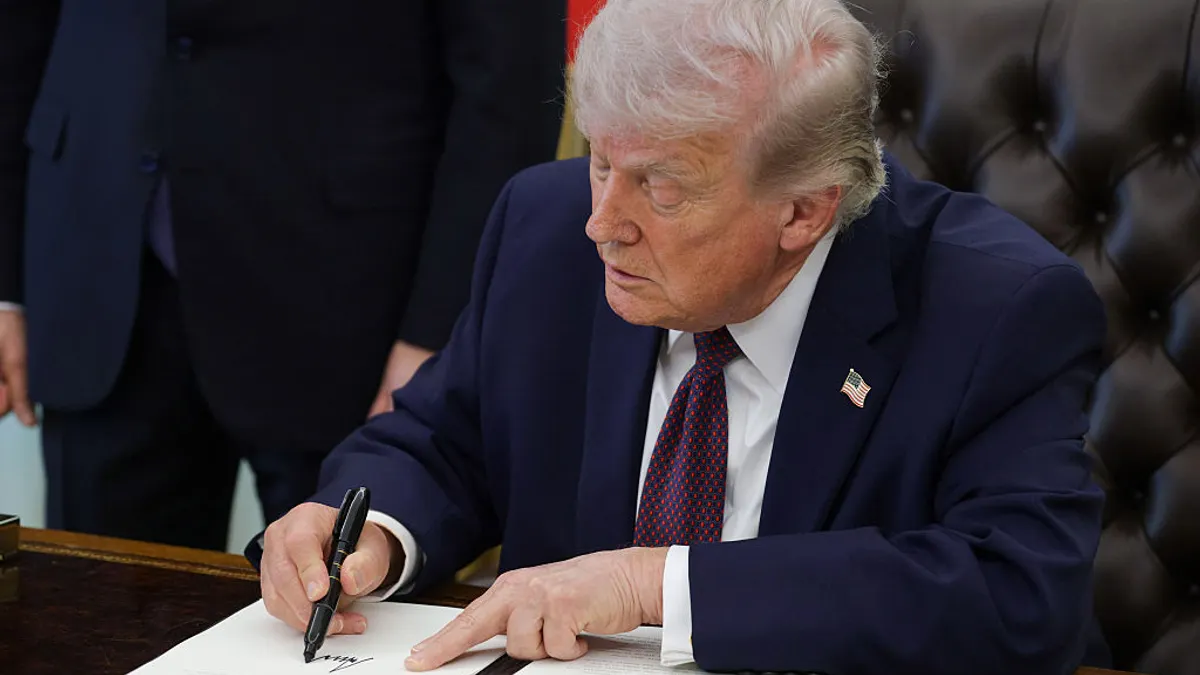
Trump’s executive order seeks to prevent certain foreign-made batteries, transformers, inverters and related digital products from connecting to the U.S. power grid after its Aug. 26 effective date.
It also gives Energy Secretary Chris Wright discretion to impose conditions on “the continued use, operation, maintenance, servicing, or updating” of equipment procured or installed before Aug. 26.
Trump’s order follows a narrower order Trump signed during his first term that blocked installations of bulk power system equipment with ties to a “foreign adversary.” China, which both Trump and former President Joe Biden have described as a U.S. adversary, accounts for 80% of global lithium-ion battery supply chain production capacity, according to the International Energy Agency.
And many U.S. battery deployments rely on inverters manufactured by Chinese companies, which in 2025 supplied about 40% of U.S. inverter volumes from production hubs in India and Southeast Asia, according to the BNEF note.
The Aug. 26 order compounds challenges faced by users of imported battery systems and inverters from the Foreign Entity of Concern rules finalized by the U.S. Treasury Department in February, BNEF trade and supply chains analyst Zoe Zakrzewska told Utility Dive in an email. Authorized by the One Big Beautiful Bill Act, those rules restrict how reliant U.S. equipment producers’ and energy project developers’ supply chains can be on Chinese-tied firms while still qualifying for federal manufacturing and investment tax credits.
“Battery energy storage systems and inverters are the two technologies that are clearly subject to both of these sets of rules … [but] the new EO has the potential to be far more punishing,” Zakrzewska said.
It “could likely be the nail in the coffin for Chinese battery and inverter manufacturers selling in the US market: while the FEOC rules allowed some room for Chinese firms to adapt, the [bulk power system] EO can easily shut out these firms for good,” she added.
The risk is greater for project developers as well because last week’s executive order may affect projects that began construction before the January 1, 2026, deadline to avoid Foreign Entity of Concern compliance but have not yet begun operations, Zakrzewska said.
Electrical equipment manufacturers reacted cautiously to last week’s executive order. Bridget Bartol, the head of industry and regulatory affairs at the National Electric Manufacturers Association, told Utility Dive on Thursday that “there’s a need for a lot more clarity,” particularly with regard to the order’s impact on software products.
“I think there’s going to be a lot of dialog between the industry and the administration,” Bartol said.
In the meantime, the BNEF note said developers that have procured but not yet installed battery system equipment may wait to move forward until the administration clarifies how the order applies, which Zakrzewska said should happen at some point.
Developers are likely to cancel altogether some projects made uneconomical by the prohibition on lower-cost Chinese imports, BNEF added.
The longer-term impact of last week’s executive order may be lessened by new manufacturing capacity coming online in the United States and in countries not covered by the executive order, Zakrzewska said.
Four battery plants have come online in the U.S. so far this year, with “a few more expected by year-end,” and manufacturers could see the opportunity as a chance to add yet more domestic battery and inverter production capacity in the coming years, Zakrzewska added.