Houston-area electric utility CenterPoint Energy has a line of sight to 12.2 GW of “firmly committed” new load and expects the increased utilization of its system to reduce costs for residential and commercial customers, officials said Thursday in a first quarter earnings presentation.
The utility now has 3.5 GW of load under construction. In total, it expects 8 GW of data center load to be energized by 2029, with another 4.2 GW to follow. That’s about a 60% increase over the 7.5 GW of load CenterPoint identified at the end of last year.
Houston is no longer an “emerging destination” for data center developers and is instead “firmly established as a location of choice for some of the world's largest hyperscalers,” CenterPoint CEO Jason Wells told analysts and reporters.
CenterPoint has approval from the Electric Reliability Council of Texas for 3.2 GW of the load, with 2.5 GW of that approved since the company’s last earnings call in February. The utility expects to submit the remaining 9 GW of projects to ERCOT for approval within the next few weeks, Wells said, with more to come.
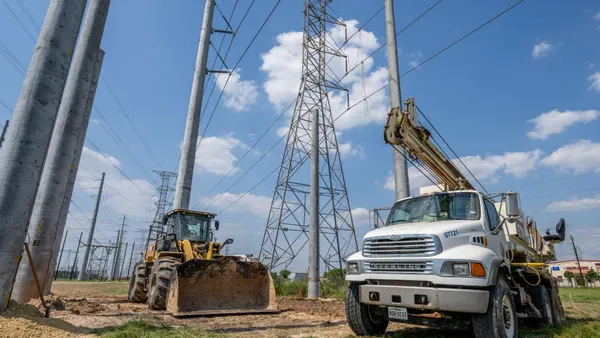
“We believe this growth will continue for years to come, requiring the further expansion of our system to support growth beyond the near term,” Wells said. “We are making steady progress on a refreshed load study that will inform our transmission planning process, and we expect to complete the study later this year.”
That growth is expected to reduce costs for all customers, the utility said. Over the last decade, customer expansion has helped keep the utility’s rate increases below inflation and below those of other Texas utilities, according to CenterPoint’s earnings presentation.
“We expect that utilizing 10 GW of existing system capacity could provide approximately $4 billion in aggregate saving for Texas residential and commercial customers over the next 10 years, supporting affordability and creating headroom for future customer-driven investments,” Wells said.
The committed load is “highly diversified,” Wells said, spanning more than a dozen customers across nearly 20 projects.
“We believe these projects are manageable in size, with 90% representing half a gigawatt of demand or less. That, along with our utilization of existing capacity and our customer selection of project sites near substations, allows for quick and efficient interconnections,” he said.
Along with the load growth coming from data centers, CenterPoint sees load growth coming from advanced manufacturing, the energy sector, residential population growth and other areas. The Houston residential population has grown at about 2% annually over the last decade, driving “significant affordability benefits for our customers,” Wells said. The utility’s distribution charges are about 11% below the national average, he said.
CenterPoint also sees growth opportunity in its Indiana territory. Wells said the utility is making “considerable progress” in conversations with a large-load customer “on a project that would represent our single largest load in our southern Indiana service territory.”
CenterPoint is preparing to seek recovery for costs associated with U.S. Department of Energy orders directing it to continue operating Unit 2 at the F.B. Culley generation station in Warrick County, Indiana. According to a report CenterPoint filed with the Securities and Exchange Commission, the utility is preparing to make a filing with the Federal Energy Regulatory Commission, and its Indiana Electric has filed an application with state regulators, to recover “any compliance costs associated with the emergency 202(c) orders that are not recovered through the FERC proceedings.”
CenterPoint reported non-GAAP earnings of 56 cents per diluted share, compared with 53 cents/diluted share in the comparable period of 2025. The company reiterated its 2026 non-GAAP earnings per share guidance of at least the midpoint of $1.89-$1.91, which would represent at least 8% growth over 2025 delivered results.