Dive Brief:
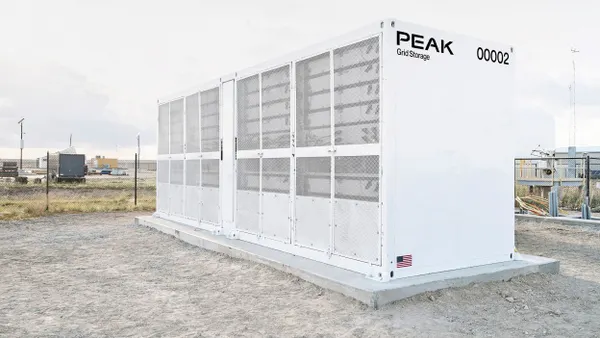
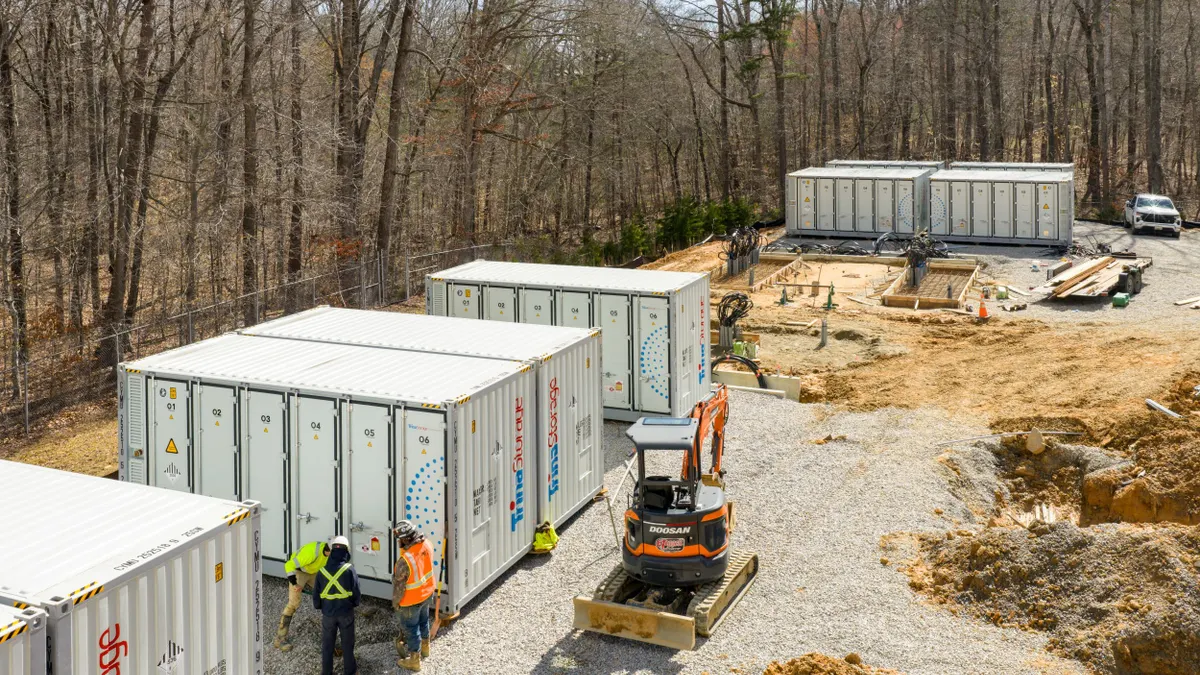
- Lightshift Energy and the Blue Ridge Power Agency, a Virginia power wholesaler for municipal and cooperative electric utilities, announced plans on Thursday to deploy about 25 MW of distribution-connected energy storage at five sites owned by three BRPA member utilities. Each 5-MW project is expected to come online this year, they said.
- The batteries will charge during periods of low demand and discharge during periods of high demand, providing a source of peak power capacity amid sharply rising load growth in Virginia and the broader PJM Interconnection, BRPA and Lightshift said. Lightshift estimates the portfolio will deliver approximately $100 million in savings over its service life.
- Lightshift can deploy distribution-connected energy storage systems faster and with less upfront development expense than transmission-connected systems that can cost “tens of millions” and take several years to interconnect in PJM, Robert Greskowiak, Lightshift’s chief commercial officer, told Utility Dive in an interview.
Dive Insight:
Lightshift says battery projects can help control rising transmission and capacity costs, especially in the PJM Interconnection, which includes Virginia — home to “data center alley.”
The company will deploy three battery installations at properties owned by Central Virginia Electric Cooperative and one each at properties owned by Craig-Botetourt Electric Cooperative and the municipal electric department for the city of Salem, Virginia, according to the announcement. The three entities are relatively small distribution utilities that serve customers in largely rural and suburban communities across central and western Virginia.
The five Virginia deployments are on the lower end of Lightshift’s “sweet spot” of 5 MW to 30 MW, Greskowiak said.
The smaller sizing is partly due to the fact that they’re the three distribution utilities’ first battery projects and partly because Lightshift prefers to “right-size” projects for utilities’ loads and capacity needs, he said.
BRPA, which coordinates wholesale power procurements for its member utilities, asked Lightshift to “make these all look pretty similar [so] we all feel like we’re getting a similar deal,” Greskowiak said.
The Virginia projects are not Lightshift’s first distribution-connected storage deployments with public power entities. Greskowiak said the company, which is based near Washington, D.C., has 14 distribution-scale battery projects operating or under construction with the Massachusetts Municipal Wholesale Electric Company, a public power wholesaler in ISO New England territory.
Greskowiak said the Massachusetts and Virginia deployments are examples of what the company calls its “VPP+” offering, which he said balances the scale of transmission-connected energy storage with the speed of behind-the-meter deployments that can be aggregated into megawatt-scale virtual power plants.
“We can reach the scale of the Invenergys and NextEras” — two major developers of utility-scale power generation, transmission and storage — “and we offer the ‘speed to power’ piece,” he said.
In some geographies, it makes more sense to develop 10 30-MW distribution-connected storage projects than one 300-MW transmission-connected facility, he added.
Utilities are not the only entities investing in storage. Data centers and other large industrial customers are increasingly looking to tap batteries for peak shaving, resilience, capacity and other benefits, he said.
For example, Lightshift is also working with Global Foundries to deploy a 16MW/52MWh battery facility at the semiconductor manufacturer’s sprawling plant in Essex Junction, Vermont. The installation will reduce the plant’s peak load, improving the New England grid’s resilience and reducing its reliance on fossil fuels, it has said.
Greskowiak said such deployments could allow utilities to defer some transmission upgrades and may obviate others entirely.
“The number the transmission utility has to solve for, then, is lower,” he said.