Dive Brief:
- The United States installed 9.7 GWh of battery energy storage in the first quarter of 2026, up 32% year over year, the Solar Energy Industries Association said in a May 21 release. It’s the highest-ever first-quarter energy storage deployment in the U.S., SEIA said.
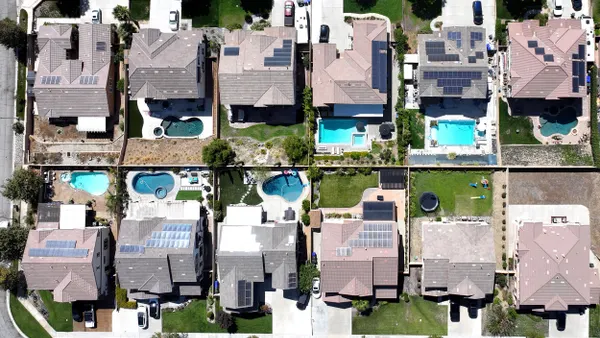
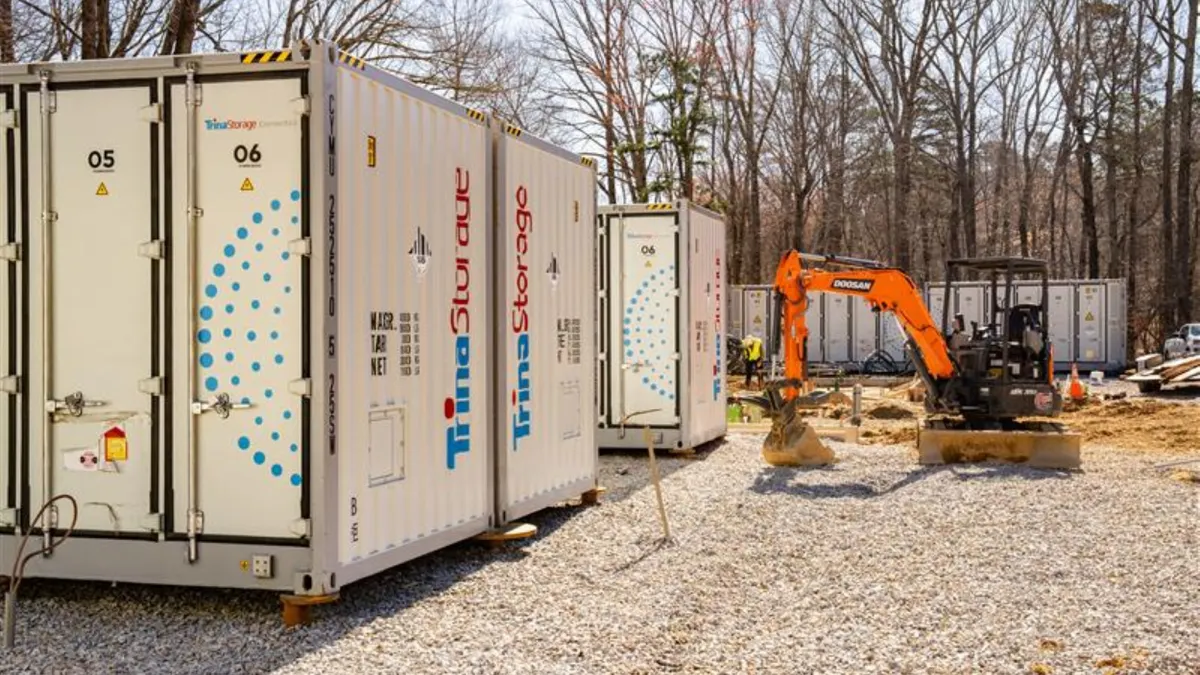
- Utility-scale deployments reached 1.5 GW/7.8 GWh; commercial and industrial deployments reached 648 MWh; and residential deployments hit 515 MWh, SEIA said.
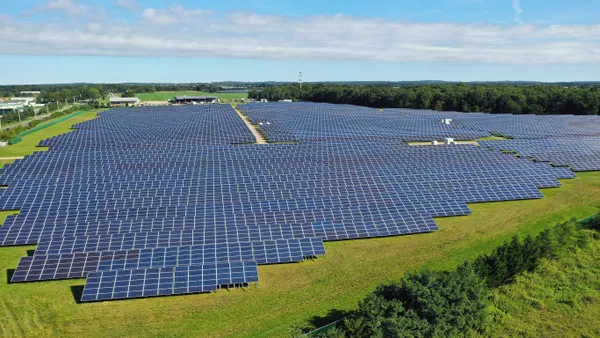
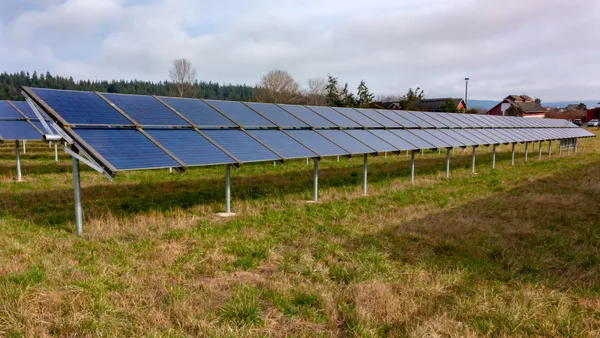
- Forty-eight percent of installed utility-scale energy storage capacity is colocated with solar generation and 51% is standalone, with the remainder colocated with wind generation, SEIA said.
Dive Insight:
The latest quarterly report, prepared by Benchmark Mineral Intelligence on behalf of SEIA, forecasts 613 GWh of energy storage deployment on U.S. soil by 2030, up slightly from previous projections. Darren Van’t Hof, interim president and CEO of SEIA, said the business case for batteries continues to strengthen.
“Energy storage’s remarkable first quarter only underscores the fundamental values of this technology: it’s insulated from fuel price shocks, keeps electricity costs down, and strengthens grid reliability,” Van’t Hof said in a statement.
Van’t Hof said data centers have emerged as a driving force behind energy storage deployment. Though U.S. utilities have announced tens of gigawatts of new gas-fired generation to serve new or expanding data centers, many utilities — and data center companies themselves — are tapping energy storage to get online faster, back up critical processes and mitigate power quality issues associated with fluctuating computing loads.
Some hyperscalers are pushing the limits of lithium battery chemistry, which experts say is most economical at discharge durations under four hours. Last week, Meta and Enbridge said they would partner on 365 MW of solar colocated with 200 MW/1.6 GWh of Tesla batteries to support a data center under construction near Cheyenne, Wyoming. The companies say the installation will have enough capacity to discharge at maximum power for eight hours, more than double what SEIA says is the current average duration of three hours.
Calling energy storage “critical energy security infrastructure,” Shan Tomouk, BESS and energy lead for Benchmark, said in a statement that a “supportive policy landscape” was crucial to the sector’s future.
Thirteen states now have energy storage deployment targets, according to SEIA, including California, Massachusetts and New York. Though cumulative deployments remain concentrated in a handful of states — California (60.6 GWh), Texas (29.2 GWh) and Arizona (20.2 GWh) — SEIA’s latest report showed a wider geographical distribution for newer projects. Georgia, Iowa and Mississippi all saw “notable gains” in installed storage capacity in the first quarter, it said.
Nevada, New Mexico, Colorado, Oregon, Hawai’i, Idaho and Massachusetts round out the top 10 states for energy storage deployment, according to SEIA’s tally. All have at least 1.5 GWh of deployed energy storage.
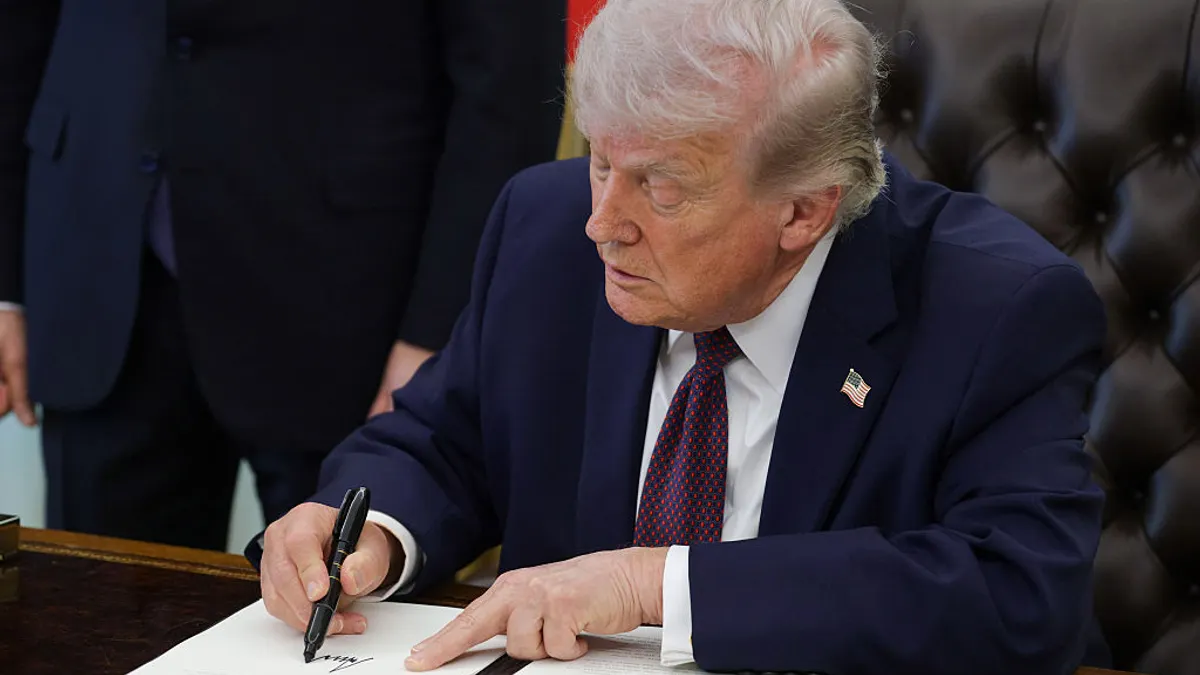
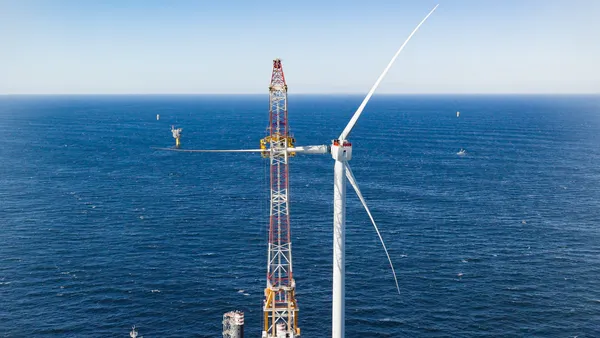
But Van’t Hof said continued gridlock on federal energy permitting reform threatens the industry’s longer-term fortunes. Washington Democrats, who have the numbers to block broad permitting reform legislation in the Senate, say a deal is contingent on the Trump administration easing its de facto freeze on large-scale wind and solar projects requiring federal approvals.
In “American Energy Is Under Threat,” a separate resource tallying 101 GW of clean energy projects under threat from “political attacks,” SEIA said the Trump administration is “using every tool at its disposal” to slow solar and storage deployment while favoring “their preferred energy sources” — namely coal, gas and nuclear. The bottleneck threatens 36% of power projects set to come online by 2030, SEIA said.
“Storage can help America meet rising energy demand and strengthen American energy independence, but only if Washington lets the solar and storage industry build,” Van’t Hof said.