Dive Brief:
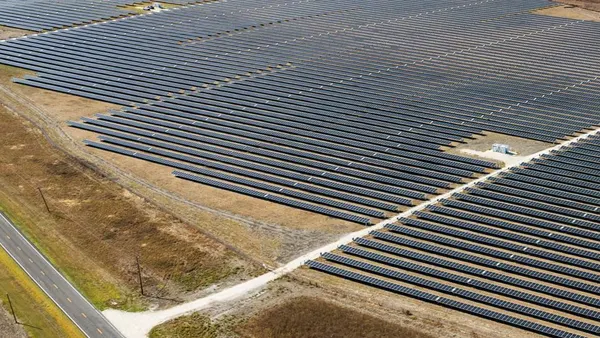
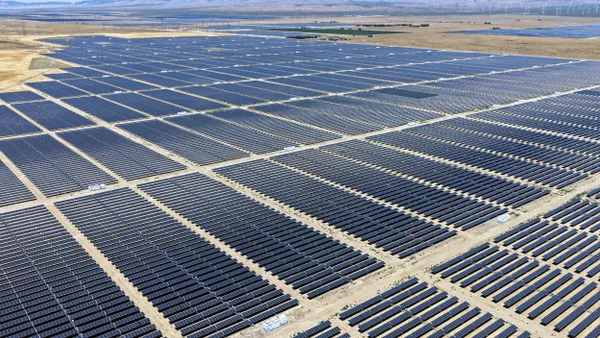
- Players of popular video games like NBA 2K26 and PGA Tour 2K25 are providing some of the offtake for a 110-MW standalone solar project that recently began commercial operations in Hill County, Texas, two of the companies behind the arrangement said last week.
- The voluntary, subscription-based offering allowed thousands of individual gamers to back a virtual power purchase agreement, or VPPA, for capacity at Mitsui & Co.’s ThreeW solar project south of Dallas, Ever.green and SuperPower said. The facility is expected to produce 280,000 MWh of energy annually.
- The unusual arrangement underscores the potential for broader VPPA adoption beyond the hyperscalers, utilities and large corporates that dominate the market today, Cris Eugster, founder and CEO of Ever.green, the Seattle-based renewable energy marketplace that facilitated the transaction, told Utility Dive in an interview.
Dive Insight:
SuperPower, the California-based company that developed the subscription offering and claimed the offtake, says 10 MW of solar can offset about 125 million hours of gaming each year. Modern gaming consoles draw significant power from users’ homes, and games played over networks drive additional power demand from cloud data centers and other infrastructure.
“There’s a lot of gamers out there, millions of them, and it's pretty energy intensive,” Eugster said. “And it’s a segment people don’t really think about.”
Eugster, a former Texas utility executive, said Ever.green believes the ThreeW VPPA is “one of” the first arrangements of its kind, but the structure itself is not revolutionary. Whereas big, power-hungry companies like Microsoft and Meta have the resources to be sole VPPA offtakers for hundreds of megawatts of capacity at a time, most companies don’t need that much power, he said.
Eugster said Ever.green facilitates “fractionalized” transactions for smaller amounts of energy capacity or renewable energy certificates, which he called the company’s “main offering.”
A VPPA is a type of contract for difference that shifts energy price exposure from the project owner (the seller) to the offtaker (the buyer). In volatile wholesale energy markets like the Electric Reliability Council of Texas, they can both offset development costs and reduce projects’ market risk by providing predictable contracted revenue upfront, Eugster said. Renewable energy certificates, or RECs, also provide contracted revenue to the seller without shifting energy risk to the buyer, Eugster said.
Upfront contracted revenue also gives developers flexibility to shape their projects in fast-changing energy markets, Eugster said. ERCOT, again, is a prime example: Texas has nearly 30 GWh and counting of energy storage on its grid, according to the Solar Energy Industries Association.
The rapid battery buildout has dampened wholesale price volatility in recent years but challenged the economics of some proposed energy storage projects, Eugster said.
With sufficient contracted revenue, project developers may have more flexibility to design and pace projects — for example, by moving ahead with a solar-only first phase with the intent to add storage in a future phase, Eugster added.
The approach works for other clean energy resources and in energy markets other than ERCOT, Eugster said. Ever.green has structured transactions around a repowered wind farm in West Texas, a 28-MW solar farm backed by Wells Fargo in South Carolina and a 3.2-MW solar procurement by a West Virginia school district, among others.
Like the gamer-backed VPPA, the West Texas wind farm transaction — which Ever.green says nearly doubled the facility’s capacity — included fractional commitments from small buyers. The project’s smallest contract was for just 1,000 MWh annually, the company says.
“Every place is unique and different, but what is common is those projects need long-term offtake to help stand up,” Eugster said.