The outcome of Tuesday’s midterm elections could have serious implications for utilities, as candidates in both parties seek to capitalize on widespread concerns about energy affordability.
Policy areas that could see the biggest impact include data centers, energy tax credits and permitting reform, experts told Utility Dive.
Hasan Nazar, head of policy at Crux, a finance technology company that connects tax credit buyers and sellers, said he believes energy affordability will be “determinative” in this election.
Polls have given Democrats a strong chance of taking control of the House and possibly also flipping the Senate, but even if they do, Nazar noted that there would still be a split government with a Republican administration in place. He hopes broad support for reform will lead to bipartisan cooperation on energy policy.
“History shows us that energy crises create policy openings, and we think the conditions are probably in place for a window of policymaking,” Nazar said.
What candidates are telling voters
All U.S. House seats are up for grabs, along with one-third of the Senate and 36 gubernatorial seats.
An Oct. 8 poll from Pew Research Center found that 74% of U.S. adults surveyed were concerned about the price of gasoline and energy, the largest share of concern among all surveyed issues.
As candidates campaigned this year, energy issues were central in many races.
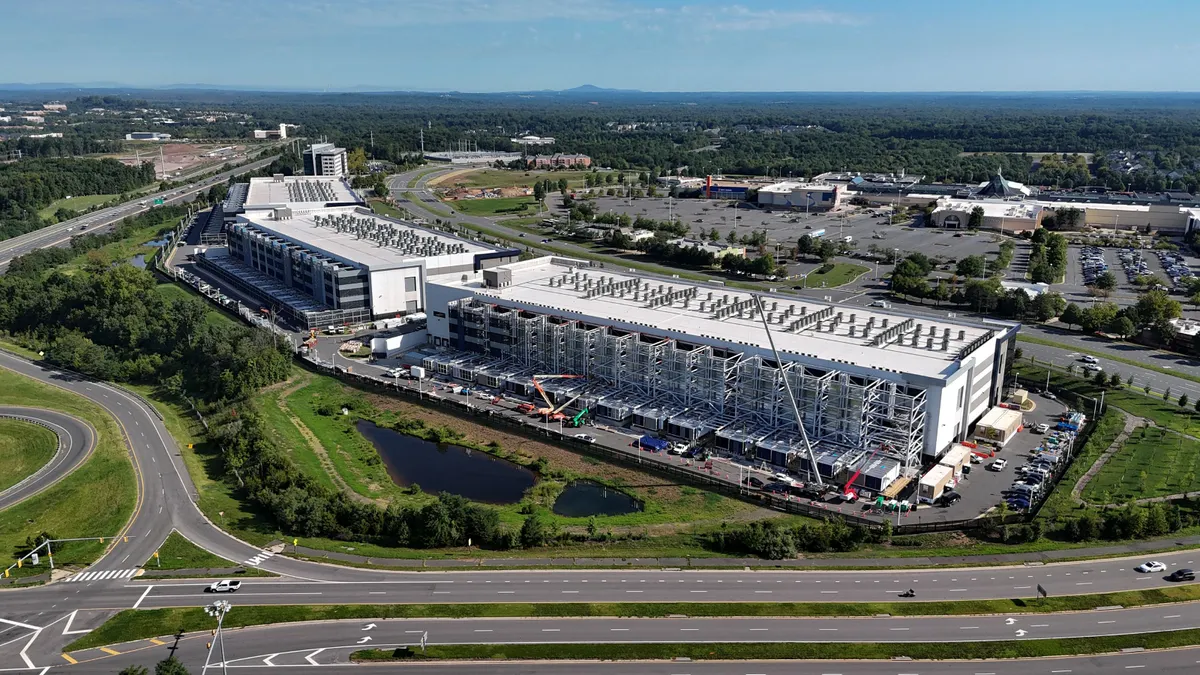
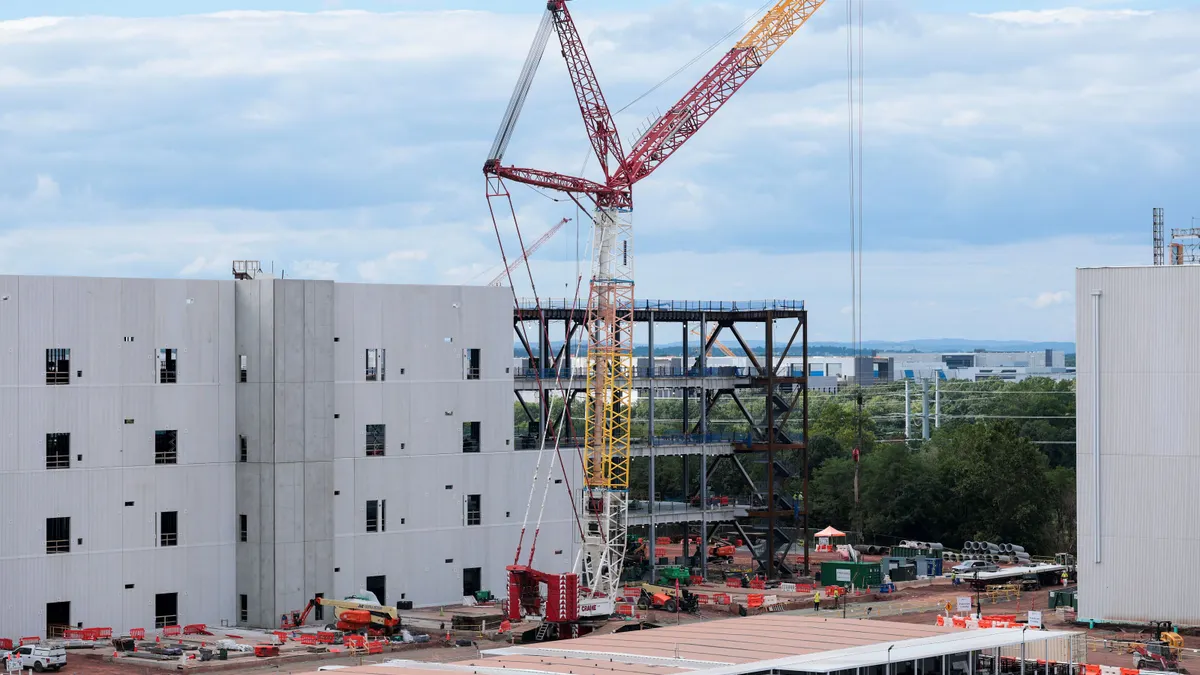
- During an Oct. 8 debate, Georgia Senate candidates Sen. Jon Ossoff, D-Ga., and Rep. Mike Collins, R-Ga., sought to tie each other to controversial data center projects, according to Atlanta News First. Collins said Ossoff had a “data center billionaire” donor and promised to protect Georgians from having their electricity infrastructure “destroyed” by the projects. Ossoff noted Collins had voted in favor of the One Big Beautiful Bill Act and said the legislation contained a “data center tax scam.”
- In Wisconsin’s gubernatorial race, David Crowley, D, has proposed requiring data centers to be powered with renewable energy, and a 2050 net zero goal for the state. His opponent Tom Tiffany, R, has strongly opposed data center development, saying “data centers, solar and wind farms should not be built on Wisconsin's farmland,” the Wisconsin Examiner reported.
- Ohio gubernatorial candidates Vivek Ramaswamy, R, and Amy Acton, D, have both campaigned on data center and energy issues — the next governor will appoint a full slate of commissioners to the Ohio Public Utilities Commission. Ramaswamy has promised free electricity to those who live near a data center, while Acton proposed a conditional moratorium on data centers if certain requirements aren’t met, reported the Ohio Capital Journal.
- Pennsylvania Gov. Josh Shapiro, D, has applied pressure to utilities requesting rate hikes, while his opponent, state treasurer Stacy Garrity, R, proposed lowering rates by eliminating the state tax on electricity, and said she would intervene in a utility’s rate case if she disagreed with a hike, according to reporting from Spotlight PA. An ad from Garrity’s campaign said Shapiro “sold us out” to data center interests, while an ad from Shapiro’s campaign called Garrity “Pennsylvania’s No. 1 fan of data centers,” The Hill reported.
Dylan Reed, Advanced Energy United’s managing director overseeing federal and political affairs, said Pennsylvania’s race is also significant given the role that Gov. Shapiro has played in the ongoing debate over the PJM Interconnection’s surging prices.
In 2025, Shapiro was one of the PJM state governors who threatened to pull out of the grid operator’s markets.
“Affordability is the message that we see out here very clearly,” Reed said. “I think when you are looking at high prices when it comes to your utility bill, the number one office that can impact that right now is the governor.”
How elections could shape federal policy
Nazar said he thinks that following the election, in Congress “there’s probably going to be at least a discussion about new kinds of tax credit incentives that could be deployed.”
In 2022, then-Vice President Kamala Harris cast the tie-breaking vote in the Senate to pass the Inflation Reduction Act, which received no Republican votes and established long-horizon tax credits for clean energy along with new tax credit mechanisms like transferability.
In 2025, a Republican-controlled Congress passed the OBBBA, which shortened the horizon for some of the IRA’s clean energy benefits. Now, if Democrats take back control, they could seek to revise the OBBBA’s impacts, observers say.
“A flipped Congress where both houses are with the Democrats could have a dramatic turn on the energy policy landscape, and particularly with federal energy tax credits,” said Heather Cooper, a partner at the law firm McDermott Will & Schulte. “We have seen pretty dramatic flip-flopping in the last five years as Congress has gone back and forth.”
However, Cooper — who advises clients on federal income tax issues related to the energy transition — said she thinks the clean energy industry is prepared for the possibility of future flip-flopping.
“Most of the players who are in this market … The reality is all of their business models are kind of used to a world where these tax credits have 1, 2, 3, 4-year horizons,” she said.
The IRA, which created a longer runway for the first time, resulted in a “phenomenal amount of money poured into this industry,” she added.
Carl Fleming, global co-head of McDermott Will & Schulte’s energy and project finance group, said, “A number of folks have already worked out scenarios where some of these projects pencil out regardless of tax credits.”
“I do think you'll probably see an extension of the solar credit,” he said. “Solar took a good hit under OB3, but with rising energy costs, I think all that stuff's on the table because if I'm running for office or trying to get back into office, and I can find a technology that can help bring those energy costs down … whatever it takes to kind of get these energy costs down, that’s going to be on the table.”
Election rhetoric or something lasting?
Some utility executives have suggested that the furor over data centers and affordability could die down after the elections.
Fleming said he thinks there may be a more fundamental shift happening. He pointed to Texas’ pause on data center grid interconnections, aimed at weeding out speculative requests, as a potential policy model.
“You could question whether [the pause was] driven by the midterms or just normal processes, but I think that's going to be the way folks will look at this at the state level going forward — taking a kind of investment-type approach to these projects,” he said.
“It's no longer a race to power; it's a race to bankable power,” he continued. “Data centers are coming along so fast, much faster than people had anticipated. It's tough for legislation to keep up with.”
Reed said that the question of how to achieve speed to power, while preserving grid reliability and affordability, is what “every policymaker should be asking.”
Nazar said that post-election, he sees the chance for “durable” bipartisan legislation.
“I think it is actually quite an interesting opportunity next year to have a necessarily bipartisan approach to these policies, where energy is top of mind for voters,” he said. “I think the [Bipartisan American Affordability and Jobs Act] is a good signal of potentially a return to cross-party substantive, serious and impactful energy policymaking that I could foresee carrying into next year.”
The Bipartisan American Affordability and Jobs Act aims to speed federal permitting for energy and infrastructure projects, protect permits for approved projects and expand the Federal Energy Regulatory Commission’s power to eliminate obstacles to new transmission. It was announced in September, the result of careful negotiation between Republicans and Democrats.
But bill co-sponsor Sen. Sheldon Whitehouse, D-R.I., warned in October that the deal could be “[blown] up” by the Trump administration’s moves to revoke federal permits for offshore wind farms.
The bill has also been criticized by some consumer and clean energy advocates who say it would favor oil and gas projects, weaken environmental laws, undermine state and Tribal authority and limit the judiciary’s ability to intervene to prevent harm.
Nazar said he thinks the potential for BAAJA to be amended “seems like that's an ongoing conversation that appears to be in play.”
“That said, I think we will see how the dynamics shift after tomorrow, if they shift at all,” he added.
According to Crux’s conversations with developers, Nazar said, “Predictability is the most important thing they could ask for from the federal government.”