Dive Brief:
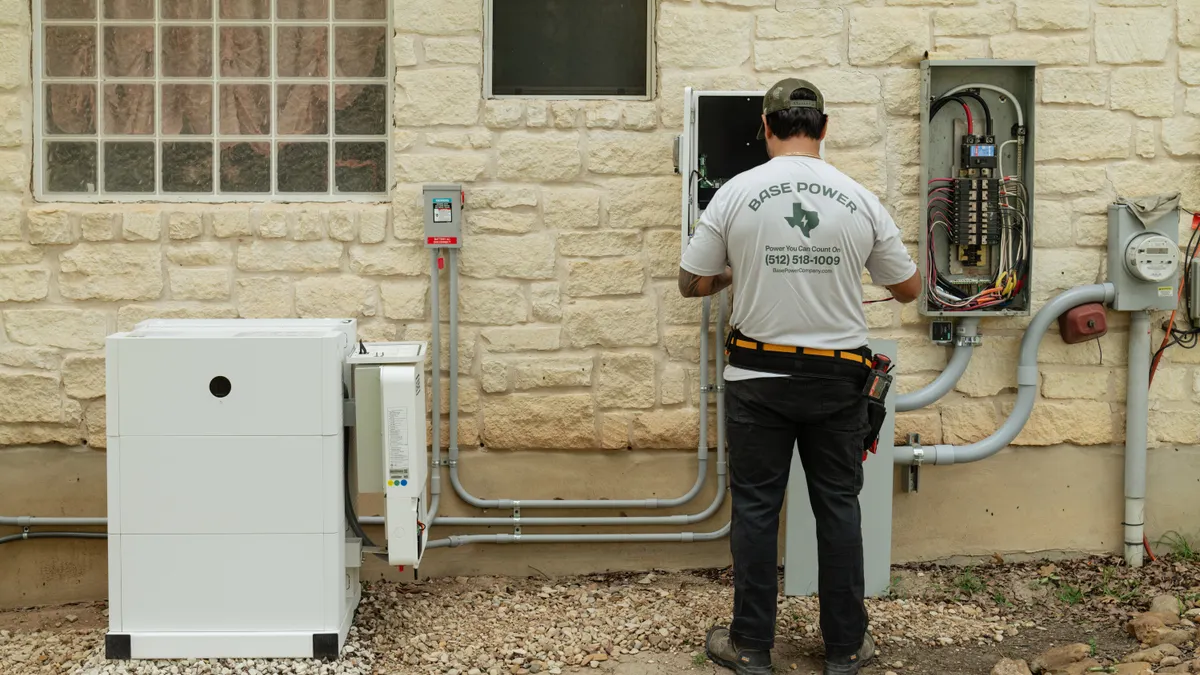
- Ava Community Energy launched an $11.25 million incentive program last week for residential customers installing solar and battery storage in their homes.
- The Oakland, California-based community choice aggregator’s SmartHome Battery program allows customers to share up to 80% of their home batteries, Ava said Thursday. Ava said it will provide rebates of $500/kWh for income-qualified customers and $90/kWh for customers who don’t meet income qualifications on the portion of the battery they choose to share.
- The utility’s announcement came two days after California legislators advanced a bill that would update state resource adequacy rules to allow aggregated distributed energy devices like stationary residential batteries and electric vehicles to qualify as resource adequacy capacity.
Dive Insight:
California utility customers add about 8,000 battery installations, totaling around 100 MW, each month, according to a March news release from Democratic state Sen. Josh Becker, D, SB 913’s lead sponsor. The release cites California Public Utilities Commission data.
Becker said his bill would place distributed energy resources on “a level playing field” with traditional generation resources that state regulation already qualifies as resource adequacy capacity.
Brandon García, California director for Advanced Energy United, characterized the bill as overdue recognition of the substantial role stationary batteries, electric vehicles and other DERs play in the state’s energy system and their potential to mitigate rising infrastructure costs.
“California has spent years incentivizing and encouraging consumers to invest in distributed energy resources such as EV chargers, smart thermostats, rooftop solar and batteries to reduce their energy demand across the state, but our policies still undervalue how these resources can be part of the solution to the energy affordability crisis,” García said in a statement.
Howard Chang, CEO of Ava Community Energy, cast the SmartHome Battery program in a similar light. Ava rolled out the program in response to the CPUC’s introduction in 2023 of a less favorable compensation framework for solar-only customers in California and the expiration of the federal investment tax credit for customer-owned residential solar systems at the end of last year, Chang said in a statement.
Environmental groups and clean energy advocates have for years fought an unsuccessful legal battle against the new solar compensation framework, known as NEM 3.0. State courts have repeatedly sided with CPUC, most recently in March.
Installations of solar-only residential energy systems fell sharply after NEM 3.0 took effect as interest in solar-plus-storage systems surged. The “attachment” rate for solar-plus-storage systems more than doubled in California in the 12 months following its enactment, according to the U.S. Energy Information Administration.
“As electricity demand is on the rise, our role is to help our customers navigate these headwinds through incentive programs that make electrification more affordable and maintain grid stability,” Chang said.
On top of its installation rebates, the SmartHome Battery program provides monthly participation payments of $3 per shared kilowatt-hour. Customers can share 40%, 60% or 80% of battery capacity. To qualify, they must own participating batteries and “not be enrolled in conflicting programs,” Ava said.
California legislators significantly reduced funding last year for the Demand Side Grid Support program, a battery-based framework that has grown into one of the country’s biggest statewide virtual power plants since its debut in 2022. An Ava spokesperson told Utility Dive in an email that potential changes to DSGS would not affect the SmartHome Battery program.