Edison Avilés is chairman of the Puerto Rico Energy Bureau, which regulates the island’s electric utility. His appointment began in 2018.
Nearly a decade after Hurricane María exposed the fragility of Puerto Rico’s centralized, fossil-fuel-dependent grid, the island’s electric system is undergoing the most consequential transformation in its modern history. The next two years will determine whether Puerto Rico advances toward a resilient, decentralized energy framework, or remains trapped in a cycle of outages, fiscal instability, deferred investment and political conflict.
Three forces are shaping this transition: the reconstruction of the transmission and distribution system; the evolution of energy policy through Puerto Rico’s Integrated Resource Plan; and mounting financial pressures around rates, operating costs and the Puerto Rico Electric Power Authority’s unresolved debt. Together, they are redefining how electricity is generated and delivered, and how the island approaches economic competitiveness and long-term energy security.
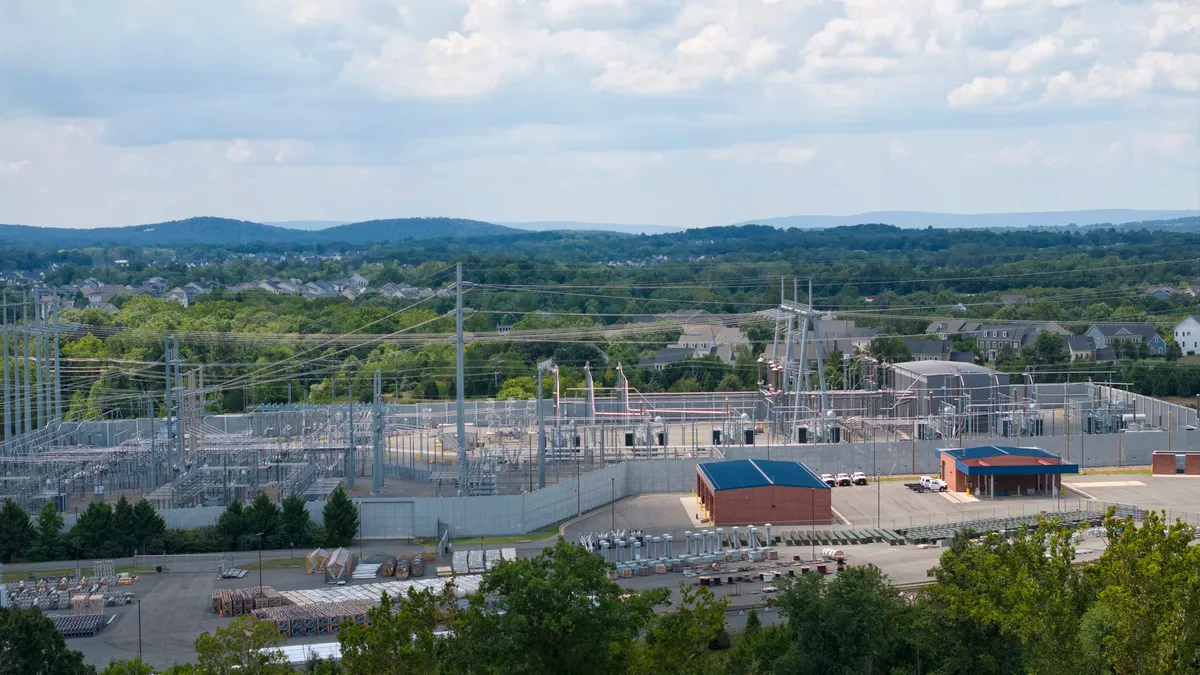
Despite years of recovery work, the grid remains structurally fragile. Much of the transmission and distribution infrastructure predates Hurricane María by decades and suffered catastrophic damage in 2017. Billions in reconstruction funding have been approved through the Federal Emergency Management Agency, but implementation has progressed far more slowly than regulators, policymakers and consumers expected.
Governance has also fundamentally changed. LUMA Energy manages transmission and distribution; Genera PR oversees most thermal generation; PREPA, still under bankruptcy protection, continues to own the assets. The restructuring was meant to modernize operations and clarify accountability. Instead, it has often produced overlapping responsibilities, institutional fragmentation and public frustration.
There has been measurable progress — thousands of pole replacements, substation modernization, expanded vegetation management and smart-grid deployment. Yet, reliability remains poor. Outages persist, reserve margins are narrow and aging thermal units continue to face challenges under periods of elevated demand and extreme weather events. The island is suspended between two realities: building the future grid while still depending on infrastructure that remains vulnerable, outdated and operationally strained.
Renewables expand, but unevenly
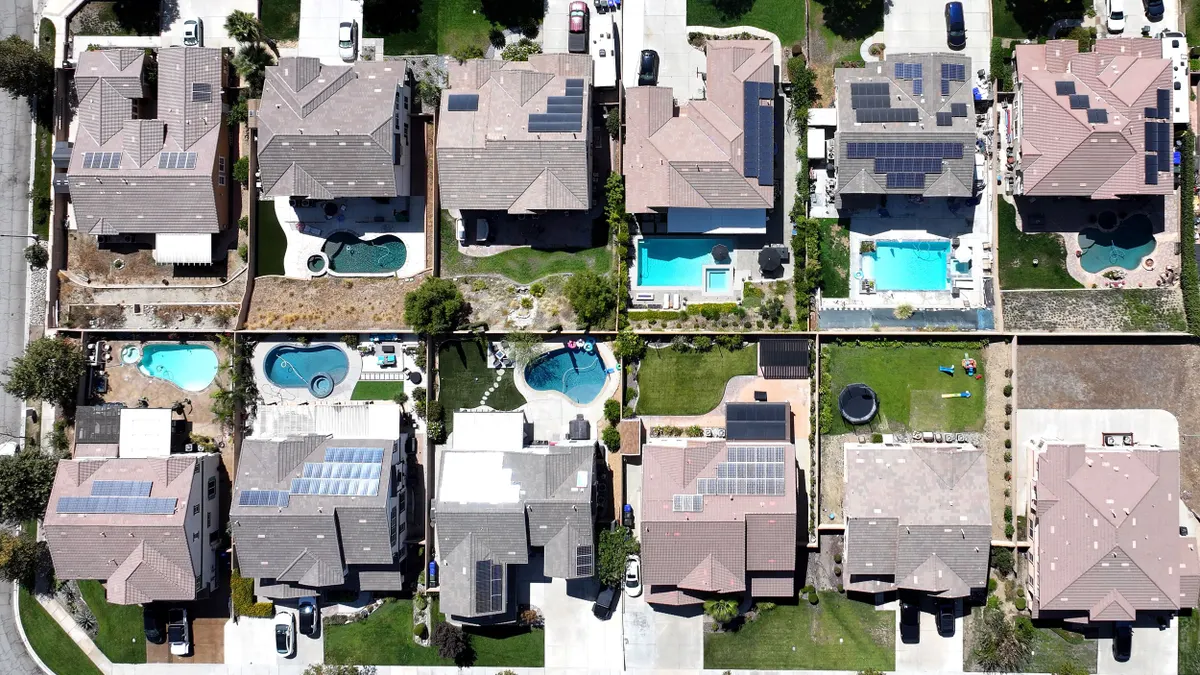
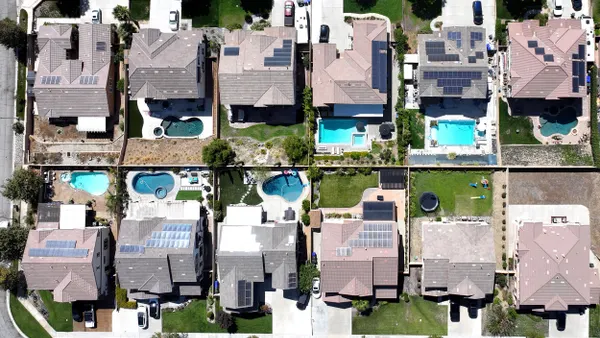
While the centralized system struggles to stabilize, distributed renewable energy is booming. Driven by high costs, recurring outages, federal incentives and a craving for energy independence, residential rooftop solar paired with battery storage has accelerated dramatically. In effect, Puerto Rican consumers are quietly building portions of the island’s future energy system themselves.
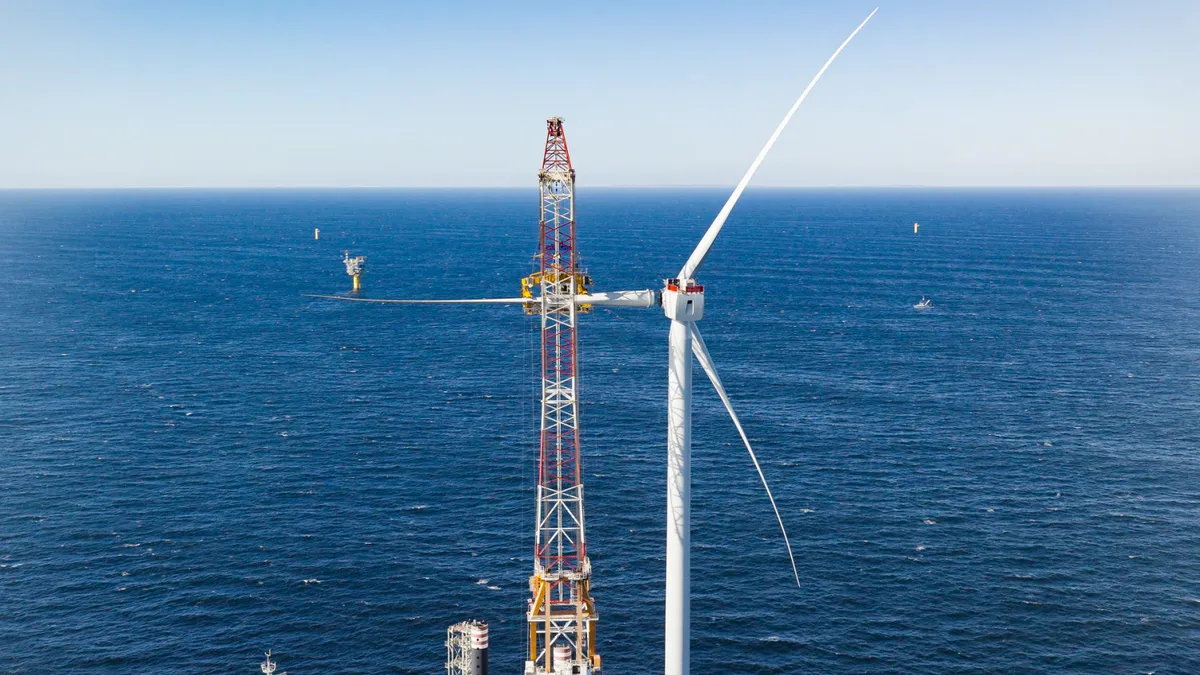
Utility-scale renewable development has lagged. Transmission constraints, permitting delays, procurement disputes and financing uncertainty have slowed large projects. Puerto Rico’s original mandate under Act 17-2019 — 40% renewable generation by 2025, 60% by 2040, 100% by 2050 — set among the most ambitious targets in the United States. Act 1-2025 has since relaxed interim benchmarks, reflecting a growing recognition that the reliability crisis cannot be solved by renewable deployment alone.
That pragmatism now runs through the 2025 IRP. Reserve margins, transmission resilience, flexible generation and storage deployment occupy a more central role in planning, and recent modeling suggests additional combined-cycle natural gas capacity may be needed to stabilize the system while renewables and storage mature. The new framing: renewables first — but reliability immediately.
The rate case: a reality check
No proceeding has illustrated the financial complexity of this transformation more starkly than the rate case before the Puerto Rico Energy Bureau, the island’s first comprehensive rate review in decades. On April 15, PREB issued a final decision. The numbers tell the story: LUMA, Genera and PREPA collectively requested roughly $3.14 billion in base-rate revenue for fiscal year 2026. PREB approved $1.78 billion — a $1.36 billion reduction, roughly 43%.
The bureau’s reasoning was direct. LUMA’s “Optimal Budget” assumed mainland-utility performance within three years — a posture that would have required an immediate 75% base-rate increase. PREB replaced “optimal” with “realistic,” excluded costs eligible for federal funding, cut projects deemed inexecutable, and rejected expenses for which evidence of need was unpersuasive. Residential rates were restructured: the customer charge rises from $4 to $8 in FY27 and $16 in FY28, the energy charge falls by roughly 3.3 cents/kWh, and the two-tier inclining block rate becomes a flat one-tier design.
The decision protects affordability but leaves a harder question unresolved. Puerto Rico’s rates already rank among the highest in the United States relative to household income. Consumers are being asked to help finance a major system transformation while still living with unreliable service. Without investment, modernization stalls. Without affordability, public confidence in modernization erodes. PREPA’s unfinished bankruptcy — and the debate over how much legacy debt should ultimately be folded into rates — sits atop all of this.
What the next 2 years will bring
Federal reconstruction funding is finally moving from planning into execution. By 2027, consumers should begin seeing tangible improvements: substation rebuilds, hardened transmission corridors, automation, smart meters, targeted undergrounding and stronger vegetation management. But reconstruction will not eliminate outages overnight. Fuel-supply disruptions, aging generation, coordination challenges and intensifying climate risk will persist.
Battery storage will become central to grid operations. Utility-scale projects will begin entering service while residential adoption keeps accelerating. The island is steadily evolving into a hybrid architecture: a centralized transmission backbone supported by distributed rooftop solar, community microgrids and utility-scale storage hubs. That structure may become Puerto Rico’s most important long-term resilience strategy.
Natural gas will expand as a transitional resource, replacing unreliable oil-fired units and helping manage renewable intermittency. Whether it becomes a true bridge fuel or a long-term dependency will be one of the defining debates ahead. Meanwhile, consumers will keep driving decentralization. Residential solar-plus-storage is growing faster than utility-scale renewables, and hospitals, universities and industrial facilities are pursuing self-generation. Puerto Rico may yet emerge as one of the most decentralized electric systems in the U.S.
The question is no longer whether Puerto Rico should transform its electric system. Necessity has already answered that. The real question is whether modernization can move quickly enough to restore public confidence before affordability pressures, operational failures and political fatigue undermine the transition itself. If reconstruction accelerates, storage scales and reliability improves in measurable ways, Puerto Rico could become a global model for resilient island-grid transformation in an age defined by climate risk and decentralization. If not, the island risks another long cycle of rising costs, deferred investment and declining trust.
What is already certain is that Puerto Rico’s future electric system will look nothing like the centralized PREPA model of the past. It will be more distributed, more digital, more renewable, more storage-dependent and far more customer-driven. The transformation has begun. What happens next will determine whether it succeeds.