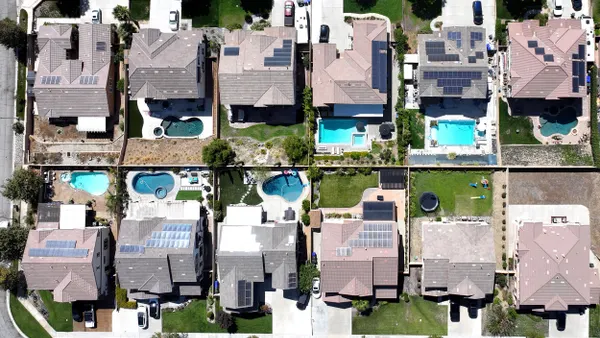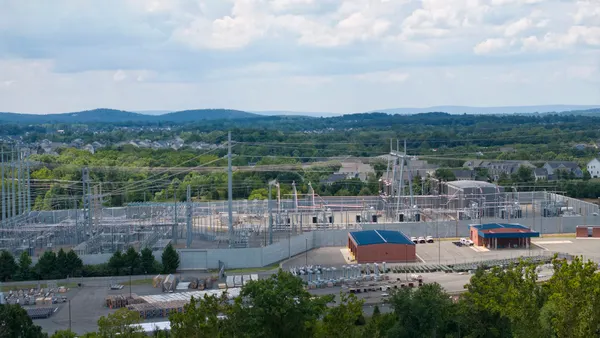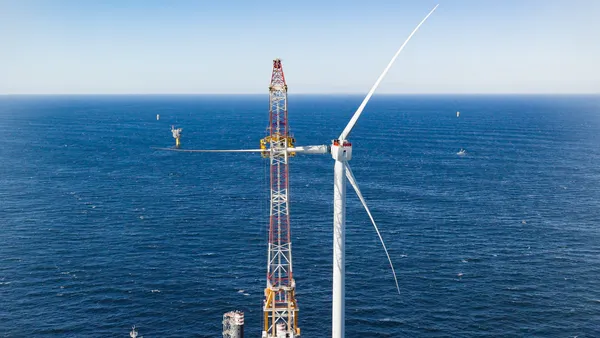
U.S. generating capacity will increase by about 75 GW this summer compared to a year ago — mainly solar, wind and batteries — while power plant retirements will slow to about 8 GW, helping to improve the outlook for grid reliability for this summer, according to Federal Energy Regulatory Commission staff.
“The pace of these changes is notable,” Alec Stirling, a FERC economist, said during the agency’s monthly open meeting on Thursday. “New capacity additions are accelerating to the largest year-over-year increase in gigawatts in over a decade, while the rate of plant retirements has slowed by more than 50% since last summer.”
The capacity additions include nearly 26 GW in the Electric Reliability Council of Texas footprint, close to 13 GW in the Western Electric Coordinating Council region and 11 GW in the Midcontinent Independent System Operator market, FERC said in its annual summer market and reliability assessment.
Generation additions are outpacing demand growth, leading to an improved reliability outlook compared to last summer, Suzanne Edwards, a North American Electric Reliability Corp. analyst, told the commission.
Even so, three areas in the United States face risks of power supply shortfalls during extreme conditions, Edwards said. They are the Pacific Northwest, New England and part of western Texas, she said.
Also, low water levels in the Colorado River Basin could affect about 4.5 GW of hydroelectric generation by August, FERC staff said.
The U.S. Department of Interior’s Bureau of Reclamation is taking emergency actions to keep enough water in Lake Powell so that the Glen Canyon dam can continue operating and water can be released downriver, according to Monica Ferrera, a FERC engineer.
The loss of the hydro capacity on the Colorado River, which includes the 2-GW Hoover Dam, would create operational challenges Ferrara said. “Operators may experience increased congestion, reduced operational flexibility and increased need for mitigation measures during times of elevated demand,” she said.
FERC staff expects gas-fired generators will provide 39% of all capacity this summer, followed by solar at 14%, coal at 13%, wind at 12%, and nuclear and hydropower at 7% each.
Citing Energy Information Administration data, FERC staff said wholesale power prices this summer are expected to average $46.81/MWh, down 5% from the year-ago period. However, prices will vary by region, with shifts in prices ranging from a 41% drop in the Northwest to an 11% increase in ERCOT.
On the gas front, FERC staff expects natural gas prices at the Henry Hub in Louisiana to average $3.07/MMBtu this summer, down 1% from last summer. Gas prices are expected to be higher at Northeast gas trading hubs, reflecting low storage levels driven by a cold winter, staff said. FERC expects Western gas prices will be lower because of the region’s mild winter, which left storage facilities at higher than normal levels.
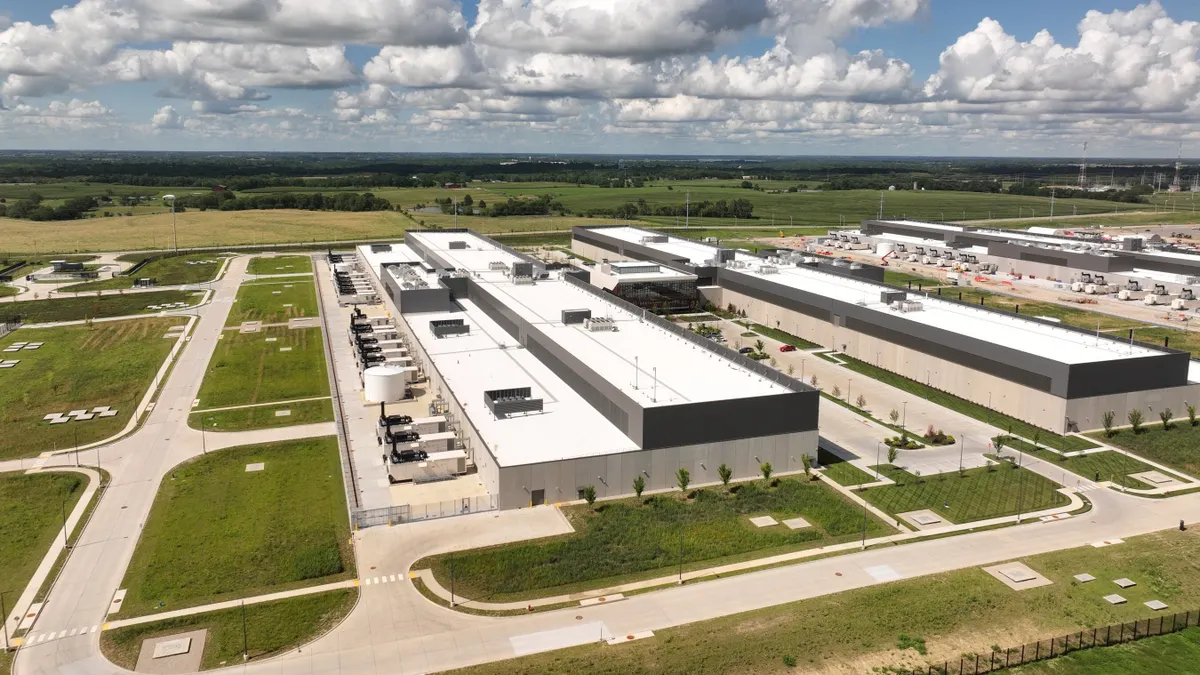
FERC and data centers
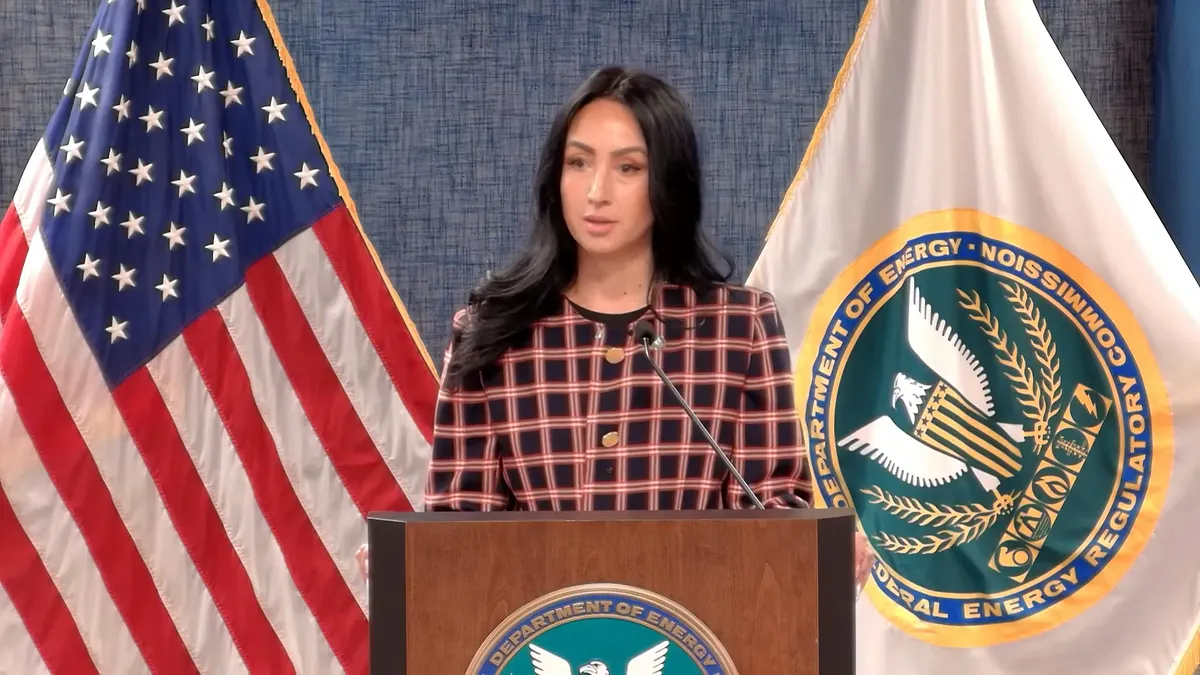
With data centers facing local, state and financial challenges, the potential for less data center demand to materialize than expected isn’t factoring into how FERC is addressing the issue, according to FERC Chairman Laura Swett.
“We are facing exploding demand for electricity for various factors as our economy grows, and FERC's job is to ensure that that type of load is connected in a responsible and economic and reliable way,” Swett said during a media briefing.
The politics surrounding data centers are irrelevant to FERC’s work, she said.
“We are looking at the facts and every market, every load, anything that comes under our jurisdiction — not to imply that load necessarily is — but we just have to ensure that we have transparency, we have well-functioning markets, and that the grid is reliable, and that doesn't change,” Swett said.
FERC is expected to release a decision at its open meeting in June on the U.S. Department of Energy’s proposal for rules governing how data centers can interconnect to the transmission system.
FERC rejects complaint over PJM upgrade costs
FERC rejected a complaint brought by the developers of two solar projects in North Carolina. After they made about $14.4 million in total “readiness deposits,” the PJM Interconnection increased their estimated network upgrade costs from a total of $33.7 million to $54.9 million.
FERC rejected their argument that it is unfair that they should have to forfeit their readiness deposits if they withdraw their projects in the face of a massive increase in upgrade costs.
During the open meeting, FERC Commissioner David Rosner said he supported dismissing the complaint but that he remains “very concerned about the unpredictability and variability that the interconnection process yields with respect to surprises on costs of connecting new power plants to the grid.”
FERC commissioners raised similar concerns in March when the agency rejected a complaint by RWE Clean Energy that argued PJM violated its network upgrade cost allocation rules for generators seeking to connect to the grid.
LaCerte touts MISO, SPP fast-track generation
After being confirmed by the Senate for a second term on May 18, FERC Commissioner David LaCerte praised MISO and Southwest Power Pool initiatives that aim to get power supplies online quickly through fast-track interconnection reviews.
SPP is advancing about 13.3 GW of resources — concentrated in Oklahoma, Kansas and Texas — with 2029/2030 online targets, LaCerte said. MISO is moving forward with 20.9 GW — largely in Louisiana, Indiana and Wisconsin — with 2027/2028 inservice dates, he said.
“These are the types of reforms that we sorely need in these areas,” LaCerte said. His second term at FERC runs to June 30, 2031.
FERC proposes expanded gas project ‘blanket’ authorization
The agency on Thursday proposed expanding its “blanket certificate” program for certain types of “routine” gas pipeline projects so they wouldn’t need project-specific authorizations. The program was last updated in 2006.
“We're not cutting any corners here, and we never have,” Swett said. “Projects identified as high risk will continue to undergo comprehensive review.”
FERC is also advancing blanket authorization initiatives for liquefied natural gas and hydro facilities, she noted.