Al Eliasen is president and CEO of Spatial Business Systems, an AI-enabled design automation platform for electric and gas utilities that was recently acquired by Enverus.
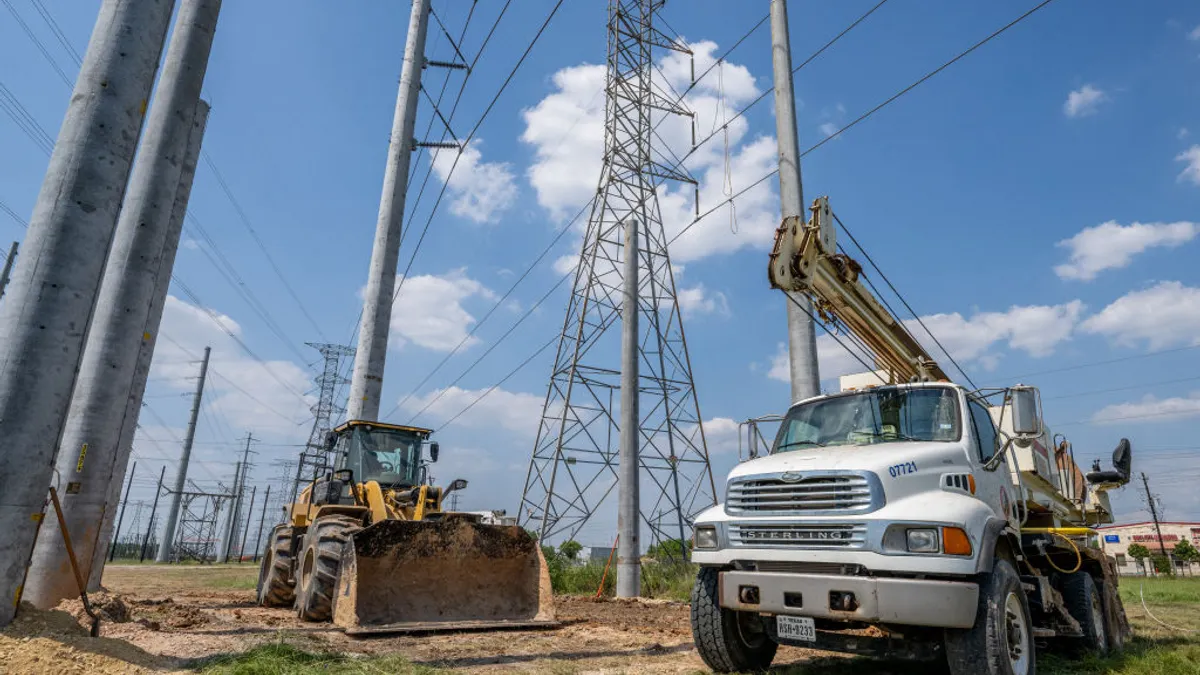
The U.S. Department of Energy’s SPARK initiative is directing real capital toward transmission projects that need to move quickly. Across the industry, the focus right now is on how to compete for that funding from DOE’s Office of Electricity. That makes sense. These are meaningful awards, and they will shape which projects move forward.

But what happens after the award letter arrives?
Federal funding brings defined milestones, structured reporting and a delivery schedule that assumes progress from Day 1. There is very little room to slow down and recalibrate. The organization responsible for delivering the project must move at the pace the funding requires.
In many cases, that is when things start to break down.
Where projects lose time before construction starts
There is a stretch of time between award and construction that tends to be underestimated. On paper, it is when design transitions into execution. In practice, it is when projects begin to lose momentum.
The issue is not engineering capability, it’s how information moves through the process.
In many environments, design inputs originate in one system, modeling happens in another and material quantities are assembled separately. Each step is handled carefully, but the workflow itself is fragmented. Changes made in one place do not always propagate cleanly to the next, and field updates often lag behind in the system of record.
Over time, those gaps accumulate. By the time a project is ready to move forward, the design, the bill of materials and the network record are often slightly out of sync. No single element is fundamentally wrong, but together they no longer reflect a single, consistent view of the project.
It often surfaces in procurement. A design is approved, materials are ordered and somewhere between the model and the material list, quantities drift. The issue is not discovered until staging or construction, when crews are waiting on missing components or working around substitutions that were never part of the original design.
That misalignment shows up in extended review cycles, procurement adjustments and rework. A typical capital project absorbs those issues. Under a federally funded program with defined milestones, they become harder to manage. What would normally be a delay becomes a compliance risk.
What changes when design is connected
In a connected design environment, design is directly tied to the systems that manage network data and assets. Information flows between them and stays consistent as the project evolves. The bill of materials is generated as part of the design, not recreated after it. When a change is made, it carries through the model, the materials and the system of record.
That changes how projects move.
Review cycles shorten because teams are working from a single dataset. Procurement becomes more predictable because material quantities are tied directly to the design. Field changes are incorporated continuously rather than reconciled at the end.
Individually, these improvements are incremental. Together, they recover time that is usually lost to coordination and rework. On a project with fixed external milestones, that recovered time creates buffer, reduces risk and improves the likelihood that commitments are met.
Audit readiness is part of delivery
Federal funding also introduces a level of scrutiny that many utilities have not fully accounted for. Reporting is continuous and detailed, covering installed assets, material quantities, design changes and progress against milestones.
In a disconnected workflow, reporting is a separate effort. Teams pull data from multiple systems, reconcile inconsistencies and construct a version of the project record that is sufficient for submission. That takes time and introduces risk.
This becomes most visible under reporting pressure. Teams are asked for installed quantities or progress against milestones, and the data exists, but not in one place. Engineering has one view, procurement another and field records a third. Pulling together a defensible report becomes a manual exercise, often under tight timelines.
In a connected design environment, the project record is built in real time. The data required for reporting already exists and is structured and aligned with the work being performed. Reporting becomes a matter of accessing that data, not reconstructing it.
For organizations new to federal programs, this distinction is easy to underestimate. It is also where process maturity has a direct impact on outcomes.
The question worth asking now
The U.S. Department of Energy has said it will prioritize projects that can be implemented quickly.
Utilities should ask themselves some straightforward questions: How long does it take to produce a constructable design package? How many review cycles are typical? When field conditions change, how quickly does that information move through design, materials and system records?
The utilities that can answer those questions with confidence will be able to move when funding arrives. Those that cannot will spend the early phase of a funded project addressing internal process gaps under a compressed timeline.
SPARK is an opportunity to accelerate infrastructure. Whether it delivers on that promise will depend less on the funding itself and more on how prepared organizations are to execute once the clock starts.
Correction: We have updated this article to correct the spelling of Enverus.