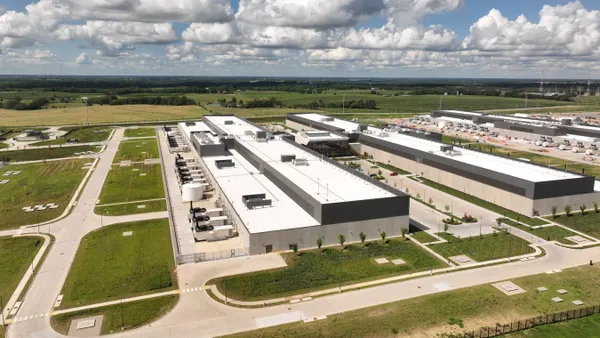
The Federal Energy Regulatory Commission on Friday approved the Southwest Power Pool’s proposal for providing transmission service to data centers and other large loads that agree to be curtailed during grid emergencies.
Under the “conditional high impact large load service,” or CHILLS, SPP will provide transmission service using available transmission capacity for up to seven years while large loads acquire firm service.
Currently, SPP requires transmission customers to have sufficient generating resources to serve their load. But those resources often require network upgrades that can take years to complete, the grid operator said in its proposal to FERC.
To help bring data centers and other large loads online quickly, the CHILLS framework will allow SPP to provide non-firm transmission service to large loads while the upgrades needed for firm service are being built or new generation becomes fully operational, the grid operator said.
SPP will be able to cut service to those large loads when the transmission system is constrained or under emergency conditions, according to FERC’s decision.
“We find that CHILLS is a just and reasonable and not unduly discriminatory or preferential approach to addressing the need to expeditiously interconnect and provide transmission service to new [high impact large loads,] while maintaining the reliable operation of SPP’s transmission system,” FERC said.
The conditional transmission service builds on SPP’s High Impact Large Loads and High Impact Large Load Generation Assessment study processes that FERC approved in January.
SPP is also developing a Price Adaptive Load Service framework for large loads that are willing to be curtailed.
SPP runs the grid and wholesale power markets in 17 states from northern Texas to Montana.