The U.S. saw a 0.7% year-over-year decline in January electricity generation, in spite of Winter Storm Fern driving consumption significantly higher in particular areas, according to a report from the Energy Information Administration.
In the Northeast, January generation increased 8.2% year over year due to cooler temperatures, EIA said. Southern Co. saw daily peak demand “very close” to its all-time high, EIA said.
The rest of the country saw January temperatures near average, above average, or — in the West — significantly above average.
The January residential retail price of electricity increased by 9.5% year over year, EIA said, while retail sales declined 1.7%. January’s Henry Hub price for natural gas went up 86% year over year.
Changes in electricity generation from natural gas were “mixed,” EIA said, “with the Northeast, Mid-Atlantic, and Central regions all seeing an increase in natural gas generation compared to the previous January, while the Southeast, West, Florida, and Texas all saw a year-over year decrease in natural gas generation.”
Natural gas consumption declined 2.8% nationwide, while coal consumption declined 13.2%.
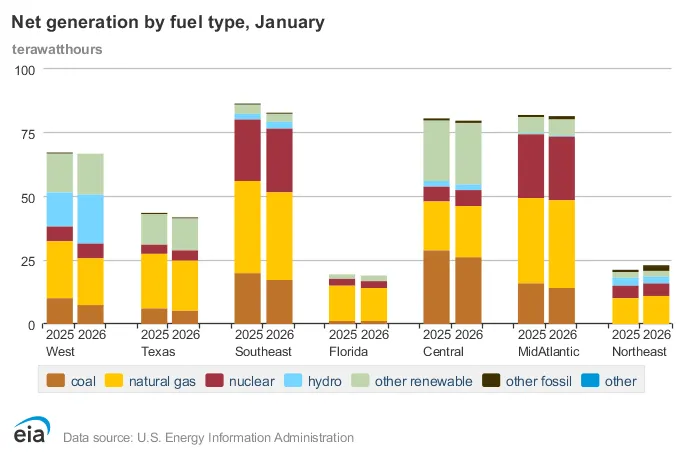
Generation from nuclear increased 2.1% compared to January 2025. Overall, coal generation declined year over year, except for Florida where it increased 18.8%.
“All regions of the country, except the Northeast and Florida, saw their shares of natural gas [consumption] increase at the expense of coal,” EIA said. “Florida was one of the outliers and saw its share of coal increase at the expense of natural gas.”
The Northeast “saw other fossil fuels consumption increase at the expense of natural gas in January 2026,” EIA said, which sometimes occurs in the region as it “has a propensity to dispatch oil-fueled generators when electricity demand gets high during the winter months.”