Dive Brief:
- The U.S. Department of Energy on Monday issued emergency orders further extending the operation of three generating units at two Indiana coal plants that were slated to retire last year. The first orders to keep the units online were issued in December.
- DOE has issued a series of orders using section 202(c) of the Federal Power Act to keep units at six fossil plants online since May. Sierra Club has developed a cost tracker, and says those plants have added more than $280 million to American consumer bills in the last 10 months.
- Both Indiana plants were essential to grid operations during Winter Storm Fern in January, DOE said. And, “the emergency conditions that led to the issuance of the original orders persist.”
Dive Insight:
According to DOE, since the original 202(c) orders were issued last year the two coal plants “have proven critical” to operations in the Midcontinent ISO region, “operating during periods of high energy demand and low levels of intermittent energy production.”
MISO did not immediately respond to questions.
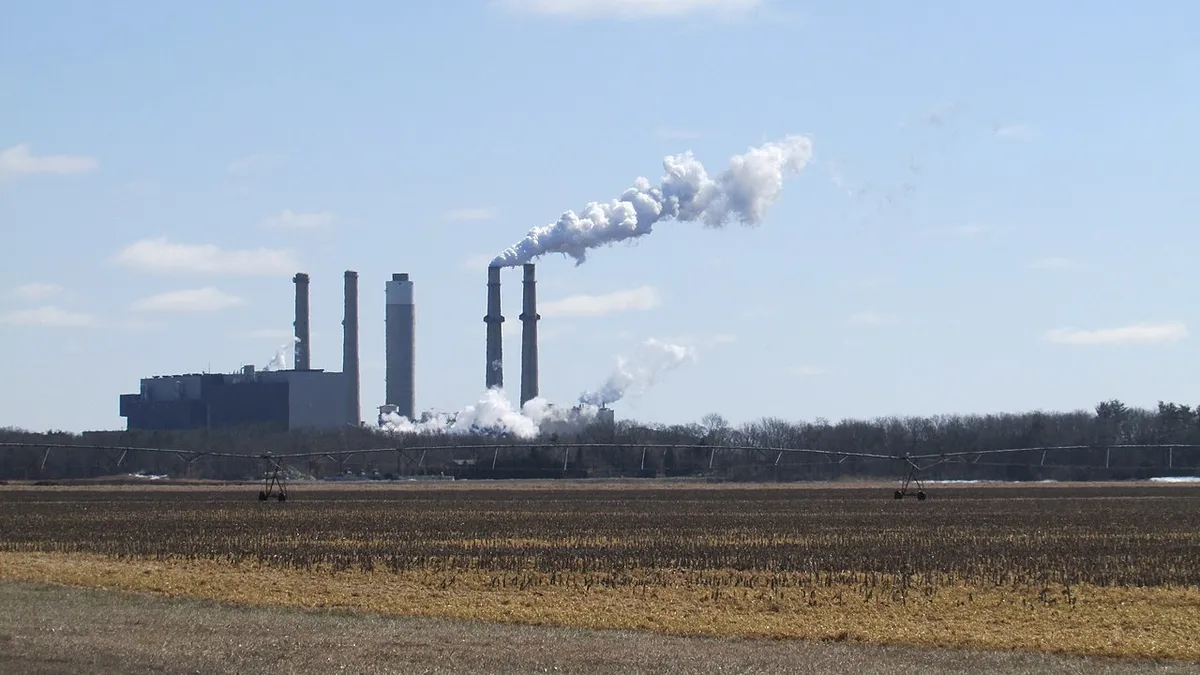
One order directs CenterPoint Energy and MISO to “take all measures necessary” to ensure that Unit 2 at the F.B. Culley generation station in Warrick County, Ind., is available to operate. The order is in effect through June 21, 2026. There are two coal-fired units at the Culley plant with a combined nameplate capacity of 369 MW, according to DOE. Unit 2 is about 104 MW and was slated to close in December.
Culley operated at 30 MW almost every day during extreme winter weather between Jan. 23 and Feb. 1, DOE said. The agency did not immediately say whether the 30 MW came only from Unit 2.
A second order directs Northern Indiana Public Service Co. and MISO to ensure Units 17 and 18 at the Schahfer station in Wheatfield, Ind., are available to operate. The order expires June 21, 2026. Schahfer includes a pair of 129 MW gas-fired units and the two coal-fired units, which run at 423.5 MW each and had been slated to come offline in December.
Schahfer operated at over 285 MW every day during the Jan. 23 to Feb. 1 stretch, DOE said.
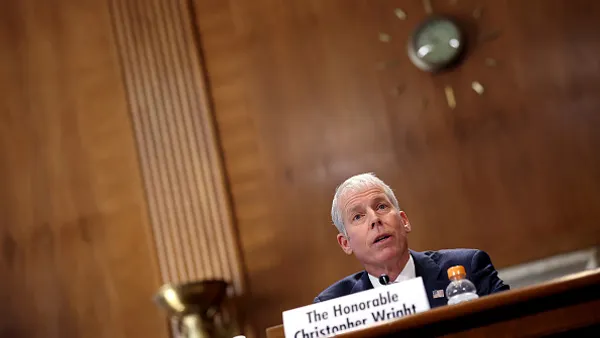
The Trump administration “will continue taking action to keep America’s coal plants running to ensure we don’t lose critical generation sources,” Energy Secretary Chris Wright said in a statement.
Sierra Club Associate Attorney Jonah Baskin said the units were likely not essential to grid reliability during the winter storm.
There were “more reasonable” 202(c) orders issued to respond to the imminent challenges of Fern, Baskin said in an email, but the the orders extended yesterday for Culley and Schahfer “were not tailored to respond to the extreme winter weather.”
“While we are still reviewing data from operations during the storm, the Culley and Schahfer units were likely unnecessary — we know that Schahfer Unit 18 was offline, remains non-functional, and couldn't have contributed to reliability even if it was needed,” he said.
DOE has increased its use of 202(c) orders during Trump’s second term, and that practice has come under fire as electricity prices have soared.
The Trump administration “has twisted the use of this emergency authority beyond all recognition,” Sierra Club Senior Attorney Greg Wannier said last week at an energy price roundtable hosted by Senate Democrats.
Wannier is the lead author for Sierra Club’s analysis of the 202(c) orders’ costs, which says the net cost of running the plants “can be understood as the extra costs that the 202(c) orders impose on ratepayers.”
Keeping NIPSCO’s Schahfer plant online has a net cost to consumers of about $174,000/day, according to the Sierra Club analysis. Running CenterPoint’s smaller Culley plant will result in net costs of approximately $21,000/day.
“At this time, there are no direct bill impacts to CenterPoint customers, but we remain committed to keeping customer affordability top-of-mind as we plan for recovery of costs associated with operating the unit,” the company said in an emailed statement.
“We continue to assess the full impact of these orders on our operations, customers and employees,” NIPSCO said in a statement.