Stefan Hirniak is president of Specialist Staffing Group US.
The U.S. economy is turning the page on the post-Covid era toward an artificial intelligence renaissance. A new generation of companies is attracting unprecedented investment in data centers, computing power and the infrastructure needed to support the next phase of AI development.
For electric utilities, however, that investment is creating a new challenge: delivering the grid infrastructure needed to power AI's rapid expansion. The AI infrastructure race will not be won by capital and electricity alone. As utilities race to expand and modernize the grid, skilled engineers, technicians and project leaders have become critical infrastructure in their own right. Without the workforce to build, operate and maintain the grid, the AI economy simply cannot scale.
By 2030, U.S. data center electricity demand is projected to reach 426 TWh, according to one estimate, placing unprecedented demands on generation, transmission and grid modernization.
Yet while much of the conversation has focused on power supply, transmission capacity and capital investment, far less attention has been paid to the workforce required to deliver it.
Engineering teams are being asked to accelerate transmission upgrades, expand service connections and modernize aging infrastructure while competing for an increasingly limited pool of engineers, technicians and project leaders. The question is no longer simply whether we can finance AI infrastructure. Increasingly, it is whether we have enough people to build it.
Our analysis estimates that as much as $1.4 trillion in U.S. STEM-related economic output could be at risk over the next decade if the talent pipeline fails to keep pace with the growing demand. That makes workforce development not simply a business challenge, but an economic imperative for America's long-term competitiveness.
Much of today's conversation rightly focuses on expanding generation, building transmission, modernizing the grid and shortening interconnection queues. Those challenges are real, and utilities are investing billions to address them. But even the best-funded infrastructure projects cannot move forward without the engineers, technicians and project leaders needed to design, build, commission and maintain them.
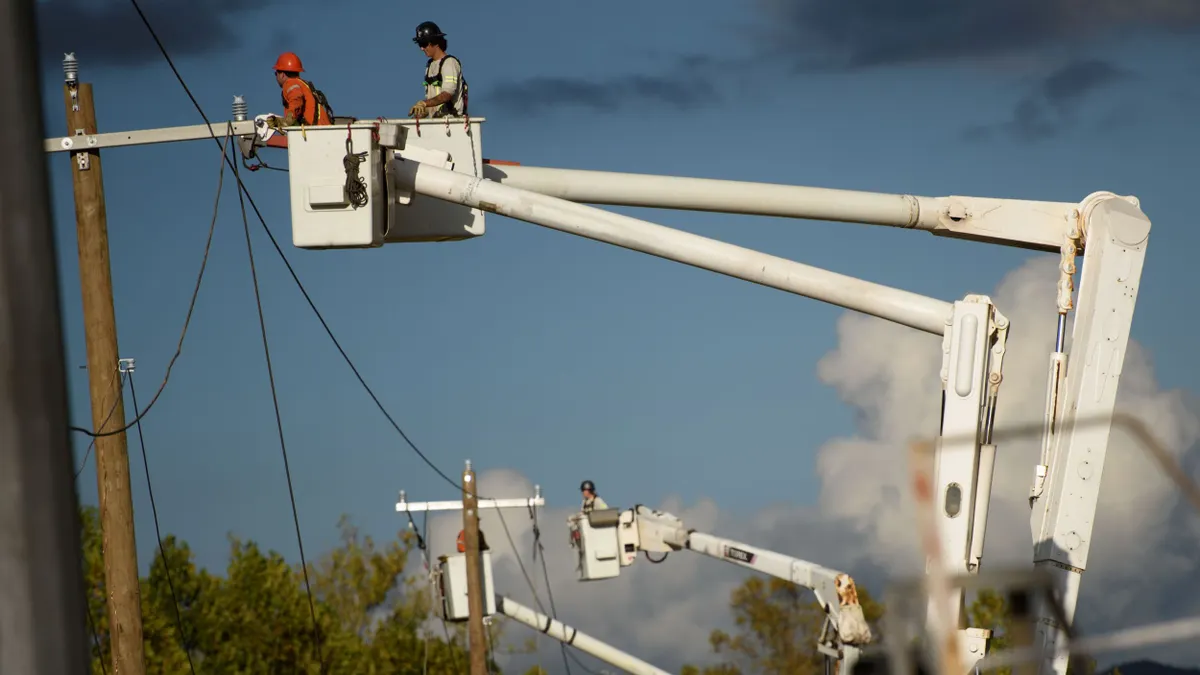
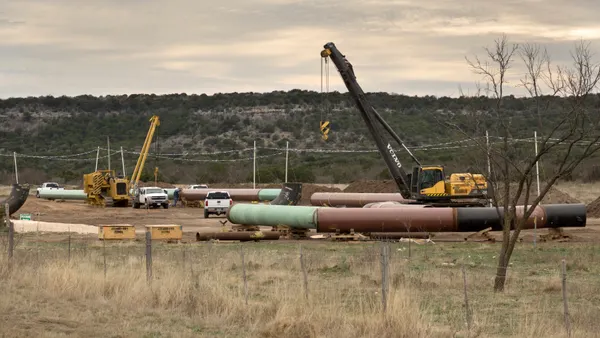
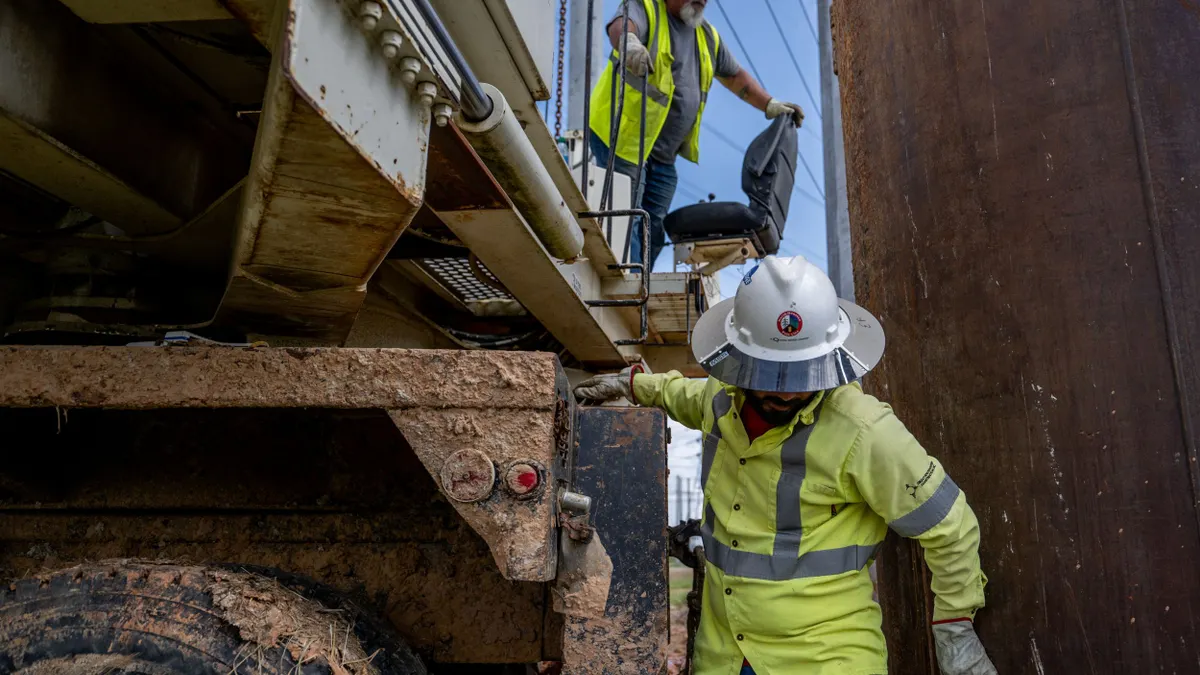
For electric utilities, this is already becoming an operational challenge. Across the country, utilities are investing billions to expand transmission networks, modernize substations and strengthen the grid to support AI-driven electricity demand. These projects rely on highly specialized transmission engineers, protection engineers, relay technicians and project managers. Even when financing, equipment and permitting are secured, a shortage of qualified people can become the limiting factor that determines how quickly critical infrastructure moves from planning to operation.
That challenge is even greater for smaller and rural utilities, which often have fewer resources to compete for specialized talent and replace retiring workers. Nearly half of U.S. engineers are now age 50 or older, creating a significant knowledge gap as experienced professionals retire. At the same time, utilities are increasingly competing with hyperscale technology companies and data center developers for many of the same electrical engineers, technicians and power systems specialists. AI is not just increasing demand for electricity. It is reshaping the labor market itself and forcing utilities and technology companies to compete for the same critical talent needed to build and operate modern infrastructure.
This should change how utilities think about workforce strategy.
Workforce planning should begin alongside capital planning. Before launching a major grid investment, utilities need to know they have the engineers, technicians and project leaders required to deliver it.
Recruiting alone will not solve the problem. Many of the skills needed to support AI-driven infrastructure already exist within today's utility workforce. Investing in upskilling, mentorship and knowledge transfer can help preserve institutional expertise while preparing employees for increasingly complex grid operations.
Utilities also have an opportunity to strengthen the long-term talent pipeline through deeper partnerships with universities, community colleges, trade schools and workforce organizations. For smaller and rural utilities that often struggle to compete for experienced talent, investing in local workforce development offers a more sustainable long-term solution than relying solely on an increasingly competitive hiring market. Scaling hyper-local pipelines now will lay the bedrock for a robust utility workforce that can withstand turnover while creating new opportunities in the communities powering America's energy future.
Regulators, educators and lawmakers also have a role to play by supporting technical education, expanding apprenticeship and workforce development programs, and recognizing that workforce capacity in this area is paramount to the long-term success of the U.S. economy.
With so much now riding on America's AI ambitions, workforce strategy belongs alongside generation, transmission and capital planning. Investing in America's energy workforce is essential to powering the AI economy and ensuring the United States has the talent to build, operate and sustain the infrastructure that now defines its economy.