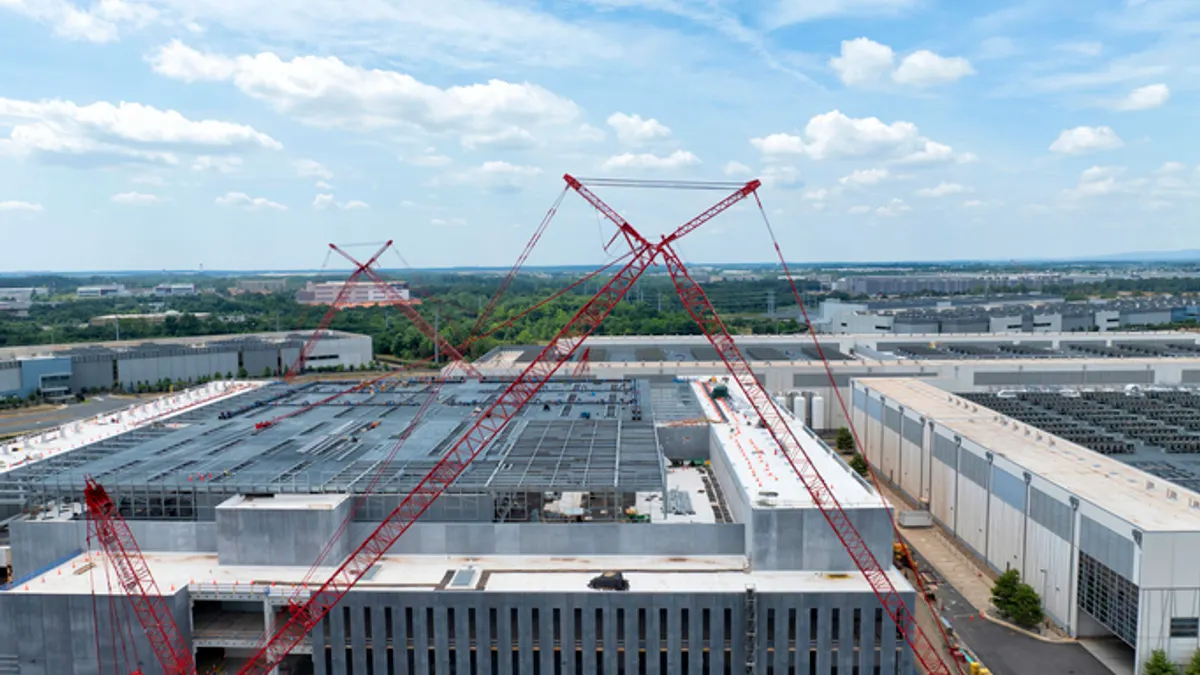
Data centers for AI and other digital use cases are consuming increasing amounts of energy and water, complicating the jobs of policymakers and community planners looking to protect residents’ health and safety, according to a new report from the Kansas Health Institute.
U.S. data centers consumed an estimated 183 TWh of electricity in 2024, according to the report, amounting to more than 4% of the country’s total electricity use. That demand is projected to grow 133% by 2030, to 426 TWh, KHI said, citing data from Lawrence Berkeley National Laboratory.
Water use is also a growing concern: U.S. data centers consumed an estimated 17 billion gallons of water directly in 2023, KHI said, and “that use could double or quadruple by 2028,” based on a range of scenarios modeled by Lawrence Berkeley National Laboratory. Just five years ago, 20% of U.S. data centers were already located in areas of the country experiencing water stress, the report said.
The institute’s analysis “is intended to provide policymakers, public health professionals and communities with objective information about the environmental and public health considerations associated with data center development so they can make informed decisions,” Emma Uridge, KHI analyst and lead author of the report, said in a statement.
Currently, electricity generated to run data centers comes 56% from fossil fuels, 22% from renewables and 21% from nuclear, the report states.
Data center growth is “delaying coal plant closures, slowing or preventing national, state and local priorities to transition to clean energy,” the report found. “Renewable sources are insufficient to meet both hyperscale data centers and existing users’ needs.”
And data center developers are facing a shortage of generation, according to a report from analysts at Bank of America. They expect the United States will need more than 230 GW of new generating capacity over the next five years, but regulated utilities are expected to add only about 93 GW of accredited supply, leaving a gap of more than 100 GW.
Data centers alone could add roughly 125 GW of U.S. electric load through 2031, BofA analysts said.
Local pushback on data center development is growing around the country. Last week, New York became the first state to impose a moratorium on data center development, halting construction on large projects for one year as it assesses their environmental impact.
“Policy responses vary and often reflect a tension between furthering state-level economic development interests and balancing local community health and environmental concerns,” KHI noted. “States are primarily addressing energy reporting, ratepayer protection and environmental assessment. Local governments have tended to act more directly on land use, zoning and permitting, driven by community opposition and the immediacy of local resource impacts.”