Dive Brief:
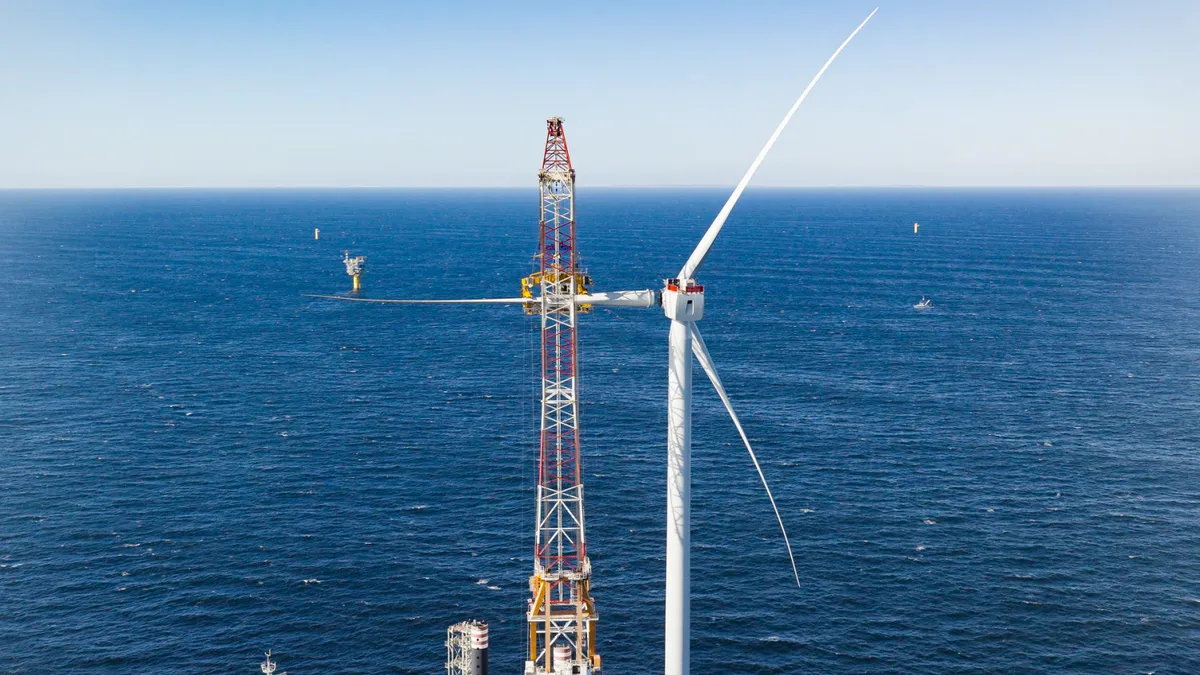
- States with deregulated power markets could use state-led planning to more successfully deploy clean energy technology with long lead times and development barriers, like nuclear and offshore wind, the Clean Air Task Force said in a Wednesday report.
- “Deregulated electricity markets have many notable benefits,” Kasparas Spokas, lead author and director of CATF’s electricity program, told Utility Dive. “They increase the operational efficiency of power systems, and they also enable regional trade. But their market prices are inherently near-term.”
- Addressing long-term uncertainty barriers and the procurement of long-lead time technology has become “disaggregated (and largely atrophied)” in deregulated regions, according to the report.
Dive Insight:
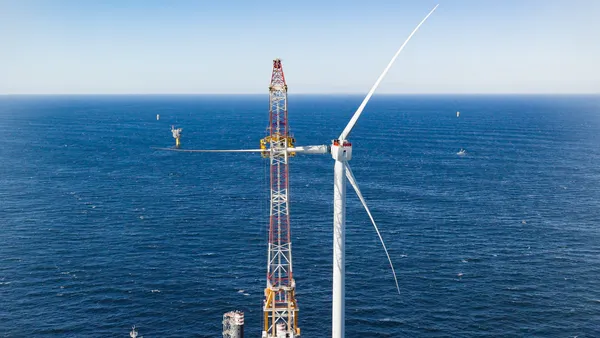
Technologies like offshore wind and nuclear may need an additional push in states without a competitive electricity market, CATF’s report found.
“States are realizing that decarbonizing the power sector requires the addition of long lead time, development barrier-prone technologies, such as nuclear, geothermal, offshore wind, and long-duration energy storage,” the report said. “In deregulated states, however, [clean electricity standards] and market prices do not provide [sufficiently] robust long-lead time price signals and are not designed to solve non-cost barriers to development of these technologies.”
As states deregulated and shifted toward regional markets, Spokas said, there was a “complete removal of a lot of the long-term planning that got replaced by market incentives.”
“But over the last two decades, those new market structures, one, were never tested for significant periods of load growth, and then two, the current power system is very different from the power system that was in place when deregulation happened back then,” he said. “We also now have grid congestion that is much higher than it was when deregulation happened.”
The report identifies three key components as being necessary to improve long-term planning in deregulated power markets, without states having to return to vertically integrated utilities: periodic, scenario-based assessments of long-term system needs; technology development roadmaps; and development mandates or state-led procurement.
Spokas cited California, New York and Illinois as examples of states which lack vertically integrated power markets but have pursued state-led planning. In particular, he pointed to Illinois’ Clean and Reliable Grid Affordability Act — which took effect in June — as an example of “model legislation” formalizing state-led planning and procurement.
“They're doing it live right now over the course of a year or so,” he said. “So there are bound to be lessons learned at the end of this year, and perhaps halfway through next year, that we'll be keeping an eye out for. But from our perspective right now, it has been a good process.”
In the case of New York, which is facing difficulties meeting its clean energy goals due in large part to the cancellation or delay of several offshore wind projects, Spokas acknowledged that these cancellations are an example of a development occurring outside of a state’s control, but said more planning would allow for “a comprehensive assessment of different future scenarios and mitigating against different risks.”
“First, hopefully, you’re proactively assessing major risks, and having plans on what to do if those risks materialize, and then second, already having this embedded capacity to plan and assess system needs so that you can pivot quicker,” he said.
The report noted that “plans can be derailed by the inability to secure permits or financing necessary to put transmission and resource plans into action. Case in point: the leading causes of cancellation for solar and wind projects are permit denials, community opposition, or lack of available transmission.”
Federal permitting and siting clarity is one element that lies outside state control but could help ensure that states are more successful with planning and procurement, Spokas said. Other examples are the implementation of the Federal Energy Regulatory Commission’s Order 1920, and “reforming interconnection queue processes to the extent that we see significant reforms to capacity markets,” he said.
In June, FERC gave a boost to Constellation Energy’s plans to restart Pennsylvania’s Crane nuclear power plant, formerly Three Mile Island Unit 1, by approving a waiver allowing Constellation to transfer some capacity interconnection rights from its nearby Eddystone power plant, increasing the amount of electricity that the Crane plant can deliver to the grid.
“For a lot of these long lead time, development barrier-prone technologies, whether it's nuclear or geothermal, offshore wind, long duration energy storage, there's a big role for the federal government to play,” Spokas said, citing state and federal collaboration to leverage public financing, and the maintenance of “certain incentives and tax credits for some of these technologies.”