Interregional transmission and links between grid operators have the highest potential for easing transmission congestion and improving resource adequacy, according to a draft transmission report the U.S. Department of Energy released Thursday.
Total U.S. congestion costs increased to $12 billion in 2024 from $11 billion in 2023, but were down from $21 billion in 2022, a year that was affected by high gas prices and severe weather, the DOE said in its draft National Transmission Needs Study. The department expects congestion costs will continue to increase.
Locational marginal prices, or LMPs, indicate that more transmission links between the Electric Reliability Council of Texas and its neighbors and between the Eastern and Western interconnections could have significant value, DOE said, citing analysis from Lawrence Berkeley National Laboratory.
Also, additional transmission capacity between NorthernGrid and WestConnect in the West and between ISO New England and the New York Independent System Operator in the Northeast could produce significant congestion cost savings, according to the draft report.
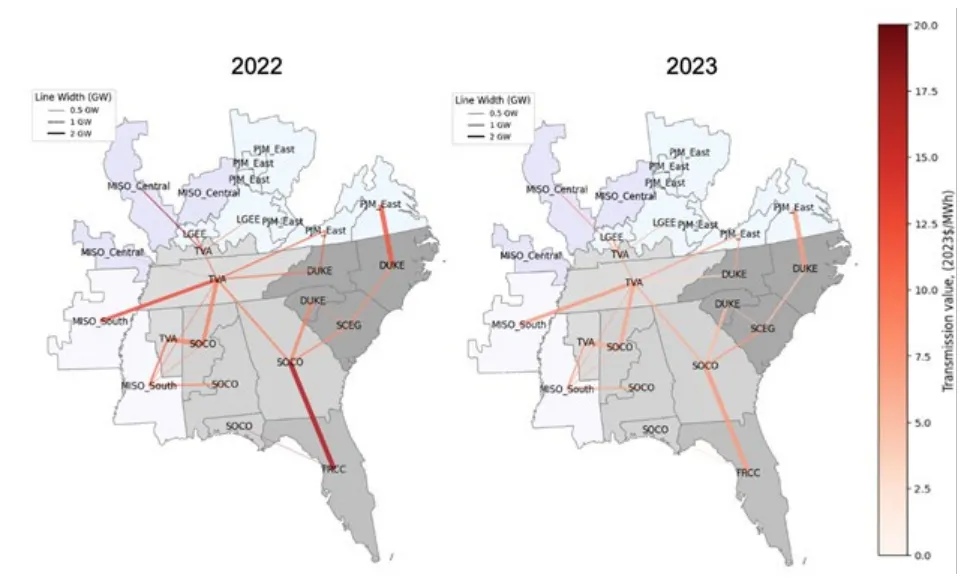
New analysis indicates that the Southeast, which lacks an organized wholesale power market or publicly available LMP data, would benefit from increased transmission capacity with its neighbors by about $10/MWh on average, according to the report.
The three areas in the Southeast with the highest potential transmission congestion value in 2022 and 2023 were interregional links between Southern Co. and Florida, Duke Energy and the PJM Interconnection, and the Tennessee Valley Authority and the Midcontinent Independent System Operator’s southern region, according to the report.
The Southeast is the only U.S. region that has failed to address at least one of the key “transmission needs” the DOE assessed in its report. The four categories of transmission needs are improved reliability and resilience; reduced grid congestion within regions; improved transfer capacity limits between neighbors; and resource adequacy through interregional transfer capacity.
The National Transmission Needs Study — developed every three years — is designed to support regional and interregional transmission planning.
For 2016 through 2024, DOE found that:
- 150 miles of interregional transmission was built annually;
- Incumbent utilities developed 98% of all transmission;
- ERCOT built the most transmission at 2,400 circuit miles;
- PJM’s eastern region spent the most on transmission at $3.5 billion a year; and,
- ISO-NE had the highest load-weighted cost for transmission investment at $9/MWh.
DOE is taking comments on the draft report until Sept 7.