

Devens, Massachusetts-based Commonwealth Fusion Systems has now raised $4 billion in its quest to build the first commercial fusion power plant anywhere in the world, following a fresh infusion of $1 billion that company executives say shows growing interest from risk-averse institutional investors.
Though only ENI and Google allowed their identities to be disclosed, the investors include pension funds, sovereign wealth funds and infrastructure and industrial corporations, said Bob Mumgaard, Commonwealth CEO and co-founder, according to the company’s transcript of the press conference following the July 30 announcement of the funding.
Mumgaard said the money will allow Commonwealth to complete its demonstration reactor and put it on the path toward deploying its first commercial reactor.
“At a time when we need more energy for electrifying everything, fusion is emerging as a next big thing in energy,” Mumgaard told reporters.
Fusion has the potential, like nuclear fission, to produce large amounts of firm power, but with far less hazardous radioactive waste.
After decades of publicly funded research, in 2022, scientists at the Lawrence Livermore National Laboratory in California made a vital breakthrough by achieving fusion ignition for the first time. The lab’s director, Kim Budil, said at the time that commercial fusion was “probably decades” away.
Work has continued since, and fusion startups like Commonwealth are pushing much more aggressive timelines. But experts remain divided over how soon they believe the technology could be commercialized.
Commonwealth, which spun out of the Massachusetts Institute of Technology in 2018, has emerged as a leading player in the fusion space. The company is working toward building a 400-MW plant on land owned by Dominion Energy in Chesterfield County, Virginia – the Fall Line Fusion Power Station – which it aims to bring online in the early 2030s.
Commonwealth has secured some of the permits it needs for the project and has signed offtake agreements with Google and ENI, Mumgaard said, adding that it has also submitted an application to connect to the PJM Interconnection.
‘Energy, density and time’
Commonwealth’s technology is magnetic confinement fusion, said Electric Power Research Institute Senior Technical Executive Andrew Sowder.
The sun’s energy is released by fusion of protons driven together by its gravity. Commonwealth’s donut-shaped superconducting magnets, called a tokamak, similarly hold superheated plasma containing deuterium and tritium that, despite their like charges driving them apart, collide and release neutrons, Sowder said. At a high enough temperature, if the density is maintained long enough, the collision releases energy.
While LLNL’s 2022 ignition was a notable achievement, it was only “scientific” net energy gain because it did not produce enough energy to power the entire fusion process.
In April, the national lab announced it would partner with fusion startup Inertia Enterprises to “inform the industrial-scale development that commercial fusion demands.”
Sowder says scientists and the private sector are working toward meaningful net energy gain, but he declined to speculate about when fusion will achieve it.
“Energy, density, and time are the three variables fusion scientists can adjust,” Sowder said in an interview.
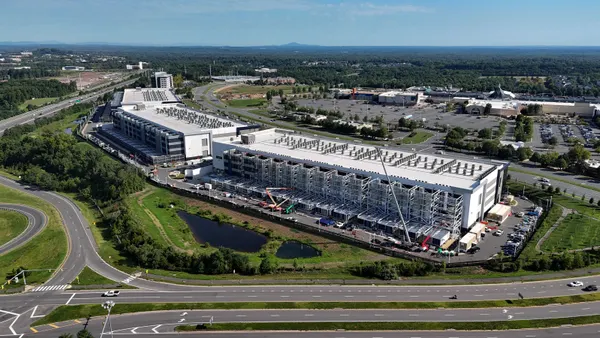
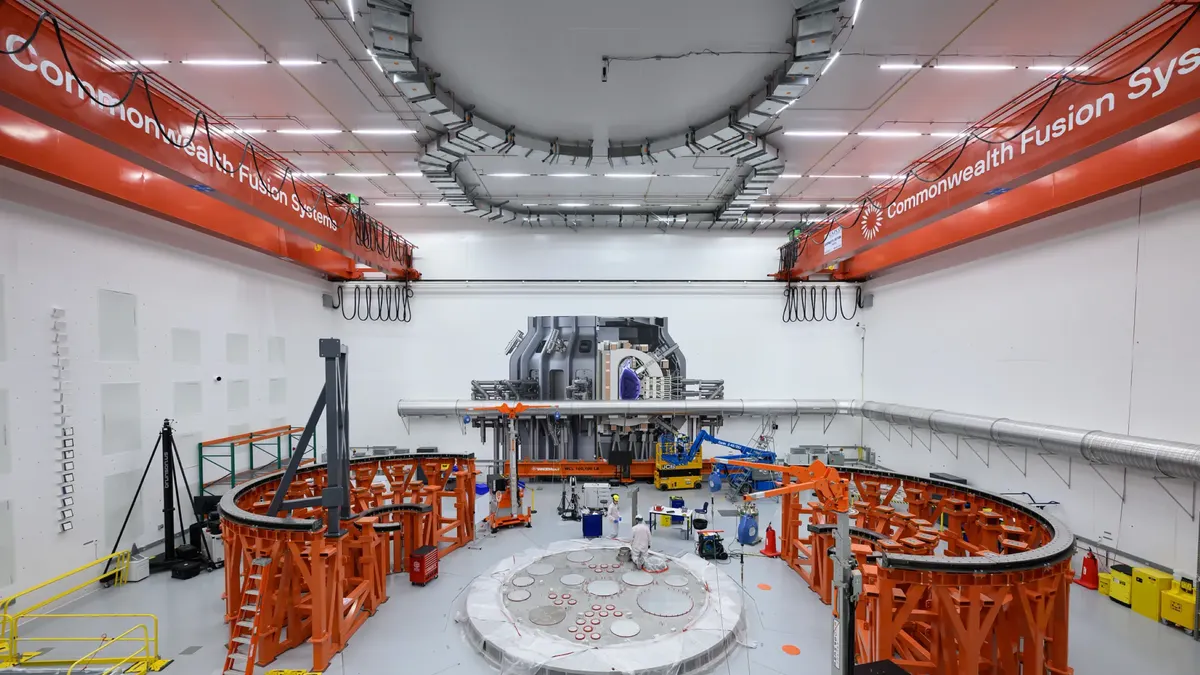
Commonwealth’s latest cash infusion will allow the company to complete its demonstration reactor, SPARC, which Mumgaard said is now “about 80% complete.” He said the company expects to show net energy gain in 2027.
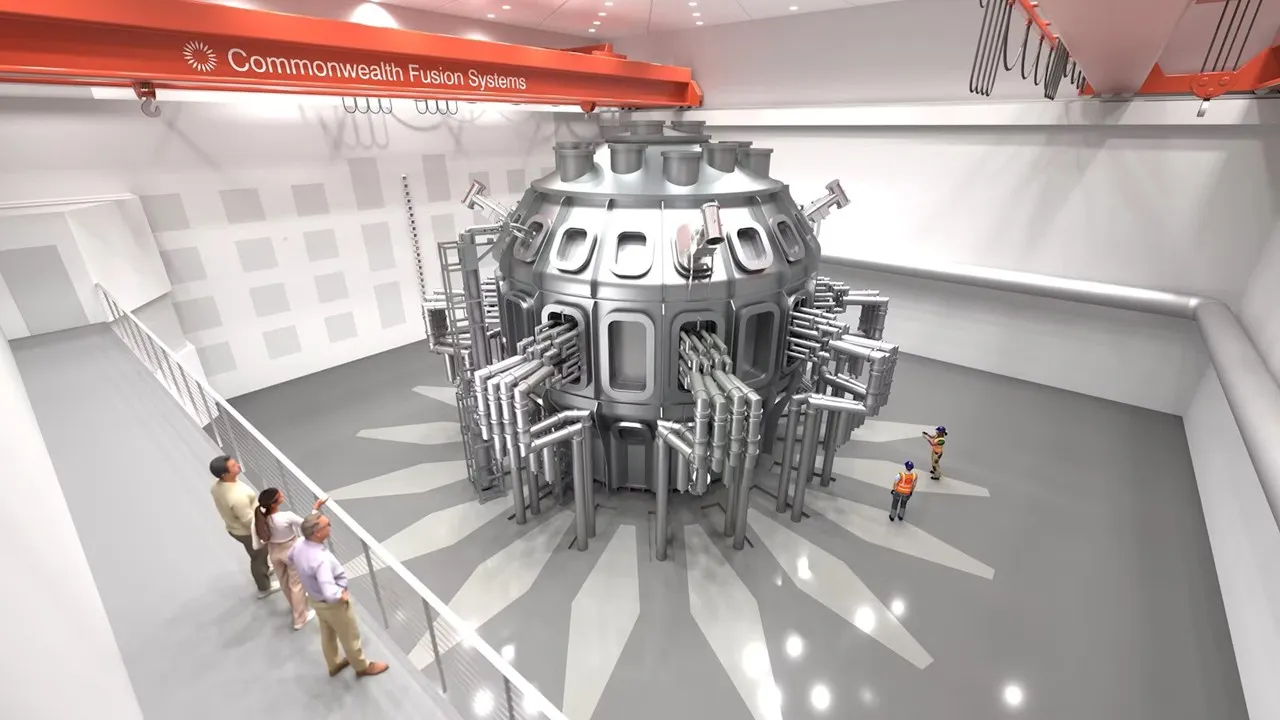
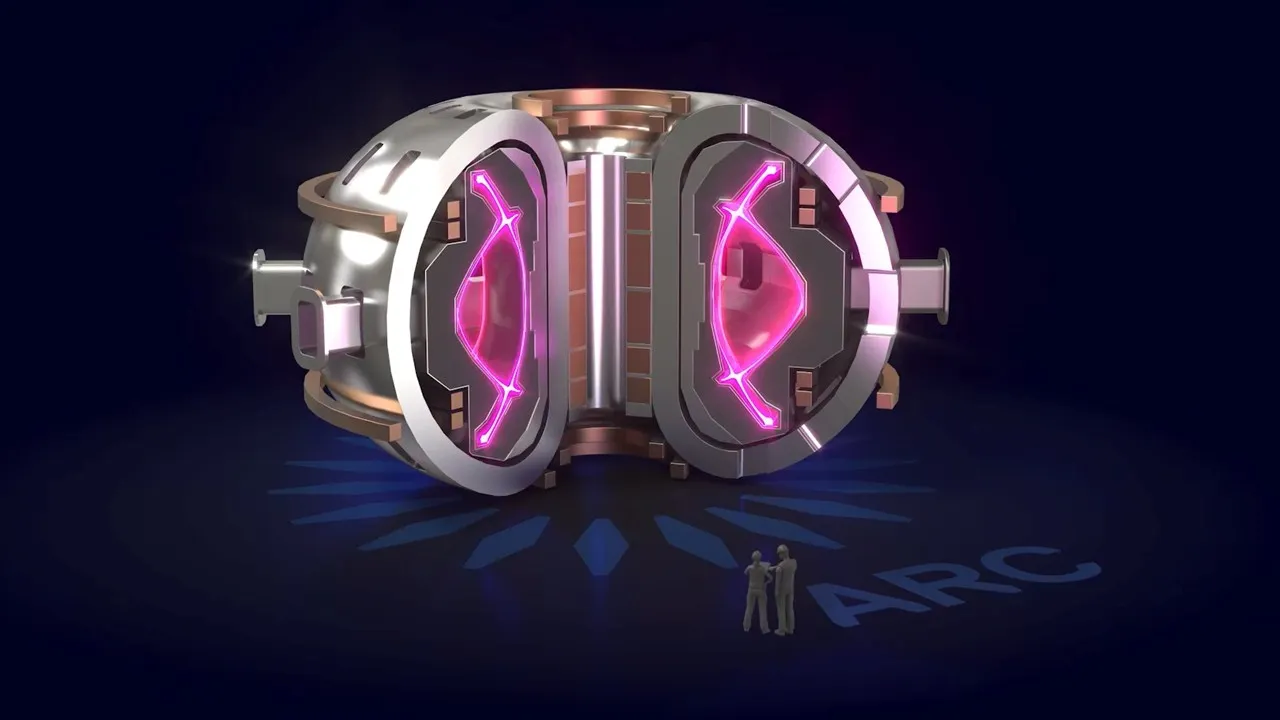
The company plans to take the lessons learned from SPARC and apply them to its next-generation reactor, ARC, which will power its flagship commercial plant in Virginia.
“This funding’s commitments from infrastructure investors shows they could soon be interested in a string of ARC power plants,” Mumgaard said.
That would take more than $1 billion, though not as much as $10 billion, which is “the scale of capital needed to do fusion seriously,” he added.
The utility and the offtake agreements
Dominion has said that in addition to leasing the company the land for the proposed power plant, it is providing non-financial collaboration, including development and technical expertise.
The utility did not respond to Utility Dive’s request for further comment.
Commonwealth company officials told Utility Dive that they were initially unsure whether they would find a utility partner for the commercial reactor because utilities tend to be conservative about unproven technologies.They explored multiple states and regions where there is a demand for low-carbon, firm power, and for each location, it engaged with the incumbent utility to understand the feasibility of interconnecting a new generation source, they said.
The turning point came when Dominion’s executive team visited the SPARC plant in Massachusetts and saw “what is being built and being planned for Virginia,” said Ally Yost, Commonwealth’s senior vice president of corporate development. “They left with a different view of where fusion is going,” and the confidence to enter a joint development agreement in 2024, she recalled.
Following that partnership, Commonwealth signed offtake agreements in 2025 with ENI and Google. Under those contracts, electricity generated by ARC will be sold into the PJM wholesale market through Dominion’s system, while the offtakers will pay for and receive clean energy credits, according to Commonwealth Chief Commercial Officer Rick Needham. He declined to disclose further details of the terms or the credit accreditation process.
Dominion Chair, President and CEO Robert Blue has said ARC generation could help meet the utility’s anticipated 6% annual demand growth. The company recently told investors during a second-quarter earnings presentation that it has 53.8 GW of large loads in “various stages” of contracting.
Dominion has been targeted for acquisition by NextEra Energy in a deal that would create the country’s largest regulated utility company. The companies’ executives have said they anticipate closing the deal by the end of 2027, pending regulatory approvals.
The competition
Currently, the field of potential competitors is small. Type One Energy and the less well-funded Helion are the only other U.S. companies with offtake agreements, according to the Fusion Industry Association 2026 report.
None of the startups have yet proven their technology can achieve ignition, let alone work at a commercial scale.
Type One is building a 400-MW project at the Tennessee Valley Authority’s Bull Run Complex, a former coal plant, with TVA as the offtaker, according to the industry report and public statements by the utility.
Type One says its curving tokamak, called a “stellarator,” may allow more stable reactions and lower energy consumption.
Helion Energy’s 500-MW linear accelerator in Washington state will use magnets to drive two plasma sources toward one another to create fusion, its website reports. It has an offtake agreement with Microsoft for 50 MW in 2028 and an agreement with Nucor Steel, which invested $35 million, for 500 MW when the project is complete, Nucor reported.
Other companies without offtake agreements are still working toward launching their technologies.
General Fusion and TAE Technologies are the only publicly traded fusion companies. General Fusion says it expects its magnetized target fusion machine to produce net energy gain in 2035, the industry report said.
TAE Technologies says its Field-Reversed Configuration linear fusion reactor could achieve net energy gain in a pilot project by 2031.
The challenges
During a Reddit “ask me anything” virtual event last month, Commonwealth scientists said they are working through immediate scaling challenges facing SPARC and ARC. To reduce costs, they also need to optimize their supply chain and development ecosystem, find the most efficient tokamak materials, and fine-tune the shape of the plasma, they said.
EPRI’s Sowder sees another critical issue.
In Commonwealth’s tokamak, tritium released at high temperature by collisions of neutrons with lithium can escape the plasma, he said. It requires a “blanket” to capture and use the heat from the escaping particles to generate electricity by conventional methods, he added.
“Blanket technology is immature globally,” but “it can be done at scale,” Sowder said. It is a critical piece of the fusion puzzle because “extraneous” tritium can create handling and other difficulties, he added.
Jon Hillesheim, Commonwealth’s principal scientist, acknowledged the challenge during the Reddit event.
The “blanket must be thick enough to capture energy from the high-speed neutrons that fusion produces and to shield the rest of the machine from them.”
On July 1, Commonwealth announced it had joined LIBRTI, the United Kingdom’s national fusion laboratory’s world-leading program to test new tritium blanket technologies, said Yost.
That will help meet its plan to demonstrate the blanket technology in parallel to completing SPARC so there will be experience and proof of execution before ARC is built, Yost said.
The blanket problem is particular to some types of fusion technology, but, Sowder said, they all face challenges.
“All the approaches to fusion need to be built, demonstrated, and operated to failure,” Sowder said.”Until there is actual evidence of net energy gain from a demonstration, none can be called a winner.”