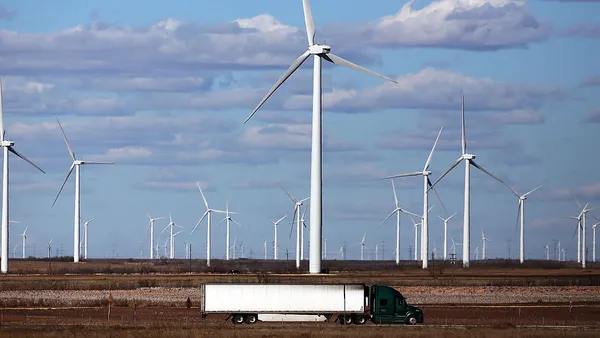
U.S. orders for wind turbines reached 2.8 GW in the second quarter of this year as developers raced to commence construction on projects before July 4, 2026, tax credit deadlines, according to a Monday report from Wood Mackenzie.
Meanwhile, the U.S. installed about 5 GW of onshore capacity in the second quarter — most of it as part of the 3.65 GW SunZia project in New Mexico, the country’s largest such project to date, it said.
The One Big Beautiful Bill Act signed into law by President Donald Trump last year moved up the deadlines for wind and solar projects to preserve their eligibility for the 45Y clean energy production tax credit and the 48E clean energy investment tax credit.
Projects that missed the commence construction deadline this summer will have to be placed in service by December 31, 2027 to qualify, while projects that met the July 4 deadline have until December 31, 2030.
“Policy is the variable with the greatest impact on wind installations,” said Wood Mackenzie analyst Tyler Gifford in a release about the report. “With tax credit expirations on the horizon, developers are prioritizing projects that can be operational by 2030, so the five-year onshore wind installation outlook remains stable.”
Wind power’s forecast for upgrades to existing farms “pulled back 1 GW quarter-on-quarter due to fewer repower equipment orders than expected,” the report said, “but tax credits continue to incentivize fleet renewal alongside opportunities from increasing decommissioning through 2030.”
Overall, “the U.S. wind industry remains on course to add 39 GW of onshore new-build capacity by 2030,” the report said. “More than half of the project pipeline from 2026 to 2028 is already operating or under construction, limiting near-term risk.”
However, Wood Mackenzie noted that offshore wind development was limited to 5 GW delivering within the next two years “as unfavorable policy limits new developments.”
Those unfavorable policies include Trump’s executive order pausing new offshore wind lease sales in federal waters. The administration has also struck deals with offshore wind developers to buy back leases previously auctioned for new offshore wind development, and continues to try to block development of offshore wind farms under construction in court.
Another policy headwind is the fact that the American Society of Civil Engineers is expected to publish guidelines next year requiring wind turbines in tornado-prone areas to meet certain design requirements, which will increase costs for wind energy projects, the report said.