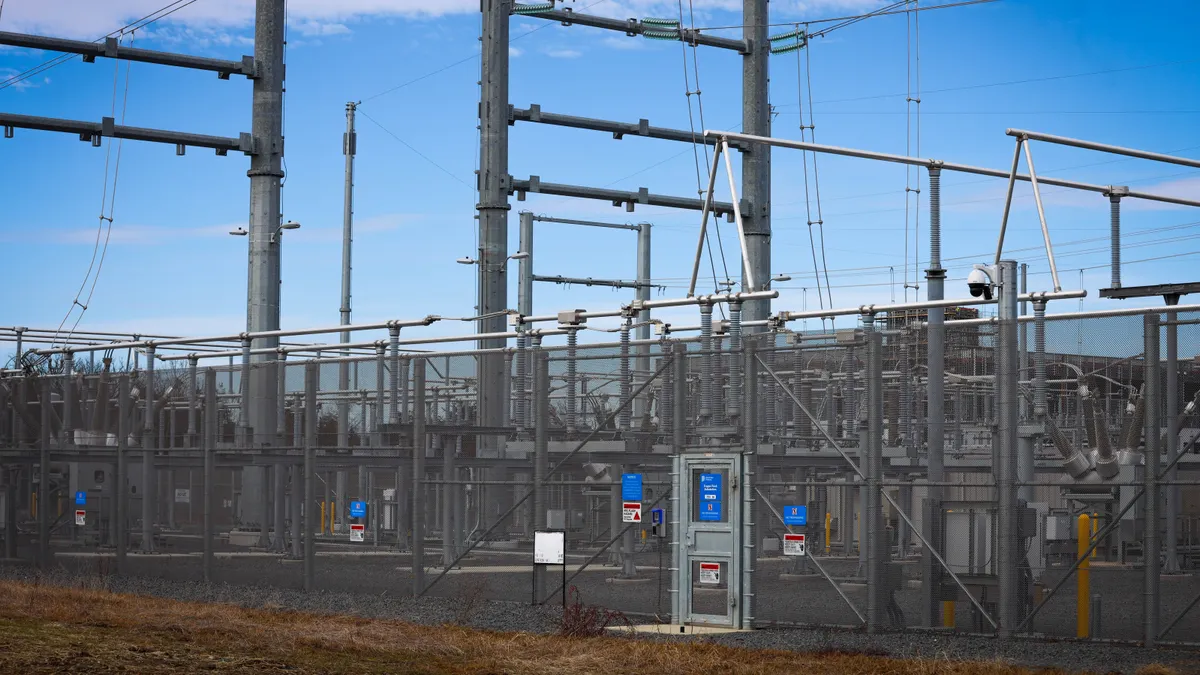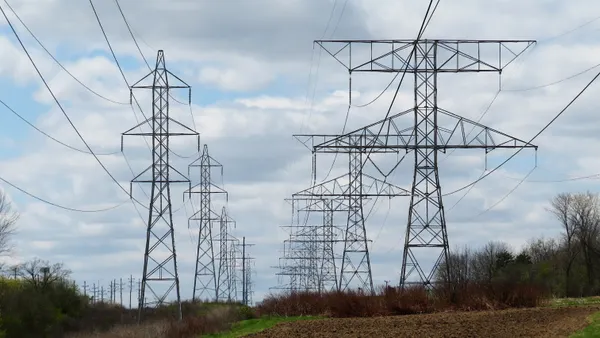

There is little debate about the transmission system's importance in meeting America’s rapidly growing electricity demand. Long-term planning for new infrastructure to address increasing demand and more frequent extreme weather calls for tools and methods that better accommodate today’s electric system and the uncertainties in its evolution. A lack of needed high-capacity lines, growing congestion, rising costs and delays can result from the difficulty to effectively plan for the future electric system.
The Federal Energy Regulatory Commission’s (FERC) Order 1920 aims to ensure the long-term planning needed to develop and build the necessary transmission infrastructure takes place regularly and consistently, and considers a rigorous set of scenarios that reflect the full range of pressures shaping the grid’s future, from data center load growth to the increasing penetration of renewable generation.
Finalized in 2024 after three years of development and stakeholder feedback, FERC Order 1920 requires transmission operators to:
- Conduct long-term regional transmission planning over a minimum 20-year horizon
- Update plans at least every five years
- Use a plausible and diverse set of at least three scenarios using the best available data
- Consider the use of grid-enhancing technologies and the potential to “right-size” aging infrastructure rather than replace it
Planning decisions that are transparent, explainable, and defensible
While FERC Order 1920 mandates rigorous, wide-ranging long-term planning, it also represents a fundamental transformation in the planning activities expected to produce results. Instead of internally focused exercises designed to support specific operations, planning under FERC Order 1920 includes an external accountability standard. That means transmission plans must be transparent, assumptions must be traceable and if regulators, states and other stakeholders involved in planning question a finding or recommendation, planners need to be prepared to explain how and why they reached a conclusion.
Put more simply, FERC Order 1920 demands that transmission system planning recommendations and decisions be defensible. “Defensible to me means you’re able to go in front of stakeholders not only with a verified and validated plan that a transmission project is going to meet the system’s needs economically, but with the best impact on reliability and within the policy goals of the states involved,” said John Meyer, who worked at the New York Independent System Operator before joining GE Vernova’s Consulting Services as technical director. “You also need to have solid rationale on what the results indicate, and clear conclusions that can be drawn from many, sometimes diverse, long-term scenarios.”
Scrutiny and defensibility are now fully baked into the regulatory framework. Traditional tools and processes make it challenging to clearly and efficiently communicate the data and assumptions behind planning decisions. That’s because transmission planning typically involves discrete workflows for economic analysis, reliability assessments and policy evaluations. Each of these workflows is often supported by its own tools, datasets, and analysts. Those workflows must eventually be reconciled, which inevitably involves approximations and manual translations, increasing the risk of errors. The result: plans that may be consistent within individual workflows but lack a holistic coherence that is straightforward to explain and defend.
A planning platform built for defensibility
Meeting FERC Order 1920’s requirements demands a planning infrastructure capable of managing complexity, maintaining consistency across distinct yet interdependent workflows, and ultimately producing results that withstand scrutiny from regulators, states and other stakeholders.
GE Vernova’s PlanOS software platform and consulting services are designed to do just that. The foundation of the integrated planning PlanOS allows is a common data environment. This allows production cost modeling, resource adequacy analysis, capacity expansion, and power flow studies to all be run using a single, shared model of the power system. This eliminates the need to manually reconcile separate data sets used by different planning tools. The use of a single, shared model vastly improves visibility into the data, the assumptions used and any changes that occurred between studies.
There’s another important advantage that flows from different workflows sharing a common foundation: the ability to do genuinely integrated analysis. For example, planners can determine new asset siting and calculate resource adequacy and nodal production cost within an expansion analysis itself, rather than separately, enabled by reimagining the system with a common data model. A more holistic approach allows simultaneous assessment of economics, reliability and policy, rather than separate workflows followed by reconciliation.
That integration is especially important when addressing FERC Order 1920’s requirement to perform scenario analysis across a 20-year planning horizon. For instance, system operators running multiple scenarios will typically produce widely divergent future generation mixes. This poses a dilemma for decision-makers. Which scenario should drive investments?
PlanOS addresses this uncertainty with a stochastic capacity expansion feature that develops multiple plausible futures, assigns probability weights to each, and then optimizes them simultaneously rather than sequentially. A traditional capacity expansion study builds a plan around a single scenario. By contrast, a stochastic analysis considers a range of plausible futures to identify the best action to take right now. “The goal is to identify the best possible step to take right now that will eventually meet all the economic, policy and other requirements across all the plausible futures rather than showing only edge case outcomes,” Meyer said.
Where software provides the structure, consistency, and traceability that FERC Order 1920 requires, GE Vernova’s Consulting Services delivers an essential layer of judgment and industry expertise. That means helping design assumption governance frameworks, stress testing results before they go in front of regulators and translating planning outcomes to be clear to all planning stakeholders.
Formal FERC Order 1920 compliance deadlines will phase in over the next few years. But what the order has already done is force a change in planning expectations, particularly about how planning decisions get made and communicated. Embracing the tools and processes FERC Order 1920 requires isn’t just about compliance. “When the stakes are this high, defensibility isn’t optional,” Meyer said. “It’s completely necessary.”