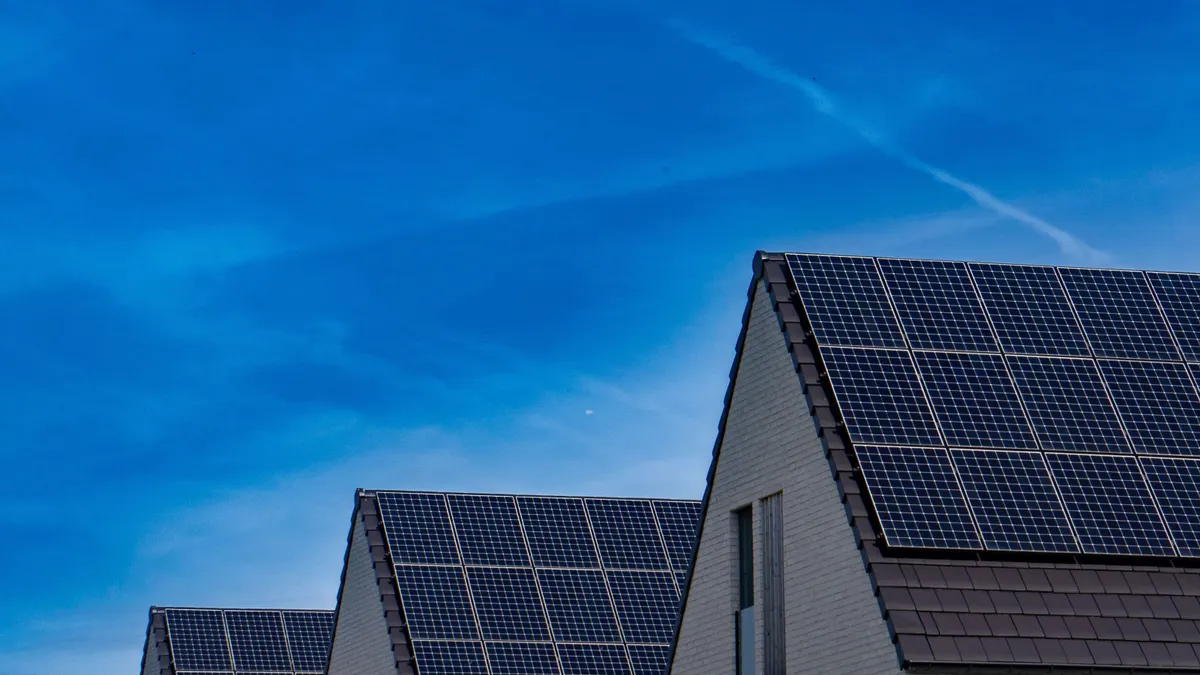

A homeowner in Australia named Sam recently opened his electricity bill and found he had over $700 AUD ($500 USD) in credit. He had solar panels, a home battery, an EV and he was being paid for the flexibility his system gave the grid.
Stories like Sam's are becoming ordinary in Australia. They point to something the United States (U.S.) energy sector should study closely as it works out how to meet surging data center electricity demand.
How Australia got here
Australia leads the world in distributed energy adoption: 990 watts of solar per person, the highest rate anywhere. 40% of houses have rooftop solar, totaling 28.3 GW, more than the country's entire coal fleet. Nearly 5% of homes have batteries, with over 400,000 installed between July 2025 and June 2026 alone.
This is the product of two decades of deliberate policy. Rooftop solar incentives launched in the early 2000s and evolved into today's small-scale Renewable Energy Scheme, cutting 30% to 40% off installed system costs. In 2025, the federal government launched the Cheaper Home Batteries subsidy, since been expanded to $7.2 billion AUD (over $5 billion USD), targeting two million batteries by 2030. It covers roughly 30% of a battery's cost, stacks with state incentives and lets owners earn ongoing revenue through virtual power plant (VPP) programs.
Why it worked
Australia's National Electricity Market has run some of the highest and most volatile prices in the world for 20 years, swinging from negative, meaning customers get paid to consume, to $23.20 AUD/kWh when supply is tight (over $16/kWh USD). A battery absorbs cheap solar and discharges it when prices spike. Since the policy push took hold, solar costs have fallen more than 90% (and 60% in the last five years), battery costs are down roughly 50% in a decade. And, in the state of New South Wales, retail electricity prices dropped 10.7% as of July 1, 2026, the first decline in five years. Companies like Amber Electric let customers trade directly on price volatility, which is how Sam ended up with a credit.
Where the U.S stands
Roughly 9% of U.S. homes have rooftop solar and less than 1% have a battery. Hardware costs are a major factor: solar runs about $3 USD/watt here versus under $1 USD/watt in Australia and batteries cost roughly $1,000/kWh installed versus $500/kWh there.
Further, the U.S. lacks mechanisms to value the flexibility these devices provide. A battery or smart thermostat that shifts load away from peak hours can defer a new peaker plant or transmission upgrade, but most U.S. rate structures aren't built to price that in. Fixing this, alongside incentives that lower hardware costs, is the biggest lever available to protect Americans from electricity prices climbing over 10% year on year nationally and over 15% in several states. Octopus Energy's Powerstore program in partnership with Lunar Energy and companies like BASE Power are already getting distributed devices into American homes; the question is how fast that scales.
The data center opportunity
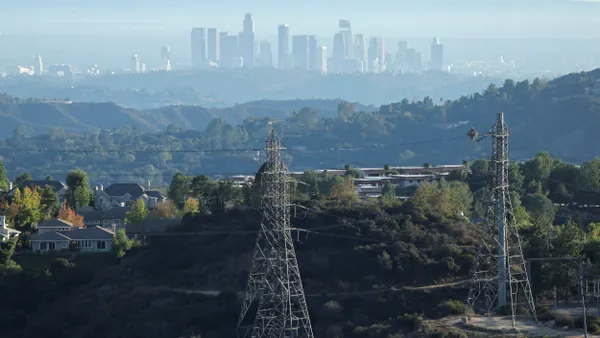
This is where the U.S. has an underappreciated opening. Data center demand is set to climb sharply over the next decade and most utility planning rooms default to large, centralized new builds: gas plants, high-voltage lines, years-long interconnection queues.
Australia is preparing for data center demand expected to quadruple over the next decade with distributed resources instead. Solar and batteries there reduce peak demand and defer infrastructure spending that would otherwise take years to permit. VPPs aggregate that capacity into something grid operators can rely on for balancing, while paying homeowners directly.
Applied to U.S. data centers, this model offers three advantages: faster timelines than the permitting and interconnection queue allows, local community support driven by lower bills and resiliency (if hyperscalers help fund deployment near their sites), and a cheaper way to firm up grid capacity by using grid infrastructure more intelligently. Matching DER locations with data center load remains a real challenge and a two-way grid requires utilities to rethink entrenched operating models. Australia is already working through these problems, offering the U.S. a head start.
What to do now
Two moves would help most. States should consider a battery (and V2G) incentive modeled on Australia's federal subsidy, paired with clear VPP compensation rules so homeowners have a reason to participate. Regulators should push utilities to treat DER flexibility as a recognized part of rate design and interconnection planning, built in from the start rather than added later.
Australia spent 20 years proving that distributed solar and batteries can lower prices, stabilize the grid and give homeowners a stake in the energy transition. With data center demand arriving now, the U.S. has a chance to compress that timeline by treating DER as core infrastructure planning rather than a side program.