Dive Brief:
- Despite trade barriers and project cost inflation, the U.S. is set to deploy 30% more energy storage capacity over the next 10 years than expected just six months ago, BloombergNEF said Thursday. BNEF forecasts cumulative U.S. deployments of 213.9 GW by 2030 and 434.4 GW by 2036, BNEF senior energy storage analyst Isshu Kikuma told Utility Dive.
- The latest edition of the energy consultancy’s semiannual energy storage outlook sees global deployments reaching 3,098 GW/11,106 GWh in 2036, roughly 10 times today’s levels. In the U.S., near-term drivers include favorable economics for colocated storage and renewables and data centers’ growing appetite for both behind-the-meter and front-of-meter capacity, BNEF said.
- BNEF’s report landed amid signs of continued momentum for the U.S. energy storage industry. On Thursday, Google said it would expand by a factor of 10 the battery-supported virtual power plant it plans to deploy with Voltus in the PJM Interconnection, to more than 1 GW. The same day, the sodium-ion battery manufacturer Peak Energy said it closed $108 million in financing from General Motors and other backers as it works to deploy nearly 5 GWh of capacity by 2030.
Dive Insight:
Energy storage deployments have far outpaced solar capacity additions in recent years, with the global cumulative installed solar-to-storage ratio falling from 94:1 in 2016 to 7:1 in 2026, BNEF said Thursday.
BNEF sees the capacity ratio stabilizing at 4:1 in 2030, and annual deployments remaining steady at 3:1 thereafter, as the energy storage industry matures.
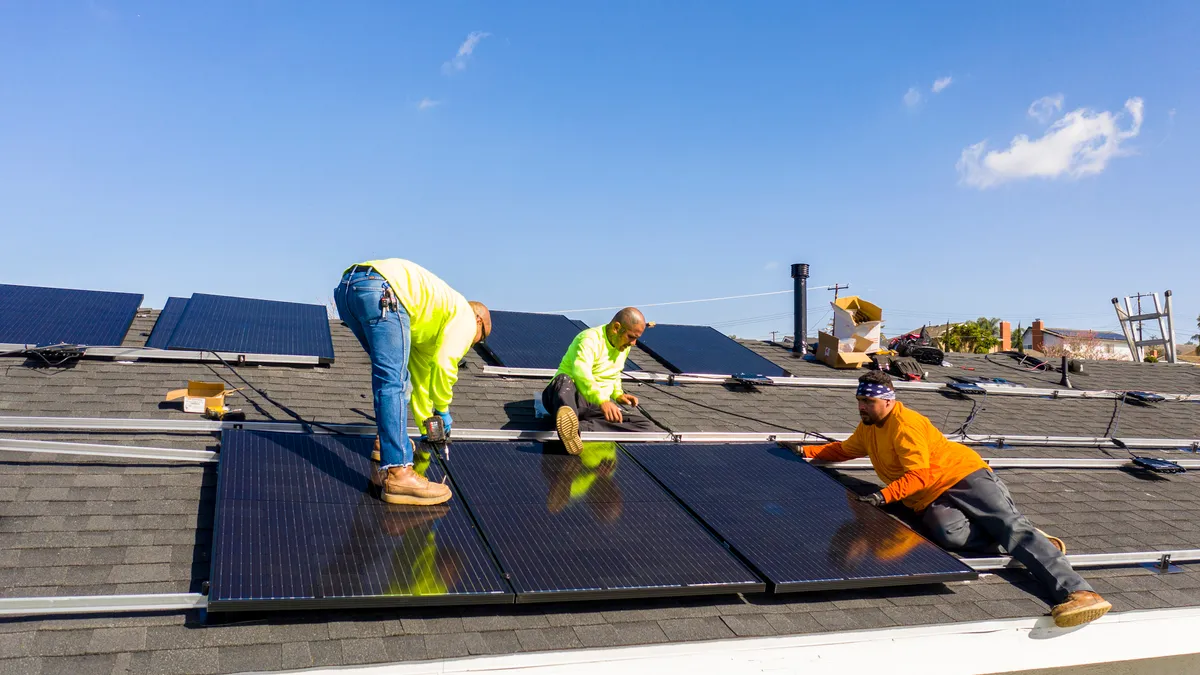
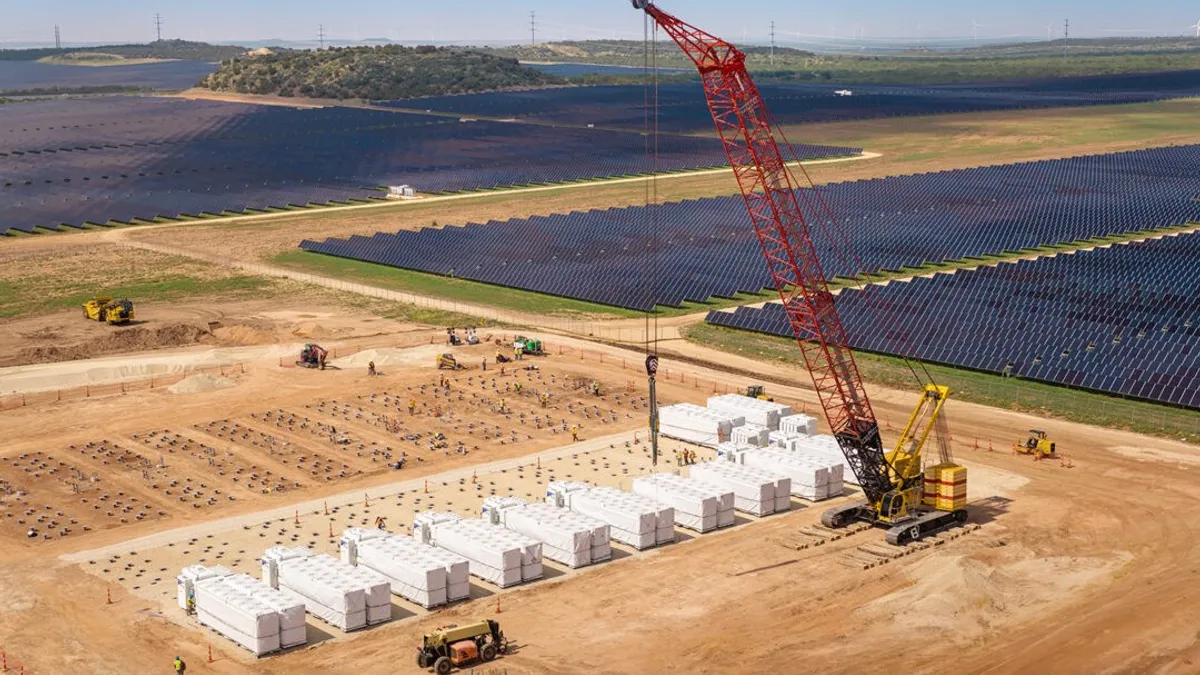
Much of the new solar and storage capacity is colocated. The United States had installed 20.7 GW/66.4 GWh of energy storage projects colocated with 41.3 GW of solar by the end of 2025, about 30% of total colocated solar-plus-storage capacity, according to BNEF. Some 4 GW of storage was colocated with solar in the U.S. in the first nine months of 2026, the group said.
The One Big Beautiful Bill Act, which extended federal tax credit eligibility for energy storage through 2035 while sunsetting solar eligibility later this decade, will support a pipeline of 83.7 GW/166.1 GWh of energy storage to be paired with 149.2 GW of solar, BNEF said.
The robust U.S. pipeline comes despite the Trump administration imposing trade barriers BNEF characterized as world-leading, including import restrictions on foreign-made power conversion systems and recent broad limits on imports of bulk power system equipment. The combined duty on stationary storage batteries imported from mainland China is 40.9%, according to BNEF.
“The US has been making the most aggressive [protectionist] efforts by favoring the domestic battery storage industry while restricting the use of supply chains involving mainland China through the One Big Beautiful Bill Act and other policy measures,” the report said.
Though still a relatively small share of overall U.S. battery deployment, on-site data center energy storage is growing quickly, with 4.9 GW/7.4 GWh expected this year — up from 500 MW/1.4 GWh in 2025, BNEF said.
The group sees on-site data center energy storage deployments reaching 6.3 GW/8.4GWh in 2027 and continuing through the decade thanks in part to large-scale deployments like the 2.6-GW battery array NextEra Energy plans to build alongside a 2-GW gas-fired power plant at a $100 billion proposed Brookfield Asset Management computing campus in Kentucky.
Multiple battery suppliers have announced firm commitments from data center customers or utilities serving them this year, BNEF said. Fluence Energy inked a $300 million deal with a data center operator for behind-the-meter batteries earlier this year, while Canadian Solar subsidiary e-Storage said in March it would deliver 500 MW/2.5 GWh of energy storage to “a major U.S. utility” in 2027 to support data center grid infrastructure.
Cumulative data center energy storage could reach 36 GW/66 GWh in 2036, much of it on grids overseen by the Electric Reliability Council of Texas, PJM and the Midcontinent Independent System Operator. Data centers in PJM are more likely to use energy storage for load shifting than behind-the-meter gas due to tighter restrictions on power plant emissions in the region, BNEF said.
Though lithium-iron-phosphate will remain the dominant chemistry for new energy storage deployments over the next 10 years, sodium-ion alternatives will begin to eat into its market share, reaching 9% penetration by 2036, BNEF said. Sodium-ion batteries can be passively cooled, reducing parasitic energy load, and may be more durable than lithium batteries over a 20-year service life, proponents say.
Led by Google, data center operators are experimenting with alternative chemistries that can discharge power for longer than lithium- or sodium-based batteries, including a proposed 10 MW/100 MWh zinc battery in West Virginia and a 300 MW/30 GWh iron-air battery in Minnesota. But those efforts are too early to include in deployment forecasts, BNEF said.