Dive Brief:
- Several hundred Central Texas property owners along the route of a proposed transmission line say they were not properly notified of public meetings and route changes, despite their land now being included in the project’s footprint, according to a petition filed with the Public Utility Commission of Texas.
- The landowners’ request calls for the PUCT to pause the case while concerns about public notice and participation are reviewed and broader questions about the need for and timing of this level of transmission expansion are reconsidered.
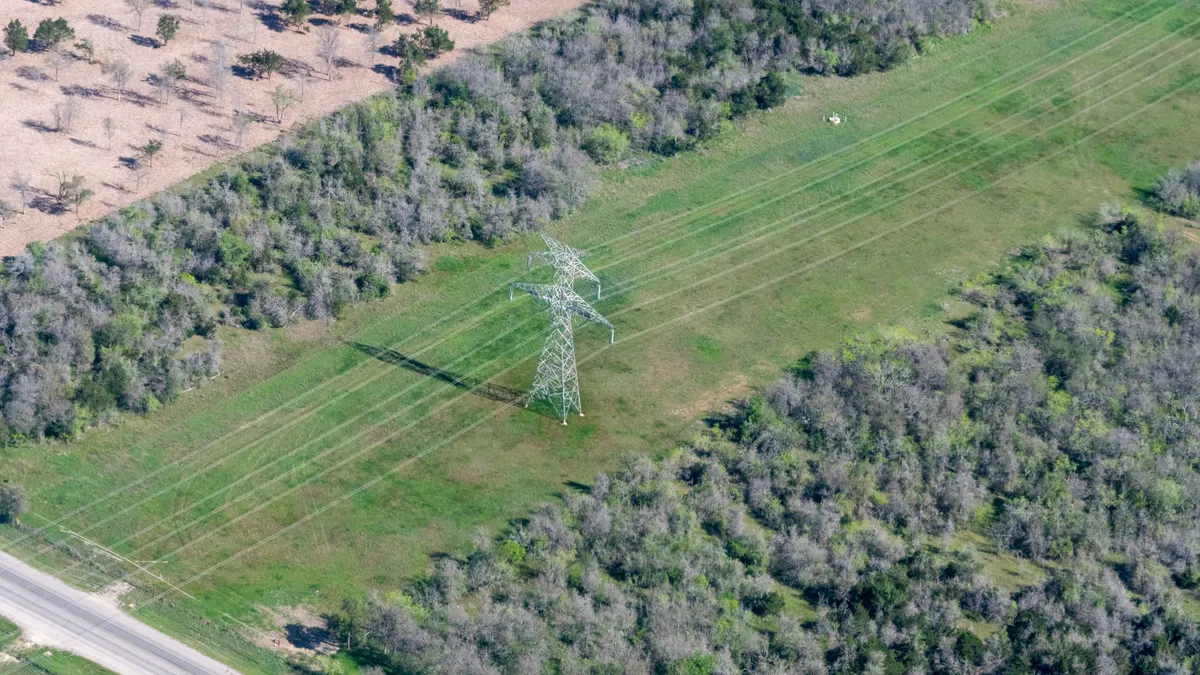
- The proposed Bell County East to Big Hill 765-kV Transmission Line Project is part of the state’s high voltage transmission buildout intended to address projected load growth in the Permian Basin region and support electric service in the area, according to filings and utility statements.
Dive Insight:
A filing before the PUCT tied to Electric Reliability Council of Texas’ Permian Basin reliability planning alleges utilities including Oncor Electric Delivery Co. and the Lower Colorado River Authority failed to notify affected landowners after changes to the project’s route were made.
“Over 1,300 directly affected property owners were denied the essential right to attend a public meeting where they could voice their concerns and express their community values regarding this significant development,” landowners said in a May 26 motion.
In interim briefs filed Friday, landowners said Oncor and LCRA had not demonstrated a concrete need for about 400 miles of new route segments and argued that project changes, along with deficient community-impact analysis and ownership records, undermined the proceeding.
“I was notified of this project after the application was already filed and after earlier public meetings had taken place, and since then I’ve been forced to navigate a complex legal process without any legal representation, while large utilities with extensive resources move forward,” said John Burrow, a Salado landowner.
Oncor said it began public meetings in summer 2025 and that landowner feedback led to route modifications reflected in filed applications. The company said it has responded to thousands of public comments but maintains the lines are needed for long-term grid reliability.
“Load in West Texas, specifically, is growing much faster than local generation is able to provide, and even if additional [local and on-site behind-the-meter] generation resources come online, they’re all still needed to maintain a reliable system for Texans,” said Andrew Clark, an Oncor spokesperson, in an interview.
PUCT staff recommended the 765-kV lines based on a 2024 ERCOT study, citing their ability to move more power over longer distances with fewer losses. Despite higher upfront costs, planners said the lines are better suited for the region’s expanding load.
“Public input is critical in the utility commission’s decision-making process. Landowners, community residents, business owners and local leaders all bring important insights and personal perspectives to the commission when considering transmission line applications,” PUCT spokesperson Rich Parsons said in an email to Utility Dive.
State law requires utilities to submit multiple route combinations for review, and the PUCT will make the final determination based on landowner input and proposed alternatives.
Opposition has since intensified after state Rep. Brad Buckley, R-Salado, and 42 other Texas lawmakers filed an amicus brief supporting the American Stewards of Liberty, a property rights advocacy group. The legislative coalition is urging the PUCT to postpone routing decisions until a broader review of the 765-kV buildout is completed, arguing it could cost ratepayers billions and disproportionately affect rural property owners.
Landowners are seeking to delay or pause the project until the January 2027 Texas legislative session so lawmakers can review the scope, costs and land impacts of the project. Evidentiary hearings took place June 8-12. A final PUCT decision is expected in September.
Correction: This story has been updated to correct a quote by Oncor spokesperson Andrew Clark regarding the need for additional transmission lines.