Dive Brief:
- More than three-quarters – 76% – of Americans want elected officials to exercise stronger utility oversight, even though they appear to have little faith in those officials’ ability to prevent rising power bills, according to a new poll and report from consumer advocacy group PowerLines.
- PowerLines said only 29% of respondents said they trusted their state governments to protect their interests in dealings with utilities, down from 38% in a similar poll last year. Public sentiment is souring as U.S. utilities filed $9.4 billion in rate increase requests impacting 81 million people just in the first quarter of this year, according to PowerLines.
- David Springe, executive director of the National Association of State Utility Consumer Advocates, which was not involved in the report, said that utilities and elected officials are in a tough spot, with industry estimates projecting more than $1 trillion in utility spending over the next five years. “The big spending is just getting started and hasn’t hit the utility rate case cycle yet,” he told Utility Dive.
Dive Insight:
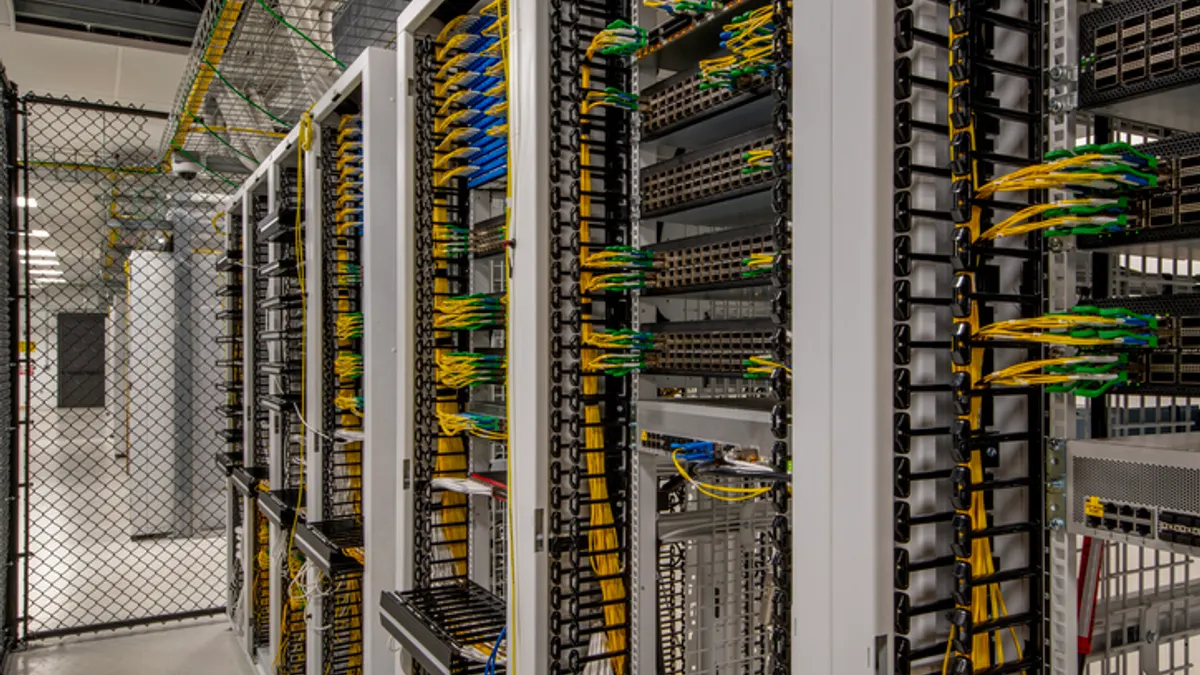
Although the reasons for rising electricity costs vary by region, nationally, much of utility spending is being driven by surging demand for power for artificial intelligence data centers.
“It’s pretty fair to say that large load demand is making everything else we need more expensive,” Springe said, adding that prices for gas turbines and transformers are rising as data center companies compete with utilities for scarce supply.
PowerLines’s polling revealed limited understanding among ratepayers of how utility businesses operate. Fifty-eight percent of respondents said they did not fully understand what drives their monthly bills. Respondents also grossly overestimated the reach of public power entities and drastically underestimated the reach of investor-owned utilities, which PowerLines said serve 72% of U.S. consumers. Another 28% didn’t know what kind of utility services their home.
Where rates are rising and why have been the subject of much study recently, with results showing complex regional factors. The PJM Interconnection's independent market monitor has said data centers drove huge capacity price increases in the country’s largest grid. In California, sharp price increases have been linked to wildfire costs.
The complexity of the problem — that no single factor is responsible for rising rates, and no single solution can bring them down — compounds the challenge for elected officials, regulators and utilities themselves, Springe said.
“There is a limited range of options that politicians have that can quickly change affordability in a meaningful way that a consumer can see … [a]nd it’s very difficult to communicate what any proposed changes may actually mean to a consumer in terms of bill changes,” he said.
Kent Chandler, former chair of the Kentucky Public Service Commission and nonresident senior fellow at the R Street Institute, a center-right think tank, said “inflation fatigue” can lead ratepayers to “feel” their bills are going up even when they aren’t. One 2025 study from the Lawrence Berkeley National Laboratory found that overall retail electricity prices fell in 31 states from 2019 to 2024 when adjusting for inflation.
Still, “as long as overall inflation occurs, utility rates are going to be in the news” unless utilities voluntarily pause hikes, Chandler told Utility Dive in an email.
PowerLines’ poll was conducted by Ipsos KnowledgePanel and surveyed 2,045 American adults and 1,912 electric ratepayers. It found that 68% of respondents’ gas or electric bills increased over the past year, 77% expect the increases to continue and 80% feel “powerless” about it, the group said.
PowerLines’s analysis of requested utility bill increases divided the United States into four broad regions.
Utilities in the South region, stretching from Delaware to Texas, made $2.7 billion in rate increase requests affecting 17.3 million customers — the highest per capita impact of any region. At $4.4 billion in increase requests affecting 44.3 million customers, the West region had the highest cumulative bill impact.
Within the South, the $912 million incremental rate request in Georgia was the highest requested increase in absolute terms of any state by far, according to the report.
Oklahoma came in second in the South region with $597 million in incremental requests, followed by South Carolina with $436 million, according to the report. Ratepayers in those less populous states would see greater individual bill impacts than those in Georgia if regulators approve the requests.
The Southern Alliance for Clean Energy, another utility watchdog, said in a report earlier this year that large utilities in Georgia, Alabama, Florida, Mississippi and other southeastern states underinvest in energy efficiency programs despite ample “low-hanging fruit” like home weatherization incentives.
Sour public sentiment around utility rates and regulation extends well beyond the southern U.S., PowerLines found. Only 16% of poll respondents across all regions said their utility puts customers’ interests ahead of its own, while 29% cited “a lack of transparency around costs” as the top concern with their utility.
The poll findings may not be news to utility leaders.
S&P Global, a market intelligence firm, said in a March report that mentions of “affordability” on investor-owned electric utilities’ earnings calls have increased 10-fold over the past five years. The same report called electricity affordability “a major obstacle to electrification, digital infrastructure growth and the broader energy transition.”
Chandler said utilities’ and public officials’ present predicament is a modern example of the timeworn political cliche: “If you’re explaining, you’re losing.”
“Trying to explain what [the PJM Interconnection] is, why its prices went up, how that affects retail prices, why rates would have gone absent intervention, etc. are all cold comfort for customers who feel their bills are going up,” Chandler said.
Chandler’s unsolicited advice to utilities: Talk less and do more.
“Utilities would be well-served to publicly show how they're efficiently or cost-effectively serving system needs, rather than just saying they are, including [by] conducting and making public analyses on least-cost solutions to pressing and prioritized needs,” he said. “Customers aren’t asking for hollow public relations jargon, they’re looking for confidence that utilities are good stewards of their money.”
Correction: This story has been updated to correct the number of states where electricity prices fell between 2019 and 2024.