Antonio Baclig is CEO of Inlyte Energy, which develops iron-sodium battery technology. Ben Kaun is Inlyte chief commercial officer and Jon Wellinghoff is a former chairman of the Federal Energy Regulatory Commission and a member of Inlyte’s advisory board.
In October, during what is supposed to be a slack season for the grid, when generators are taken offline for maintenance, a spell of unseasonable fall warmth prompted the U.S. Department of Energy, at PJM Interconnection’s request, to issue an emergency order to avoid blackouts. The event is yet another indication of the strain on grids from demand growth from data centers.
But the Oct. 13-16 event also reveals a crutch that is increasingly being leaned on during grid stress, which may be an unwelcome surprise for communities living next to data centers: the diesel generators that are installed for emergency backup. The DOE’s 202(c) order, consistent with similar orders begun this year around Winter Storm Fern, authorized PJM to direct backup generation at large loads such as data centers to run. Earlier this year, on July 2, as an intense summer heat dome settled over the Mid-Atlantic, PJM recorded its highest-ever unrestricted demand, reaching 168 GW. In Northern Virginia’s Data Center Alley, utility executives said they came within minutes of needing to call on the vast fleets of backup generators installed at data centers to keep the system supplied.
This is a remarkable development. For decades, those backup generators had a simple job: If the grid fails, keep the data center running. Now, as electricity demand grows faster than it has in decades and extreme weather increasingly tests the grid, the generators themselves are beginning to look like a potential source of grid capacity.
That may seem expedient. But this development is happening at the same time as the public backlash against data centers, seen in last week’s mid-term election results, is prompting states to impose requirements for data centers — in September alone, new rules on data centers were signed in Virginia, Massachusetts, Maryland and California. If policymakers and regulators do not pay attention to what is likely to happen during periods of grid strain, increased reliance on diesel may end up being the default for the U.S. grid.
The Faustian bargain of leaning on diesel
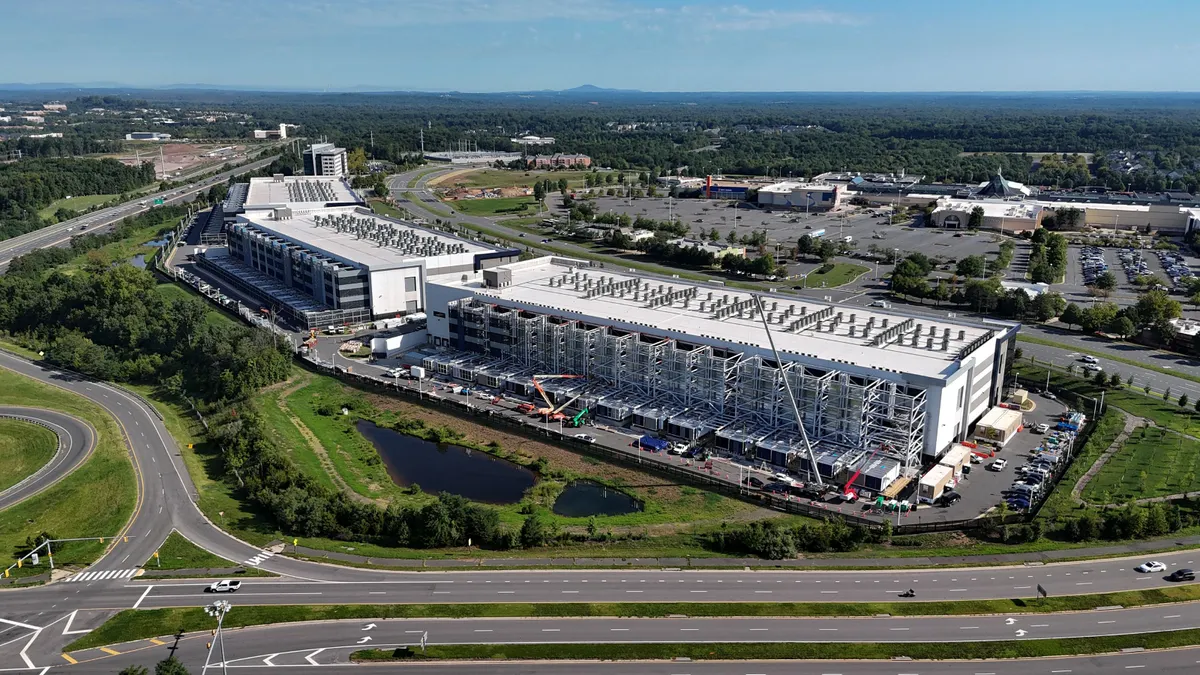
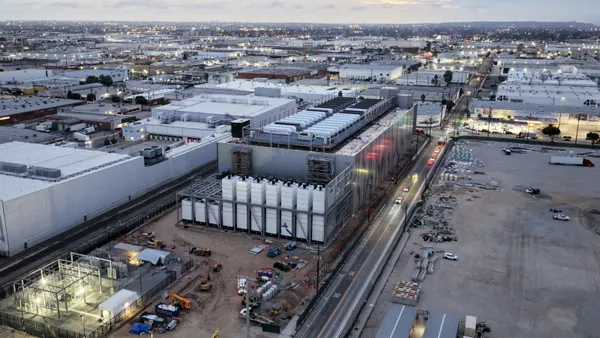
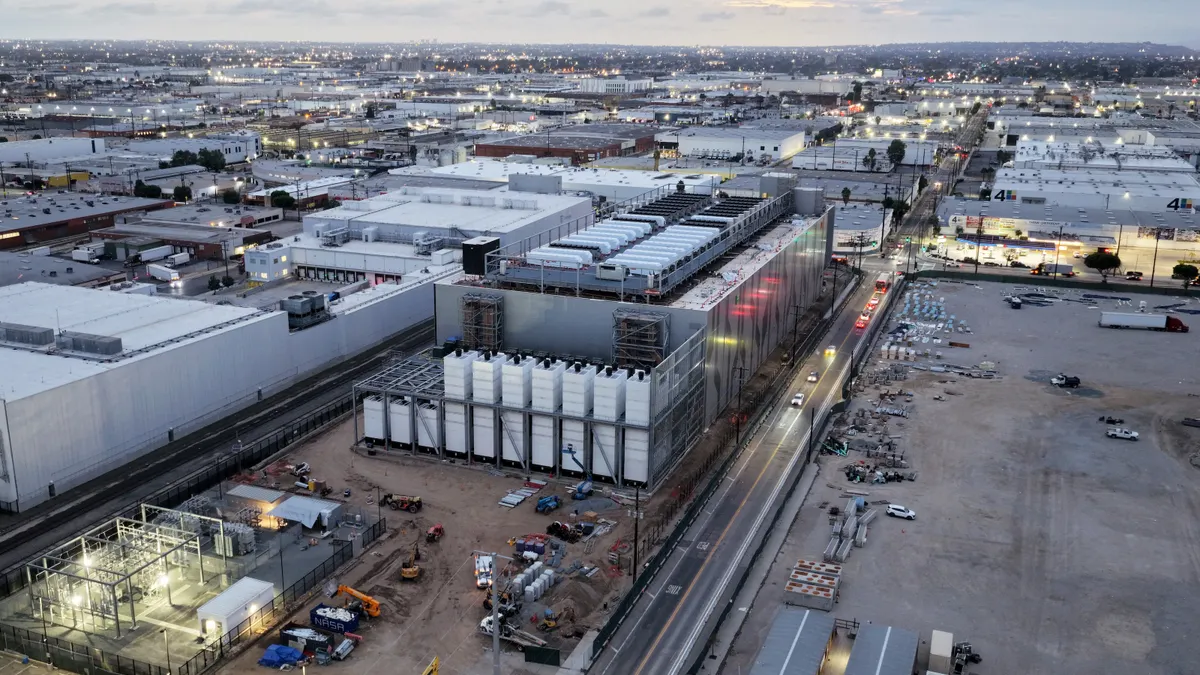
The existence of huge fleets of behind-the-meter diesel generators is a new development brought on by the AI boom. A modern hyperscale data center is no longer simply another large electricity customer. Its electrical infrastructure can resemble that of a small city, with substations, private distribution networks, sophisticated power electronics and enormous amounts of backup generation. Because even a momentary interruption can be extraordinarily costly, data centers install enough backup capacity to keep operating through a major grid failure.
Diesel generators have been the default because they are proven, reliable and relatively compact. Diesel fuel is also extraordinarily energy-dense and can be stored on site. But the generators were designed to sit idle most of the time and operate only during emergencies.
Rapid load growth is changing that equation. New generation and transmission take years to permit and build, while enormous new data center loads can arrive much faster. During periods when the grid is short of capacity, thousands of idle diesel generators can therefore look like an irresistible resource.
Federal emergency authority has already been used to make such backup generation available during periods of severe grid stress. In January, DOE authorized grid operators to tap as much as 35 GW of idle backup generation at large facilities. Similar authority has been invoked 13 times this year, seven of those in PJM.
The danger is that an emergency exception becomes a routine operating model. Once policymakers and utilities begin counting on data-center diesel generators as a source of capacity, there will be less incentive to develop cleaner resources that can provide the same reliability services.
This extracts a local price. Diesel generators produce nitrous oxides, particulate matter and other pollutants. A study of Northern Virginia data centers found that operating their diesel generators up to permitted limits would increase the region’s total nitrous oxide emissions by 45%. The study also found that the census blocks most exposed to those emissions tend to have lower household incomes than other census blocks.
The noise is also disruptive. During a previous electrical emergency in Loudoun County, residents described the sound of data-center generators operating continuously as being like airplanes landing for more than 24 hours.
That may be tolerable as an emergency measure. It is a poor model for the everyday infrastructure of the electric grid.
Virginia is starting to ask the question: its order directs environmental regulators to review the cumulative impact of data center backup generation and to evaluate alternatives including on and offsite battery storage, load flexibility, fuel cells, and other non-diesel options. But will state and federal regulators, and data center companies themselves, take the next steps to prevent diesel generators from being the default solution?
Turning data centers into clean grid resources
This question is particularly important because data centers are being asked to become more flexible participants in the grid. Recent regulatory initiatives are creating pathways for large new loads to interconnect more quickly if they agree to reduce their demand when the system is short of capacity.
A data center cannot simply turn itself off. However, that does not mean it cannot be flexible. Many strategies are being developed to make data centers appear flexible to the grid, including throttling low-priority compute, shifting compute to other regions, and putting flexible resources such as batteries at the data center site, or nearby, connected front-of-the-meter or behind-the-meter at businesses and homes.
Batteries can reduce the data center’s demand on the grid during periods of extreme system stress. They can absorb electricity when supply is abundant and return it when electricity is scarce.
However, the lithium-ion batteries being installed today have short durations, for example two or four hours. For any longer period of outage or grid stress — and local congestion can create longer periods of stress than the system-wide peaks — if the data center still needs to be curtailed by the grid, where is that power going to come from?
Today, the default is the backup diesel generator, or in some cases natural gas generators. Therefore, once the battery runs out, the data center that is providing a grid resource instantly switches from doing so in a clean way with a battery to doing so in a dirty way with fossil fuels.
It is clear that data center flexibility can use the grid more efficiently, providing faster access to power at lower societal cost. However, there are many details to be worked out. As policymakers and regulators formulate and implement new data center rules, they should look carefully at how data center flexibility is likely to be met and only allow methods that are consistent with the overall goals of states. If they do not, the expediency of diesel generators could result in it being used more often, creating more pollution and noise for local communities.
A future with clean, productive resilience
Looking to the future, the most secure way to ensure that on-site fossil fuel generators are not used for data center flexibility is to not have them there at all. Why not just replace the diesel backup entirely with batteries, as recommended by the Better Data Center Project? A common objection is that the batteries do not provide enough backup duration.
One alternative is simple: long-duration energy storage, either on-site or proximate within the potentially congested area. A storage system capable of providing 24, 48, or even 72 hours of backup could give a data center a high level of resilience, while at the same time allowing the facility to strengthen the grid productively on an everyday basis.
And long-duration storage does not necessarily mean installing more lithium-ion batteries. New battery chemistries, and other clean backup technologies, are emerging that use more abundant materials, are designed for stationary rather than transportation applications, and can potentially offer different combinations of safety, cost, footprint and duration.
For data centers, footprint is particularly important. Land around a hyperscale facility is scarce. Technologies that can safely pack long durations of stored energy into a relatively small area could make it possible to replace diesel backup without requiring any more land. Additionally, LDES could be placed for the benefit of the data center at other consumer locations such as commercial and industrial sites.
The immediate objective should not be to pick a single winning technology today. It should be to make sure that data-center developers and regulators do not assume that diesel generators are the only practical answer, and that they work to incentivize and develop alternative technologies. So far, LDES has been framed as a front-of-meter bulk storage solution, and state incentives have only rewarded behind-the-meter short duration storage. There should be a signal to the data center or other customers that the resilience contribution of behind-the-meter LDES is valued for bulk system reliability and the elimination of local emissions. This could take the form of allowing behind-the-meter LDES to be accredited towards system capacity and state procurement mandates while taking into account the full effective load carrying value of their durations, as well as modifying existing behind-the-meter rebate and demand response incentives to reward longer durations rather than capping them at shorter duration.
Across the country, residents are increasingly questioning the impacts of data centers: their electricity consumption, water use, noise, and local pollution. Some of those impacts may be unavoidable. But many are the consequence of choices about how these facilities are designed.
Virginia and other states are beginning to define what a community-friendly data center looks like. The industry should meet that standard by building data centers that are clean and quiet stewards of their communities from the start, rather than locking yesterday’s infrastructure into tomorrow’s grid.