The Indiana Utility Regulatory Commission recently approved AES Indiana’s plan to serve a Google data center in a contested case that highlights the complex challenges regulators and utilities face in allocating system costs for large computational loads.
According to the Oct. 7 order, AES will acquire or build new generation, storage and grid infrastructure for a 390-MW data center planned for Monrovia, a town Southwest of Indianapolis, at an estimated project cost of about $737 million.
The new generation, storage and transmission assets included in the Monrovia Project will go into the utility’s rate base.
AES says its electric service agreement with Google is designed to ensure the revenues will be sufficient to “reimburse at least 100%” of the project’s incremental direct costs. But the contract itself is heavily redacted, and an estimated $74 million in network upgrades has been explicitly allocated to all customers as a reliability need, prompting criticism from consumer advocates that the arrangement is shifting costs onto other ratepayers.
What are ‘reasonably allocable’ costs?
Indiana state law requires large load customers to reimburse at least 80% of project costs “reasonably allocable” to them.
Claire Wayner, a senior associate at the clean energy nonprofit RMI, said in an interview that while local projects are fairly easy to trace back to a specific data center, broader regional system upgrades raise more complex questions about who benefits and how costs are allocated across jurisdictions.
“Maybe they're upgrading a part of the grid that they were going to have to upgrade anyway because it's aging infrastructure,” Wayner said. “If that's the case, they should have to demonstrate that, and then maybe cross socialization makes sense.”
But, she continued, “If that upgrade was not going to be built without the data center, without benefits modeling or just a demonstration of the benefits to the rest of the zone, it's difficult to make the claim that all ratepayers in that zone should pay for it.”
AES Indiana will serve Google’s data center from its portfolio of shared generation and battery assets. The new generation and storage assets built to meet the additional demand will be owned through a subsidiary by the utility and go into its rate base.
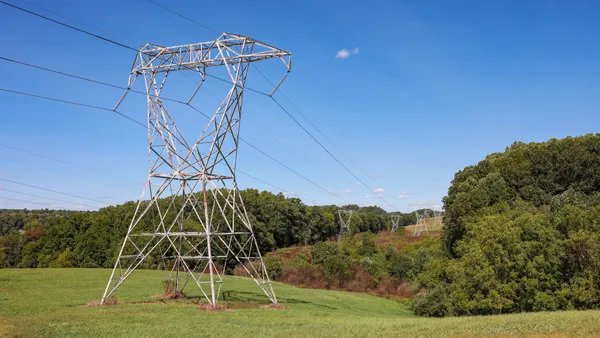
In testimony to the commission, a utility representative said the transmission infrastructure included in the Monrovia Project falls into three basic categories: interconnection infrastructure for the generation and storage; “direct connection” infrastructure for connecting the data center to the system; and network upgrades necessary “primarily” to serve Google “but also to meet other customer demand or energy needs.”
Google will pay about $32 million upfront for the direct connection, but $73.8 million in network upgrades will be included in AES Indiana’s transmission rate base and recovered through future rates from all customers, including residential ones.
Commissioners approved the proposal 5-0, saying in their order that “although the Customer may be the impetus for the network upgrades being made, this does not preclude the upgrades from providing system-wide benefits.”
“Network upgrades, as the name implies, are upgrades or additions to the transmission network intended to provide reliability, resiliency, and stability to the system at large,” it said. “Just as the Customer will be allocated a portion of the existing network transmission infrastructure, it is reasonable for existing customers to also be allocated a portion of the network upgrades.”
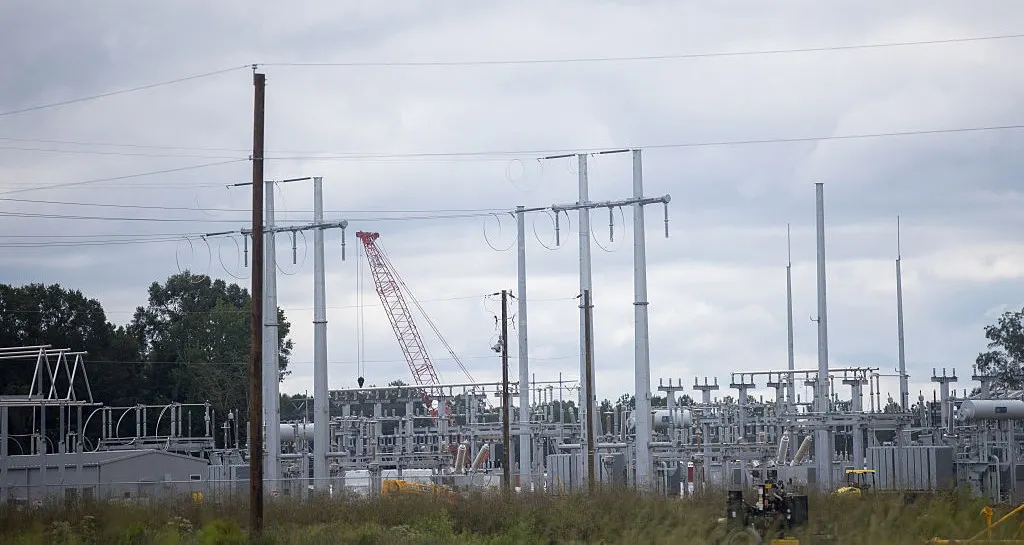
The Midcontinent Independent System Operator approved some of the network upgrades, which include a new substation, citing reliability and load growth.
Although the order says the portfolio proposed in AES’ filing is for 390 MW of new load with 460 MW of new 4-hour storage and 130 MW of solar generation, the substation planned for the project is designed for 1,200 MW of load, creating opportunity for future expansion at the site.
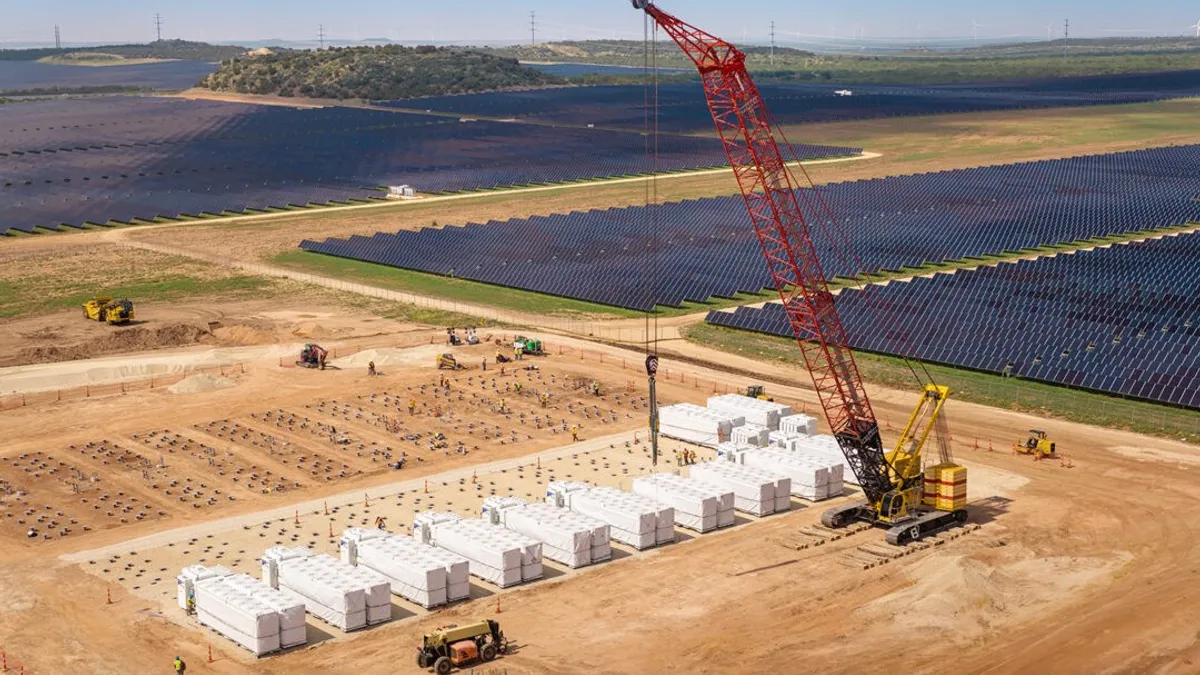
The generation and storage resources consist of one 200-MW and one 130-MW battery energy storage system, called Foundry Works and Hardy Hills, respectively, as well as a 130-MW solar facility paired with a 130-MW BESS called Crosstrack. Their cost is redacted in the case filings.
‘Cost allocation and cost recovery are two different concepts’
Ben Inskeep, program director at the Citizens Action Coalition, a consumer advocacy group that intervened in the case, sees the deal as running counter to President Donald Trump’s Ratepayer Protection Pledge signed earlier this year by tech companies and utilities, including Google and AES Indiana.
“These network upgrades are specifically driven by the Google data center,” Inskeep told Utility Dive in an interview. “Instead of making the cost causer pay, AES Indiana has decided to spread the costs out to other ratepayers, and our commission has unfortunately approved that.”
Ben Gavelek, a spokesperson for the commission, declined to comment on the deal. Google did not respond to requests for comment.
Claire Rice, a spokesperson for AES Indiana, said in an email that although the transmission assets are being allocated through the normal cost-of-service process, Google’s rate includes a “separate incremental-cost test designed to recover the incremental costs required to serve Google, including the network upgrades.”
“Cost allocation and cost recovery are two different concepts,” she added.
Many of the exact terms of the service agreement, including monthly energy and demand charges and riders, are redacted in the public record. Parts of other contracts underpinning the deal are also confidential.
The assets will be included in future base rate case filings. Until those new rates are established, the utility plans to recover those costs through its Environmental Cost Recovery and netted with contract revenues.
The commission’s order says AES Indiana’s accounting and ratemaking proposals enable it to “match” the project costs with revenue collected through Google’s electric service agreement and “flow” those contributions “back to existing and future customers” through riders.
AES says using this arrangement, Google will pay $300 million toward fixed costs through the end of the contract period at the minimum demand level, including 100% of the annual revenue requirement associated with the network upgrades. The utility expects Google to pay approximately $770 million at the expected level of demand.
Company representatives told regulators that its cost allocation framework is not based on “direct cost method” but instead uses a modified “slice of system” approach.
Another point of contention is that the tech giant’s rates will be based on a 90% load factor, which AES says is high compared to all other customers, but critics said amounts to a 10% discount.
The commission’s order said using the 90% estimated load factor “recognizes the Customer’s substantial and continuous utilization of the system capacity without assuming that the Customer’s maximum demand occurs exactly when the system peaks each month.”
Advocates call for legislative reform
Even though the network upgrade costs are not allocated to Google alone, AES Indiana Vice President of Commercial Patrick Maguire said in an interview that revenue from the company will “more than offset” residential customers’ portion.
“Customers’ rates are not impacted by those transmission investments at all,” Maguire said.
State regulators approved a $71 million rate hike for AES customers in June, attracting the ire of Gov. Mike Braun and setting off a chain reaction of turnover at the commission, which voted in September to rehear the case, the Indiana Capital Chronicle reported. The first of two increases has already taken effect, with another scheduled for January, despite the rehearing.
The utility’s next rate case is scheduled for 2029. That is also when AES plans to share a full cost-of-service study, cost allocation and rate design principles associated with the Monrovia Project.
Inskeep said it’s not clear if there will be a net savings for Indiana utility customers from Google’s contract with AES when factoring in other costs, such as congestion pricing, rising labor and equipment costs, new generation and potentially more network upgrades.
“We really do need some legislative reforms to increase transparency and establish better protections for ratepayers,” Inskeep said.
In the meantime, the grid operator is undergoing reforms to address the rapid scale-up of large load data center additions and associated transmission upgrades.
Jonathan Neal, a spokesperson for MISO, said in an email that the grid operator has undertaken an Expedited Project Review and Expedited Resource Addition Study to try and bring generation and transmission online more quickly.
MISO is also “working with our stakeholders” to make improvements around cost transparency, speed to partial power, a non-firm service option and market operations and processes.
Many of these reforms respond directly to concerns noted by the Federal Energy Regulatory Commission when it issued Show Cause Orders to six grid operators, including MISO, directing them to overhaul their processes for interconnecting large loads.
“MISO is committed to addressing these challenges efficiently, reliably, and fairly,” Neal said.