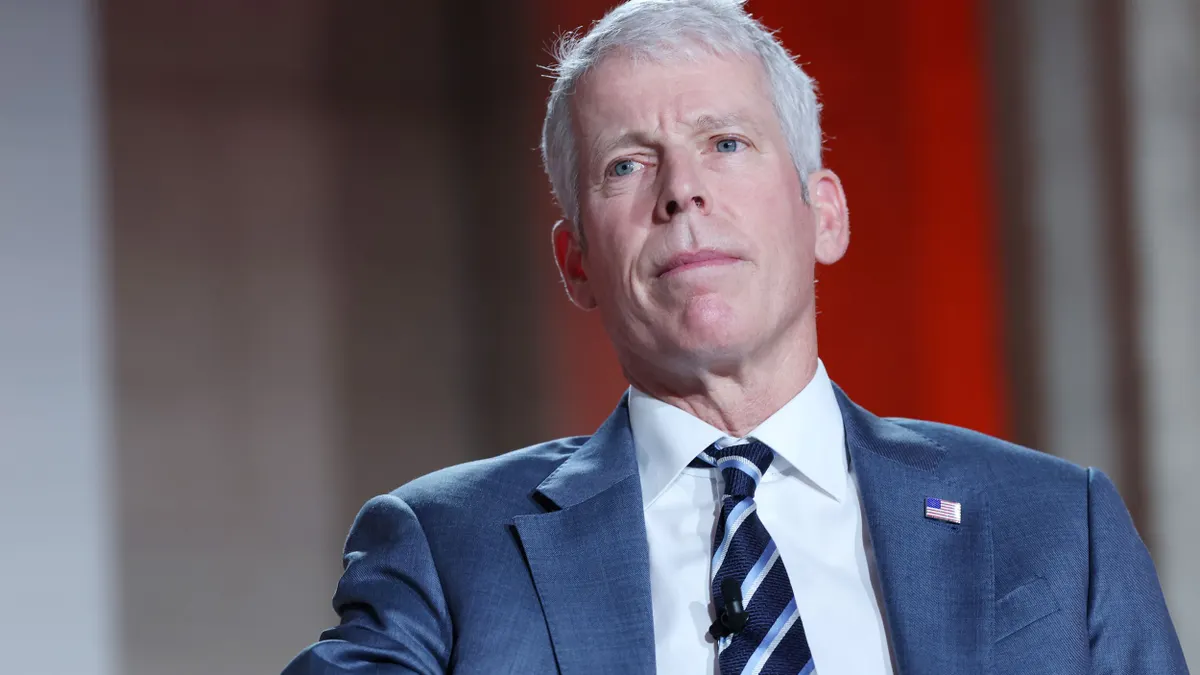
In his second day appearing before the House, Energy Secretary Chris Wright faced questions about potential avenues for permitting reform and aspects of the Trump administration’s proposed 2027 Energy Department DOE’s proposed budget, like the lack of a line item for the Energy Star program.
A March agreement between the Environmental Protection Agency and DOE transferred administration of the Energy Star program to the latter, but DOE’s budget request to Congress did not request additional funding to support the program, Rep. Paul Tonko, D-N.Y., pointed out during a Thursday hearing held by the Committee on Energy and Commerce.
In EPA’s 2027 budget, the agency only allocated one full-time employee to support the Energy Star program as administered by DOE, Tonko said. “Based on that, it seems that EPA is already preparing to end its responsibilities. Historically, the Energy Star program has required about $35 million annually ... Is DOE seeking that funding as part of its budget request?”
Wright said he would have to get back to Tonko on the details of this issue. He said that when it comes to voluntary labeling for appliances, the administration is “all for that” and “all for data transparency.”
Rep. Scott Peters, D-Calif., said there is “concern around certainty” resulting from some of the administration’s actions, such as issuing stop work orders for “already permitted” offshore wind projects.
Peters also said that while the natural gas industry wants “relief” from the Clean Water Act’s Section 401, which requires state certification that a project such as a pipeline will not violate water quality standards, this “can't be done unless we write down the rules on methane.”
Due to global demand for clean gas in markets like the EU, “the industry has developed the technology it needs to be able to abide by methane restrictions. We need to write those down,” Peters said. “Do you think you would be able to work with us to get a congressional deal this year?”
“I do believe so,” Wright said. “I think you raised a number of the key issues, and I do believe that there is room for a bipartisan agreement that addresses all of the issues you raised. And I would like to see that happen, and I'd like to work with you on it.”
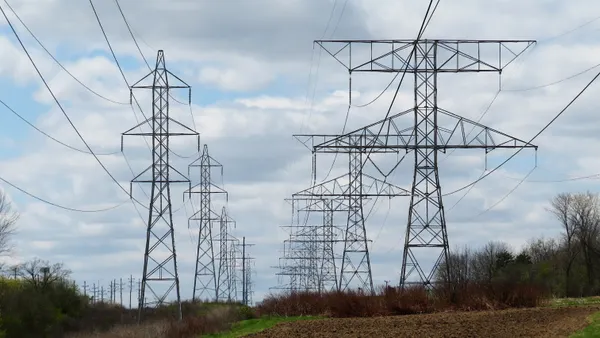
Wright also said that the idea of creating parity between permitting pipelines and permitting transmission lines, with more efficient transmission permitting paired with reforms to environmental laws, was “very worthy of discussion.”
“We really need your help to help kick this committee into gear on the House side,” Peters said. “If you and President Trump can indicate, yeah, you want permitting reform, and transmission planning has got to be part of it, I think we could come to a deal.”
“That's great to hear,” Wright said. “I look forward to those dialogues moving forward in the next few weeks, I hope.”