Abbey O’Brien is senior manager of market intelligence at Ulteig.

In Big Tech’s race to build new data centers, decades of essentially flat load growth are now being upended by gigawatt-scale interconnection requests. While owners and regulators alike work to clear large load backlogs and provide reliable, affordable electricity, price-conscious customers can nevertheless still feel caught somewhere in between.
Those familiar with the “streaming wars” may notice several parallels.
Just as legacy media companies were caught off guard by tech player competitors and the advent of streaming, today’s utilities are confronting a hyperscale and AI-driven wave of change. The pattern offers a cautionary tale: When new entrants disrupt systems built for different eras, they risk strain, complexity and rising costs for customers.
Utilities can avoid the disjointed outcomes and customer backlash experienced during the streaming wars, but only if they view the AI boom as a systemwide modernization challenge rather than an overflowing queue of individual projects.
Lessons from the streaming disruption
The launch of Netflix’s streaming platform in the early 2000s marked a turning point for the media industry. Binge-watching and on-demand content were unfamiliar at the time, but they quickly captured consumer attention and rewired expectations. The industry’s incumbents — major studios and cable providers — were slow to adapt. In that lag, tech firms carved out market share and set a new pace, with Amazon launching what would later become Prime Video and Google acquiring YouTube.
By the early 2010s, traditional content giants like Disney, NBCUniversal and Warner Bros. rushed to launch their own direct-to-consumer platforms. Instead of creating a seamless experience, their siloed approach led to costly duplication. Each company built its own app, its own licensing strategy and its own subscription model.
As competition intensified, so did consumer frustration. Monthly costs rose, content was scattered across platforms, and the simple promise of streaming gave way to complexity and fatigue. Eager to recover subscribers lost to a hyper-fragmented market, firms embarked on a series of consolidation and bundling moves, including Paramount’s recent bid to acquire Warner Bros.
When innovation outpaces coordination, systems become disjointed, costs shift to the end user and trust erodes. For utilities facing a new era of AI-driven demand, the message is clear: Coordination beats catch-up.
Prevent cost shift to customers
The significant concern is that the pace and structure of data center growth could leave utility customers footing the bill without a clear say in how the system evolves.
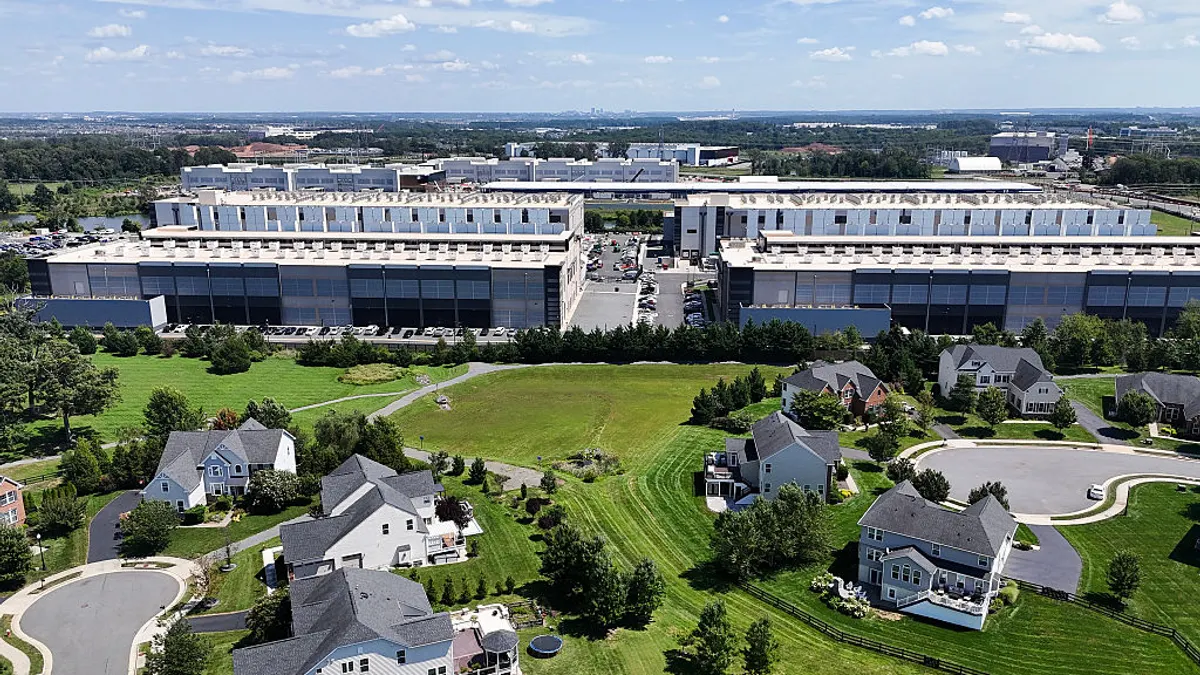
According to a recent forecast by 451 Research, part of S&P Global, data centers will require nearly three times as much grid power by 2030, underscoring how quickly this demand is scaling. When grid upgrades are rushed to serve individual projects, they can reshape transmission plans, resource mixes and local infrastructure in ways that reverberate across entire service territories.
Regulators are also grappling with how to balance economic development, grid reliability and ratepayer protection. Policy conversations around interconnection reform, cost allocation and data center siting are moving quickly, but not always in a coordinated way across states and regions. Without a more intentional framework, utilities risk repeating the media industry’s experience of disconnected solutions, uneven benefits and a growing sense of public frustration.
This coordination challenge is exactly why regulatory reforms are accelerating.
The Federal Energy Regulatory Commission’s Order 2023, which requires transmission providers to adopt a first-ready, first-served cluster study process for large generator interconnection requests, has been providing some relief to the new supply backlog. Considerations are underway to incorporate similar structures for large loads, and especially large loads co-located with their own supply. If done correctly, such reform could address the lengthy study process for these facilities and perhaps, at least in part, help to address some of the cost allocation concerns.
What utility leaders can do now
The question for utilities is how to shape the AI and data center boom into a resilient and equitable part of our country’s grid future. Utilities that treat these requests as isolated transactions risk missing opportunities to strengthen long-term planning assumptions.
Several steps are critical:
- Treat AI and data center load as a long-term planning signal, not a one-off opportunity. Integrate these projects into resource plans, transmission studies and distribution system planning from the outset to support more durable investment decisions and clearer regulatory conversations.
- Establish transparent, predictable interconnection and cost-allocation frameworks. Utilities and grid operators must work with regulators and policymakers to modernize interconnection queues, clarify who pays for which upgrades and ensure costs are aligned with benefits for large customers as well as residential and small business ratepayers.
- Elevate collaboration as a core competency. Unlike the media sector, utilities already operate within a culture of risk management and public oversight. That should be an advantage. Proactively convening technology companies, regulators, local governments and community stakeholders can surface siting options and portfolio solutions to reduce overall system risk.
- Link every big load to a broader grid modernization story. Each new data center should be evaluated not only for its megawatts, but for how it can accelerate needed transmission, distribution and resource investments that will serve customers over time. Framing projects as part of connecting today and tomorrow helps tie immediate opportunities to long-term system resilience and flexibility.
Avoid the backlash
The streaming wars showed what happens when industries let innovation race ahead of coordination. Media companies are still seeking ways to re-bundle content and rebalance business models after years of consumer confusion and eroded trust. For utilities, the lesson resounds loudly: When industries fail to anticipate systemic shifts, reactive consolidation becomes the only path to stability.
Certainly, building coordinated, future-ready infrastructure now is preferable to navigating high-stakes restructuring later. But it won’t be easy. Utilities have a narrow margin for error. Outages, volatile bills or perceived favoritism toward large customers can quickly undermine public and political support for critical investments.
The AI and data center boom will shape load growth and grid investment for decades to come. Utilities that meet this moment with coordinated planning, clear communication and integrated, system-wide thinking can turn disruption into a modernization milestone. Those that treat each interconnection as a one-off may find — like the media giants before them — that reacting too late is far more painful than getting the model right from the start