Dive Brief:
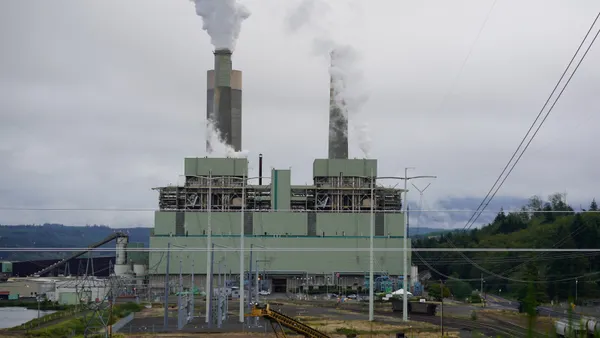
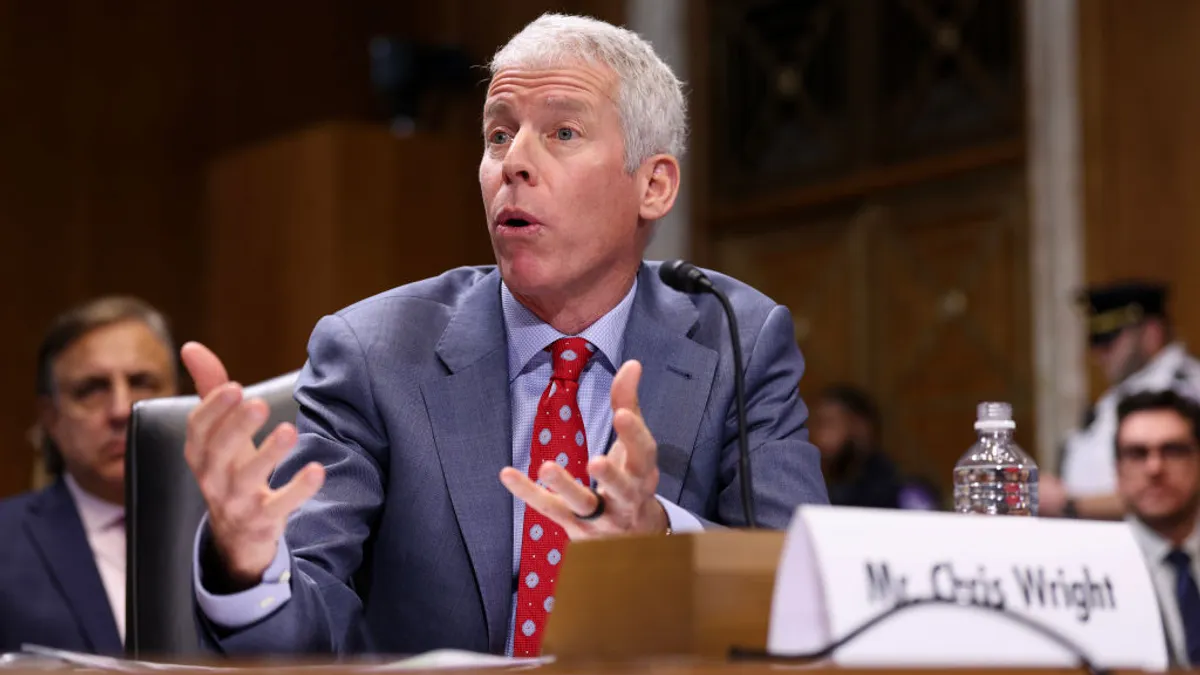
- U.S. Department of Energy Secretary Chris Wright defended his decisions affecting the U.S. electric grid and ratepayers before lawmakers Wednesday, saying his emergency orders keeping coal plants online past their planned retirements were necessary to prevent blackouts, and that Biden-era DOE initiatives targeted for review or cancellation were wasteful and rife with fraud.
- Wright’s comments were made before a House of Representatives appropriations subcommittee meeting to discuss the White House and DOE’s proposed 2027 budget, which would slash non-defense spending, including for electricity. He faced criticism from Democratic lawmakers about the impact war in Iran has had on energy prices, and the cancellation or delayed disbursement of funding awarded by the previous administration.
- Wright said he would look into cost impacts from some coal plant emergency orders and said that his department would likely release energy efficiency home rebate funding “in the near future.”
Dive Insight:
Rep. Frank Mrvan, D-Ind., pressed Wright on the plan approved by federal regulators that would allow coal plant owners to recover the costs of complying with his emergency orders from utility customers.
“So you ordered a tariff that would allow my ratepayers to pay more based on your energy policy,” Mrvan said to Wright.
“No, it's to keep the grid reliable and ultimately to drive prices down,” Wright replied.
“I'm telling you, it is not net beneficial to my ratepayers, and please look into it,” Mrvan said. Wright agreed to do so.
Regarding the president’s proposed budget, Wright said that the department is “restoring fiscal discipline,” including by “restructuring or eliminating over $80 billion in loans, more than 80% of the Biden-era loan portfolio, and we are redirecting that capital towards projects that strengthen reliability and American energy production.”
The proposal, as outlined in DOE’s congressional budget justification, would increase DOE’s total discretionary budget by nearly 10% to $53.9 billion while cutting non-defense spending by 16%.
The administration seeks to cut more than $15 billion in Infrastructure Investment and Jobs Act funding and redirect about $4.7 billion of it to “firm baseload power” — coal, natural gas, nuclear, hydropower and geothermal generation, as well as transmission — and to “support seven AI supercomputers at the Argonne and Oak Ridge National Laboratories.” The proposal would cut appropriations for electricity by more than 20%.
During the hearing, Rep. Marcy Kaptur, D-Ohio, asked Wright if there is “any path to reconsider” the cancellation of funding for competitively awarded energy projects.
“How is the department assessing which projects will be canceled, which will not be canceled, and how do we work with you on that?” she asked.
Wright said the department would “100%” reconsider funding awards it had canceled, and acknowledged that DOE had erred in some of its initial decisions.
“We've had a number of projects where we've made decisions, then we've been clarified and educated and thought, ‘You know, you're right. I think we misunderstood what you were doing there, or we thought it wasn't viable because we didn't see that connecting step that makes the math work,’” Wright said.
Rep. Rosa DeLauro, D-Conn., said the administration has “stalled on implementing” some of the Inflation Reduction Act’s home rebate programs “for well over a year already,” and asked Wright what the timing is for releasing funds from the Home Efficiency Rebates Program and the High-Efficiency Electric Home Rebate Act.
“I think in the near future,” Wright said. When DeLauro asked for a more precise timeline, he said, “probably” around a “few weeks.”
Rep. Debbie Wasserman Schultz, D-Fla., also questioned Wright about the withholding of rebate funds, focusing on “over $345 million in [Inflation Reduction Act] rebate funds for Florida homeowners” specifically.
“We have looked carefully at a number of these broad-based programs that deliver money to consumers for rebates, for efficiencies, for upgrades — an incredible amount of fraud in that,” Wright said. “There was DEI stuff put into that.”
Wasserman Schultz asked if Wright would commit to unlocking grant and rebate funding for her state, “since Congress appropriated the funds, and they are appropriated under law?”
“Of course, we follow the law,” Wright said. “We look at all of our projects and deploy funds that are legally obligated, but we look at them carefully. I hear your sort of smug dismissal of our concern for energy costs and energy reliability. It’s entirely unjustified.”
Following Wright’s comments, the Building Performance Association issued a statement celebrating his apparent commitment to release billions in home energy rebate funds in “the administration’s first public statement on the status of the programs.”
“We applaud Secretary Wright for pledging to release the pivotal Home Energy Rebates to help Americans upgrade their homes and save on their energy bills,” said Kara Saul-Rinaldi, chief policy officer of the BPA. “The rebate programs have the potential not only to cut energy bills in half for participating Americans, but also to support grid reliability and energy load shifts, evermore important with data centers coming online soon.”