Dive Brief:
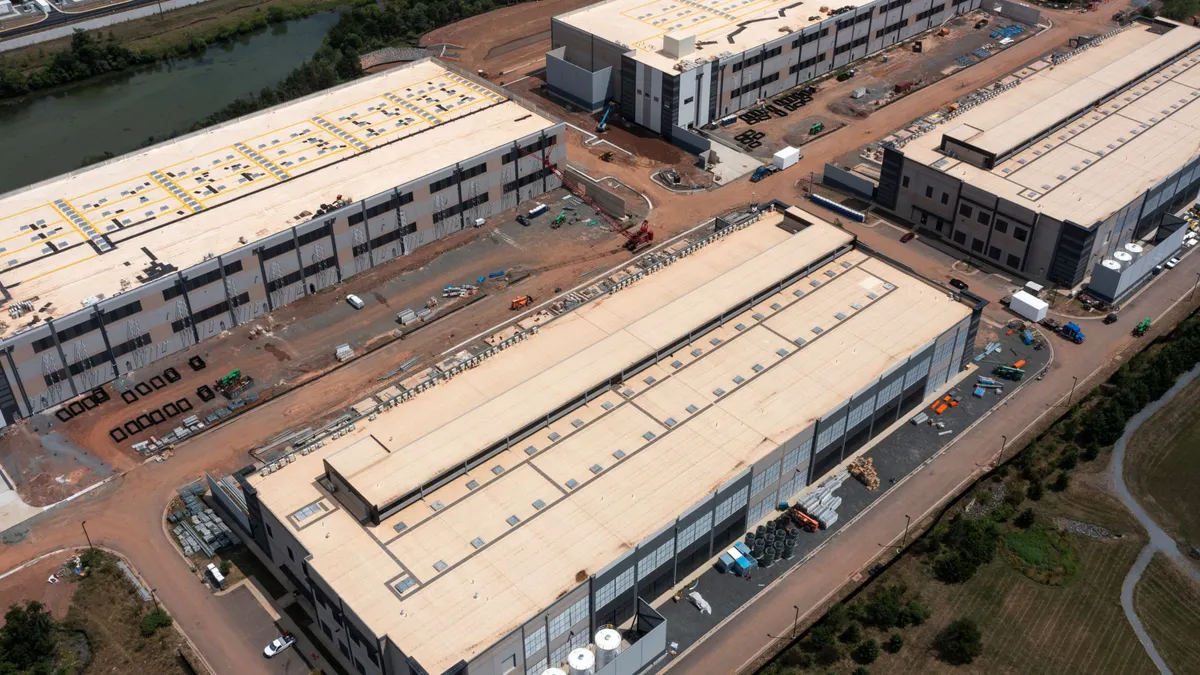
- Chief executives of nonprofit electric cooperatives this week called on the federal government to repeal greenhouse gas standards for gas-fired power plants that they say are hampering their ability to meet surging electricity demand, particularly from large-load data centers.
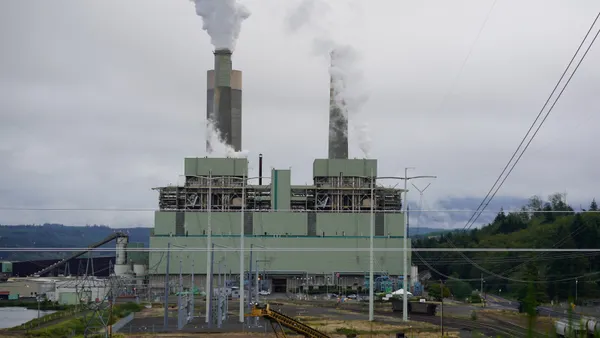
- The rule, finalized by the Environmental Protection Agency in 2024, uses power plants’ capacity factor to determine how strictly their emissions are regulated. New gas-fired plants with a capacity factor greater than 40% must meet a carbon dioxide standard based on highly efficient combined cycle combustion technology and install carbon capture technology to capture 90% of all CO2 emissions by 2032, according to a note from the law firm Holland and Hart.
- Jim Matheson, CEO of the National Rural Electric Cooperative Association, said during a Wednesday press event that the rule’s 40% capacity threshold and its carbon capture requirement are “untenable,” and his trade association supports the Trump administration’s efforts to fully repeal the rule, and is “anxious” to see progress on that front. “This is a significant threat to our ability to do our job,” he said.
Dive Insight:
In June 2025, EPA Administrator Lee Zeldin proposed a repeal of all greenhouse gas emissions standards for the power sector. The EPA then sent a proposed “Carbon Pollution Standards Repeal” rule to the Office of Management and Budget for review in May, but the 90-day review deadline passed earlier this month with OMB yet to take action.
At Wednesday’s event, Oglethorpe Power Corp. President and CEO Annalisa Bloodworth called the rule “deeply flawed” and “genuinely … the most irrational environmental regulation I've personally encountered in my career.”
Also on that call were Todd Brickhouse, CEO and general manager of Basin Electric Power Cooperative, and David Tudor, CEO and general manager of Associated Electric Cooperative. Tudor said that the co-ops run by himself, Brickhouse and Bloodworth cover “about 60% of the cooperative family across the United States.”
Matheson said that the Trump administration “clearly understands our issues,” but when it comes to the status of the rule’s proposed repeal, he lacks “insight on what goes on behind closed doors.”
“We are anxious to see action on this,” he said. “We all understand all the factors that are driving increased demand for power in this country. We all understand that natural gas is the go-to for new generation in this country.”
Matheson said he supports an outright repeal of the rule as he doesn’t believe it can be modified “in a way that makes sense.” The 40% threshhold does not “work for us,” he said, and carbon capture and sequestration technologies “are not commercially viable.”
Bloodworth agreed, saying a full repeal of the rule is “what we need to be able to plan and to invest with confidence.”
Brickhouse said that while renewables make up 30% of Basin’s generation portfolio, meeting data center demand with renewable energy generation backed up by diesel is not ideal due to the “very high load factor” of data centers.
“If it's a 1,000-MW data center, they're going to consume close to 900 MW or 1,000 MW around the clock, 24/7, 365 [days a year], and we need, from a reliability perspective, to have a generating unit like a combined cycle facility that can match that,” he said. “Wind works up here, but we have wind turbines that have capacity factors of 40%. But at the same time, you cannot rely on wind turbines when a data center is going to have a load factor of 95% to 100%.”