Almost all U.S. power generators are capable of operating in extreme cold, with a relative few facing known constraints that could keep them from reinforcing their ability to produce electricity during winter storms, the North American Electric Reliability Corp. said Thursday.
“Industry is rising to the challenge of protecting the grid during periods of extreme cold,” NERC President and CEO Jim Robb said in a statement.
The reliability watchdog last month filed its “Cold Weather Data Annual Report” with the Federal Energy Regulatory Commission, tallying the industry’s progress in implementing new winter weatherization requirements. About 94% of the bulk power system’s total capacity could be called on to operate below 32 degrees, thus NERC requires those units to implement protective measures. Relatively few units experienced reliability issues requiring corrective action plans, NERC said.
Units constituting 4.3% of capacity are implementing corrective action plans to address reliability issues, and 60% of those plans will be completed before this upcoming winter, NERC said. “A small percentage of units,” about 7.4% of the total capacity, “declared a constraint that precluded them from implementing corrective actions.”
The findings “highlight measurable improvements in the electric industry’s cold weather preparedness, while underscoring the need for continued vigilance to address winter reliability risks,” NERC said.
The risk from extended corrective action plans and cold weather constraints “is limited,” NERC said. “Based on the data reported this year, 99% of the total net winter capacity in the continental U.S. responded that they were able to operate” at calculated extreme cold weather temperatures.
Generator owners reported a total net winter capacity of 1,154,231 MW in the continental United States. That’s a 7% increase over the winter 2024-2025 reporting period, NERC said. Owners reported cold weather constraints for 633 units comprising 85,691 MW, with known limitations of wind accounting for 71% of units reporting a constraint.
“Coupled with our recent joint report with FERC on winter system performance, it’s clear that improved preparation is making a difference with no significant system disruptions over the past winter,” Robb said. “While that is good news, the bulk power system continues to face serious reliability risks during the winter period.”
Milder temperatures in some regions could provide relief this winter as well. The El Niño weather pattern is likely to result in warmer-than-average temperatures in the northern U.S., according to the National Oceanic and Atmospheric Administration. Wetter-than-average conditions are likely across the southern U.S., from California to Florida, and along the East Coast, NOAA said.
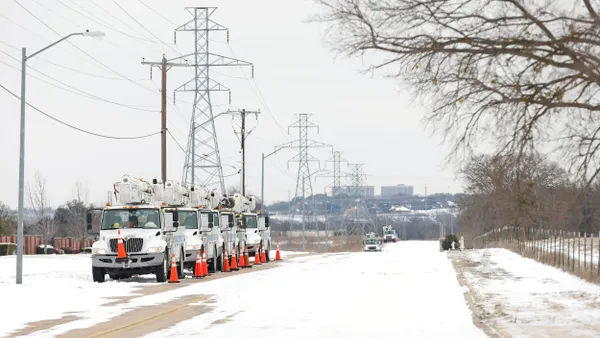
Cold weather grid operating standards have been a priority for FERC and NERC since Winter Storm Uri in 2021, when about 4.5 million Texans lost power because power plants were unable to run.
PJM Interconnection, the grid operator for 13 states and the District of Columbia, on Thursday said it expects to have 182,426 MW of operational capacity to serve a forecasted peak electricity demand of approximately 147,500 MW, plus a forecast average of approximately 3,200 MW of electricity exports to neighboring systems.
That peak, driven by demand growth in the region, would set a new winter record if reached, the grid operator said. PJM’s ability to reliably serve winter demand “will depend on continued preparation and strong generator performance,” the grid operator said. “This is especially important in areas where transmission constraints limit the ability to deliver electricity from other parts of the system,” particularly including some zones in Maryland, Virginia and the District of Columbia.
ReliabilityFirst, the regional entity which monitors reliability along most of the East Coast, including the PJM grid, has about 13% of its total net winter generating capacity under a cold weather constraint, NERC noted. About 12% of the total net winter capacity in the Midwest Reliability Organization region reported a generator cold weather constraint, according to the report. In the Northeast Power Coordinating Council territory, about 4% of the total net winter capacity reported a generator cold weather constraint.
"Our goal is to coordinate operations with the generation and transmission owners and proactively manage the system to perform at high levels when consumers need energy the most," Michael Bryson, PJM senior vice president of operations, said in a statement.