John Delurey is managing director of campaigns at Vote Solar.
In October 2024, I wrote about the storm clouds gathering over Illinois ratepayers. Energy prices were spiking across the state, in large part due to long delays from grid operators in connecting renewable projects, misguided policy decisions from regional grid operators and rising load forecasts from the data center boom.
Things have only taken a turn for the worse since then, with headwinds from Washington blowing against renewable energy and an administration seemingly determined to make energy more expensive. I argued in my last piece that, while we couldn't single-handedly fix the broader issues with national policy or regional markets, Illinois had a choice: we could panic, or we could plan.
A year and a half later, it’s safe to say that Illinois has chosen to plan. With the passage of the Clean and Reliable Grid Affordability (CRGA) Act six months ago, Illinois has avoided the knee-jerk reactionism sweeping through statehouses and utility boardrooms across the country and instead embraced a strategy that will deliver a cleaner and more affordable grid.
Speed to power
Spooked by the voracious (albeit in some cases speculative) energy appetite of new data centers, regulators are greenlighting a wave of new gas plants and placing bets on nuclear expansion. The narrative is always the same: we need baseload power, and we need it yesterday.
This 20th-century playbook ignores a 21st-century economic reality: time is money, and centralized power plants are excruciatingly slow to build. With construction timelines often over a decade and costs that historically swell over budget, promising new nuclear as a fix for today’s capacity crunch is disingenuous. Similarly, new natural gas turbines are facing supply chain bottlenecks that push deployment out three to five years — all while locking ratepayers into volatile fuel markets for decades.
Ratepayers facing high bills right now do not have five years to wait. They certainly don't have 10. They need resources adequate to meet the moment on a timeline that matches the urgency of current load growth projections.
Bending the curve with community power networks
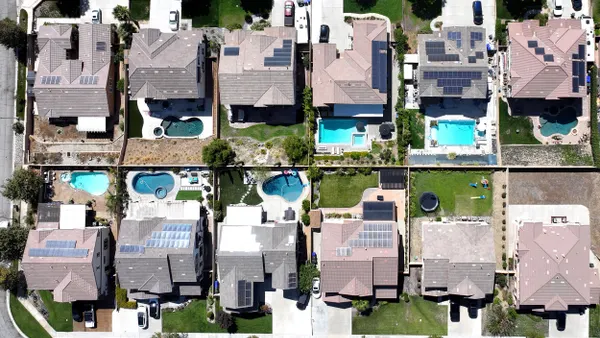
This is where CRGA changes the game. By focusing on local solar and storage and energy efficiency, Illinois is mobilizing the only resources that can be deployed fast enough to make a material difference towards resource adequacy before the next wave of capacity market auctions. By using these local resources in larger community power networks, we can help reduce the overall burden of capacity obligations for states in regional markets like the Midcontinent Independent System Operator and PJM Interconnection. In particular, the virtual power plant (VPP) programs in CRGA are tasking utilities to tap into the latent potential of the grid's edge.
CRGA’s VPP policy will unfold in two phases:
- Phase one will launch this summer and focus exclusively on distributed solar and storage. The first phase will start bending down power bills and address expensive peaks through better customer compensation, motivating them to discharge their batteries during hot summer afternoons. This encourages a stronger grid and helps avoid the need for expensive spot power from peaker plants.
- Phase two planning will take place during the first phase. State regulators will use this time to plan and launch the second phase, which is a more robust VPP that will aggregate thousands of small assets — smart thermostats, residential batteries, electric vehicle chargers, etc. — and orchestrate them to act like a single, dispatchable power plant.
When demand peaks on a sweltering July afternoon, we won’t need to wait for a new gas peaker to come online — instead, a VPP can instantly discharge stored solar energy or take a short break from charging an electric vehicle. This demand response capability creates immediate headroom on the grid. It bends the demand curve downward, suppressing the clearing prices in capacity auctions and saving money for every ratepayer, not just those directly compensated for their participation.
Storage and smarter planning
Beyond local resources, CRGA’s target of 3 GW of utility-scale energy storage by 2030 provides a clear signal to the market. Batteries are the Swiss Army Knife of the modern grid — providing frequency regulation, shifting solar power to the evening peak and solving resource intermittency.
Critically, CRGA also institutes a requirement for long-term integrated resource planning. The restructured energy markets in Illinois provided affordable power with fairly little risk when demand growth was relatively flat, as it has been since deregulation in 1997. Now that demand is growing, Illinois cannot afford to exclusively rely on market signals that skyrocket energy bills without effectively incentivizing new resources. Now, Illinois will have a proactive roadmap, ensuring that the data center boom and electrification transition are managed with foresight rather than desperation.
Lean in, don’t back out
Some other states — even those that have traditionally led the energy transition — seem to have misunderstood the assignment, confusing climate backtracking with cost control. Consider the recent or currently unfolding unforced errors across the map:
- Massachusetts: The state House passed H.5151, an energy omnibus that laudably streamlines solar permitting, improves grid interconnection and unlocks plug-in solar. But the bill as currently drafted guts the state’s award-winning Mass Save energy efficiency program with a $1 billion cut — dropping a crucial cost-saving measure when it’s needed most. Fortunately, Gov. Maura Healey is keeping the emphasis on deploying clean energy to tackle the affordability crisis.
- California: In 2025, the California legislature successfully passed landmark, bipartisan bills to catalyze VPPs, only to watch Gov. Gavin Newsom veto them. Late last year, Gov. Newsom went further by defunding the Demand Side Grid Support program — the nation’s largest and most successful VPP initiative — leaving gigawatts of proven resources on the table.
- New York: Gov. Kathy Hochul is proposing to delay the emissions targets of the landmark Climate Leadership and Community Protection Act through the budget process. Instead of addressing the very real problem of energy affordability through demand and supply solutions, the administration is leaning into a false binary that pits climate goals against ratepayer protection.
We are lucky to live in a time when renewable energy, especially local solar and storage, is the cheapest and fastest resource to market. While other states lock their citizens into billions of dollars of soon-to-be-stranded fossil fuel assets or walk back climate commitments, Illinois is proving that the path to reliability doesn't require a return to the past. By betting on efficiency, storage, long-term energy planning and the flexibility of the modern grid, CRGA offers a blueprint for how to keep the lights on and bills down.