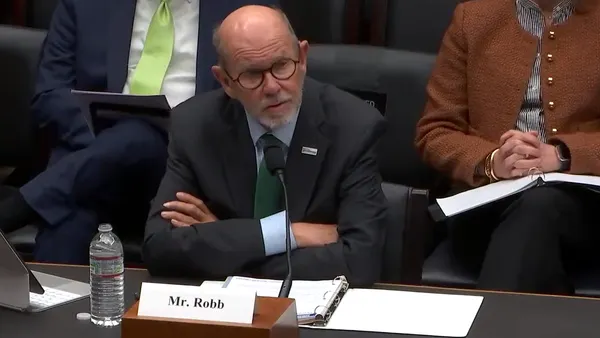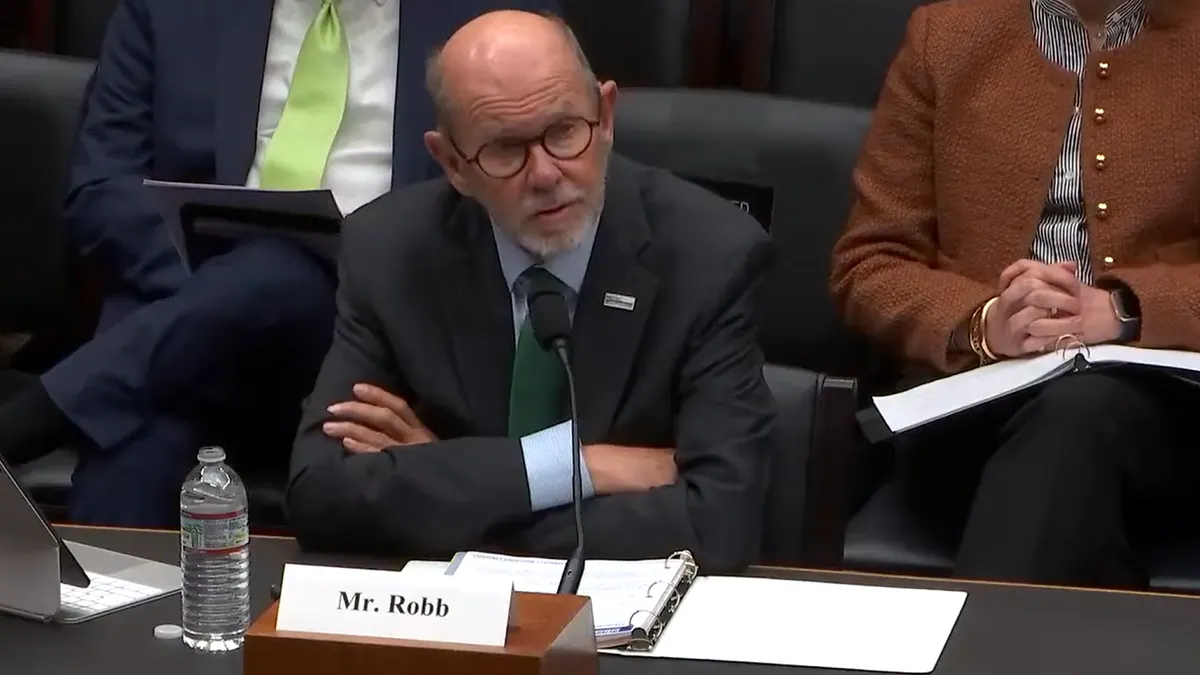
The U.S. grid withstood Winter Storm Fern in January without disruption to the bulk power system, but the electric sector cannot become complacent because reliability risks are rising, Jim Robb, president and CEO of the North American Electric Reliability Corp., told a House subcommittee on Tuesday.
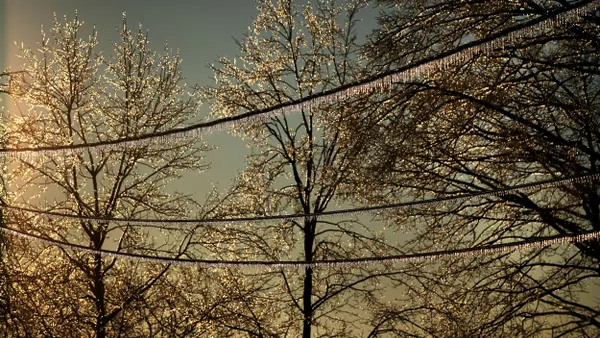
Fern was a wide-area, multi-day, extreme weather event that left about 1 million people across the Midwest, Northeast and South without power — but largely due to local outages, such as from downed power lines. While ultimately there were sufficient energy resources available on the grid, Robb called the storm a “classic near-miss” that required extraordinary measures.
As demand forecasts for Winter Storm Fern surged, the electric sector activated emergency operating procedures to manage the reliability risk and the U.S. Department of Energy stepped in with emergency orders, Robb said. Gas, coal and nuclear resources provided most of the generation through the storm, but renewables also contributed, he said. Fuel oil and liquefied natural gas helped keep the lights on in New England.
Ultimately, the power sector caught a break when Fern’s temperatures were not as cold as forecast, Robb said.
The electric power sector has shown “commendable improvement in cold weather performance,” Robb said, compared with past events like Winter Storm Uri in 2021. “However, the system ran very close to the edge, leaving no room for error” during the January storm.
Ultimately, Fern reinforced the concerns NERC laid out in its most recent Long-Term Reliability Assessment, Robb said.
Even though grid metrics show strong performance, “risk is growing more acute,” Robb said. “Nearly two-thirds of the country is at elevated or high risk of energy shortfalls over the next five years.”
Three trends explain the growing risks, he said: demand growth, a changing resource mix and lagging supply additions.
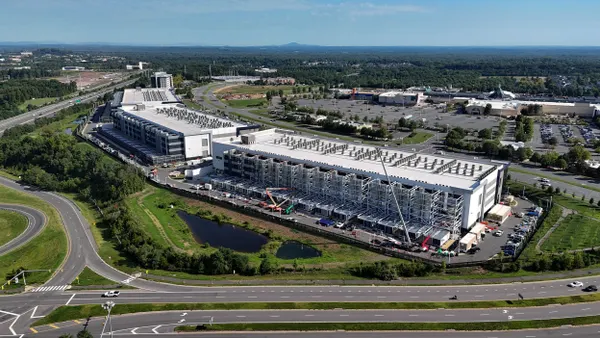
“Electricity demand projections are higher than we've ever seen at any point in the last two decades,” Robb said. “These trends are driven by the proliferation of large industrial loads, particularly but not exclusively data centers, and expanding use of electric heating and electric vehicles.”
The rate of increase in electricity demand is “staggering,” he said. Summer peak demand is projected to rise by 200 GW, with winter demand growing faster. “That's 70% higher than what we projected at this time last year,” Robb said.
Older generators are being replaced by renewables and batteries, which leaves supply increasingly weather-dependent. There is also a decline in the essential reliability services necessary to support voltage, frequency and ramping needs, he said.
Over the next 10 years, coal and natural gas’ share of U.S. generation is projected to decline from 62% to 48%, while renewables and batteries will grow from supplying 12% to 34% of peak demand, Robb told lawmakers.
More supply is needed. “Projects need to get out of the queue and into the ground much more quickly,” he said.