LS Power has closed on a $6 billion private equity funding round, up from an initial $4 billion target, the power infrastructure company said earlier this month. About $1.7 billion of that money is dedicated to LS Power’s planned purchase of about 5 GW from Constellation Energy.
Utility Dive talked with Darpan Kapadia, LS Power’s chief operating officer, on Friday to get the company’s views on what’s driving the power sector, including data center demand, the outlook for gas-fired and renewable generation, and opportunities for transmission development.

Founded in 1990, LS Power built up a roughly 5 GW portfolio of gas-fired power plants, which it sold to Cogentrix and NRG Energy by 2001, Kapadia said. After a series of power plant bankruptcies in the early 2000s, LS Power launched its private equity arm and rebuilt its portfolio by buying distressed assets. Since then, the privately held company has raised more than $19 billion in private equity, he noted.
Among its companies, LS Power owns or majority-owns Clearlight Energy, Endurant Energy, EVgo, LS Power Grid and REV Renewables.
This interview has been edited for length and clarity.
UTILITY DIVE: What opportunities are out there for investing the money from the fundraise?
DARPAN KAPADIA: We have our private equity business, we have our generation development business and we have our transmission development business. So, we're in a unique position where we have the ability to buy or build any power infrastructure-related project across the United States.
We were able to raise the quantum of capital at the speed that we got it done because of a few things. One is investors appreciated the unique, differentiated platform that we’ve built over 35 years. It's hard to replicate that.
Two is that we have a very attractive, long-term realized track record of investing in the space. And then lastly, I do think at this particular moment in time, there's investor interest in establishing exposure to the sector trends that are playing out in the power space today.
What types of trends?
The way we think about the opportunity set is really in three large categories. One is conventional generation — that's gas-fired, combined-cycle projects or peaking projects. Two is renewables. That's solar, wind, run-of-river hydro, pumped storage hydro, battery storage, renewable fuels. And then three is distributed resources. That's energy efficiency, demand response and microgrids.
The reason we were comfortable raising a $6 billion fund, which was more than twice the size of our last fund, is because we see interesting opportunities across all three categories.
On the conventional generation side, the trends are that the demand for firm capacity is growing at rates we haven't seen before. Over the last couple decades, electricity demand [growth] was limping along between zero [percent] and a half a percent. When you look across the market today, electricity demand, depending on where you are, is growing anywhere from 1[%] to let's say 4% or 5%. And much of the incremental demand is for firm capacity, the kind of capacity that can ramp up, ramp down, and stay online.
I think around the renewable side, there, it's particularly interesting at the moment. My experience has been [that] whenever you see dramatic swings in fundamentals, policy and sentiment, opportunities are created. We're seeing that around renewables today, particularly already-built, operating, cash-flowing renewables, as well as select development platforms.
One of the largest transactions we’ve done is, last year we acquired Algonquin's North American renewable business, which was a complicated situation. It was 44 assets residing across a dozen states, five power markets, four provinces, two countries, and a very varied commercial profile. Some long-term contracts, merchant assets, some development, a mix of technologies, and we were able to take the whole thing down.
What we've seen is, in particular, non-U.S. sellers are repositioning their businesses, and that's generating opportunities.
Sentiment pendulum-shifts can move pretty rapidly from time to time, and that creates opportunities. We saw that on the gas side not too long ago. We were acquiring gas-fired assets when the sentiment around those projects was pretty negative.
Speaking of sentiment shifts, how is LS Power thinking about data center AI-driven demand growth? How are you thinking about the validity of demand forecasts right now and the risks around a potential [power supply] overbuild?
I think it's helpful for us that we've lived through these cycles, and we know history can repeat itself, or at least it can rhyme. But our view is that the environment today is very different than the one the sector went through in the early 2000s.
The demand growth we're experiencing today is real. It feels extremely durable, and it's more diverse than just AI and data centers. It's manufacturing. It's electrification. It's demand for compute beyond just AI. So we think the drivers are secular in nature; they're durable.
But just as important as the demand story is what's happening on the supply side. And I would say today, it's never been harder or more expensive to build new, in particular, gas-fired generation infrastructure than it has in the past.
So you see the demand growth that feels real and durable, the supply side is going to take time to catch up, and the markets are screaming that.
The PJM Interconnection is one of those markets that's screaming. How is LS Power thinking about new build in PJM and potential uprates?
I think what's important to appreciate at this particular moment is that much of the new demand growth that we're experiencing can come online very quickly. You could stand up a data center in one year or two years, but from an energy infrastructure developer perspective, that's a longer process. So you're going to have this lag between new demand showing up and the supply coming to meet that demand.
[That’s] because on the development side today, it takes longer and more capital to get through the interconnect process. It takes longer and more capital to secure the necessary equipment. And when you look at the different steps of the process that need to be executed, it can take four, five, six years from start to energization for a large combined-cycle, gas-fired project in PJM — or, really, in any other market.
But there are things you can be doing in the interim, [such as] expansions and uprates. I think demand response and energy efficiency can play an even greater role to take some of the strain off the system until supply can catch up with demand.
To what extent does the recent rise in interest rates affect project viability and decision-making?
The impact is really marginal. When you're developing these large pieces of energy infrastructure, the interest cost is a relatively small portion of the totality. To build a 1 GW combined-cycle [plant] today, your all-in cost is probably north of $3 billion — that's probably twice as much as it was just six, seven years ago. So you've seen significant cost inflation on the construction side, in particular, and rising rates is part of that, but it's not critical.
What is LS Power seeing in terms of the opportunities in transmission?
Our experience has been when you have these kinds of significant shifts that are happening in the sector, it's not only the generation side that has to adapt, it's the transmission side that has to adapt.
Ultimately, we need to move the electrons across the system and do it in a way that removes congestion, makes the overall system more efficient and ultimately reduces costs for ratepayers and businesses. We think that in this time of significant focus on affordability, policymakers appreciate that a competitive market around transmission is ultimately good for the ratepayers, and that opening up of markets to competition from independent transmission developers like LS Power has been a positive development for the industry, and I think that trend will continue.
The permitting bill that's pending in the Senate has a chunk of transmission-related provisions. When you think of the challenges of building transmission — or any infrastructure — where do you put permitting issues in the ranking of challenges developers face?
We're trying to build assets with a 20-, 30-, 40-year time horizon, so we need durable policies — and these comments apply both to generation and transmission. We need clear market signals, undistorted market signals. We are strong proponents of competition, and that's on the generation and the transmission side.
And then I think policies that reduce the barriers to execution are also important, and that can get to permitting reform. That can get to clear and quicker interconnect processes and the like. And so, policies that advance those principles, we're supportive of.
How is LS Power viewing the potential for battery storage?
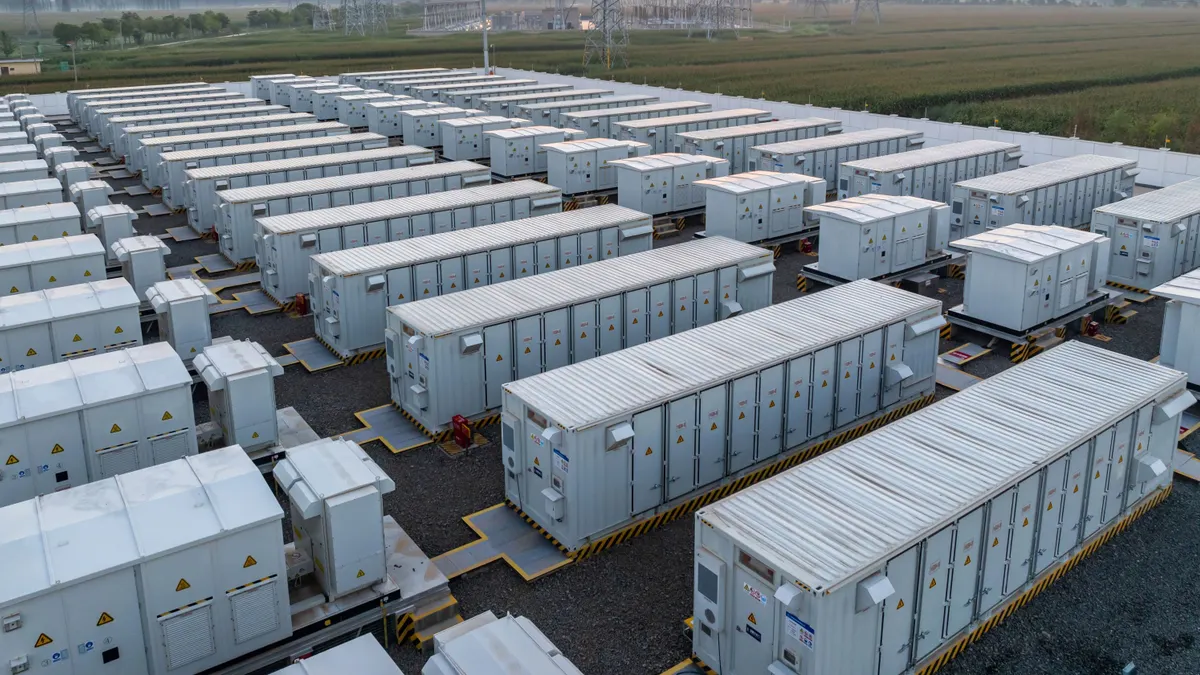
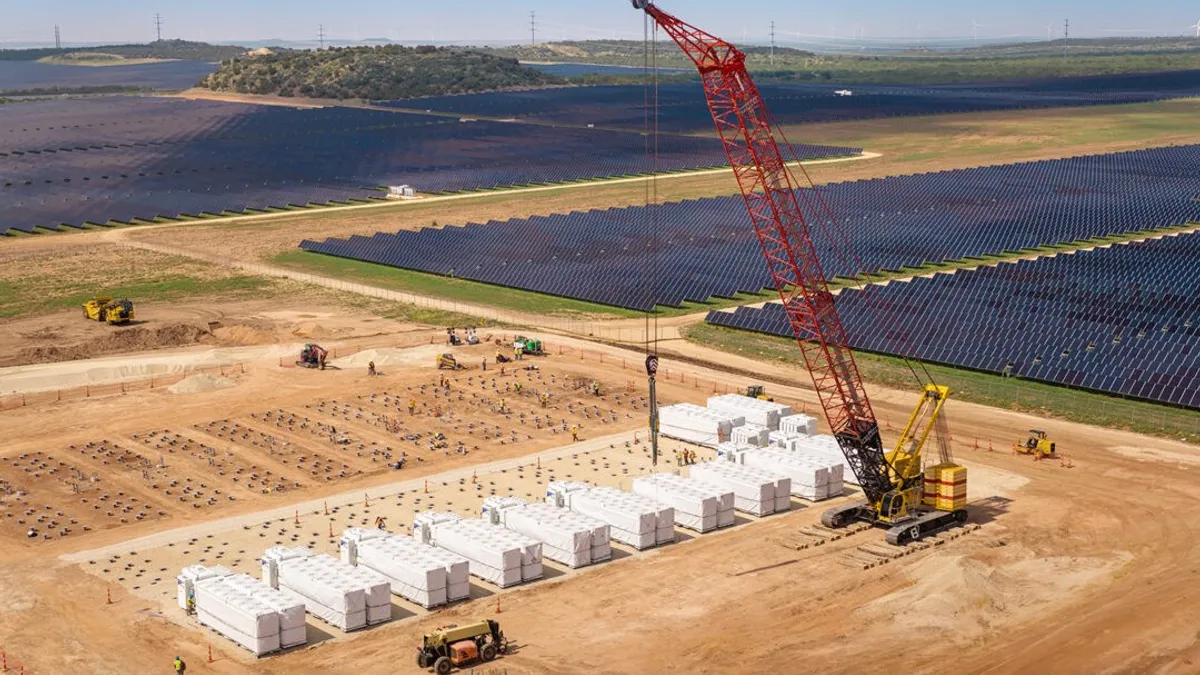
Battery storage will continue to play a really important role in managing the system because when you have this kind of demand growing as quickly as it is, and it takes as long as it does to build conventional generation projects, battery storage projects can get developed and built at a quicker pace.
Battery storage could play a variety of roles. It can help manage the peaks and smooth out the curves, but it can also be very complementary to a transmission solution to help relieve congestion or bottlenecks. We're looking across all the various markets to build battery storage right now.