Jeff Cramer is president and CEO of the Coalition for Community Solar Access.
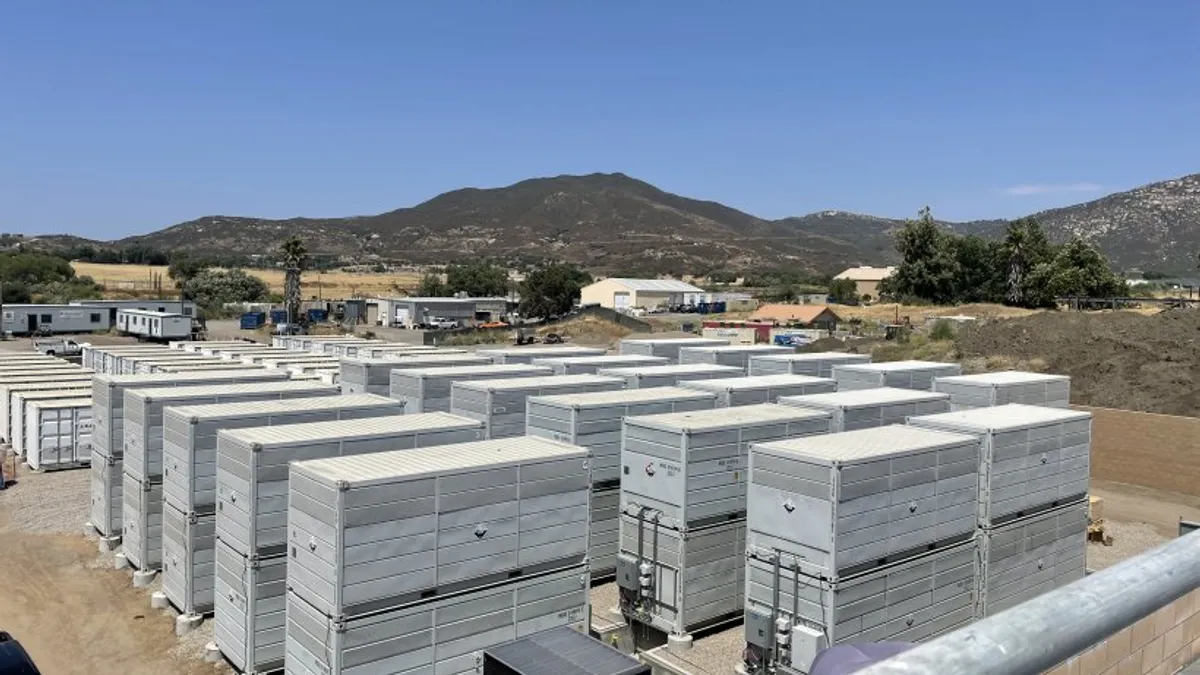
Earlier this month, the Minnesota Public Utilities Commission approved Xcel Energy's Capacity*Connect program, authorizing the utility to own and deploy up to 200 MW of distributed battery storage across its distribution system. Our organization, the Coalition for Community Solar Access, alongside the Solar Energy Industries Association and Minnesota Solar Energy Industries Association, raised concerns about the program's design. But now that the decision is made, it's worth stepping back and being honest about what's good here — and what the broader moment demands.
The good news first. A major investor-owned utility is now formally validating what distributed energy advocates have argued for years: that front-of-meter battery storage, strategically sited on the distribution system, is a legitimate, scalable tool for meeting resource adequacy needs, improving grid resilience, and inherently deferring costly transmission and distribution upgrades. That's no small thing. For an industry that has historically defaulted to centralized generation and big-iron transmission as the answer to every planning challenge, Capacity*Connect represents an institutional acknowledgment that the future grid will cost less and work better if built differently.
And perhaps this is the way it had to happen in a regulated market. Maybe it took extending the monopoly framework — single-sourcing the development work through a hand-picked deployment services company that has not yet demonstrated commercial deployment of front-of-meter storage projects, and placing the assets in the utility rate base — to get a utility comfortable enough to test this approach from the inside. If that's what it takes to prove the concept, then let's learn everything we can from it. Then competitive, non-utility market players can bring home the big benefits.
We should expect this behavior from utilities. When they finally see value in something, they want to monopolize it and earn a return on it. It's not villainy; it’s the default incentive structure under cost-plus regulation.
But here's where the forest gets lost for the trees. This decision arrives in a moment of extraordinary urgency when business-as-usual is not good enough.
Under a paradigm that maximizes competition and innovation, distributed energy resources could support that growth without creating runaway electric bills. Load growth forecasts have increased nearly fivefold nationally. The DOE estimates virtual power plants could reach 80 to 160 GW by 2030. Rewiring America has estimated that targeted deployment of distributed resources could free up over 100 GW of grid capacity in the next five years alone. We need all the capacity we can deploy, and we needed it yesterday.
Against that backdrop, consider what Minnesota just approved: A pilot capped at 200 MW with a $430 million ratepayer-funded budget, to be executed by an untested service provider and a utility still primarily fixed on the growing central-station way of spending.
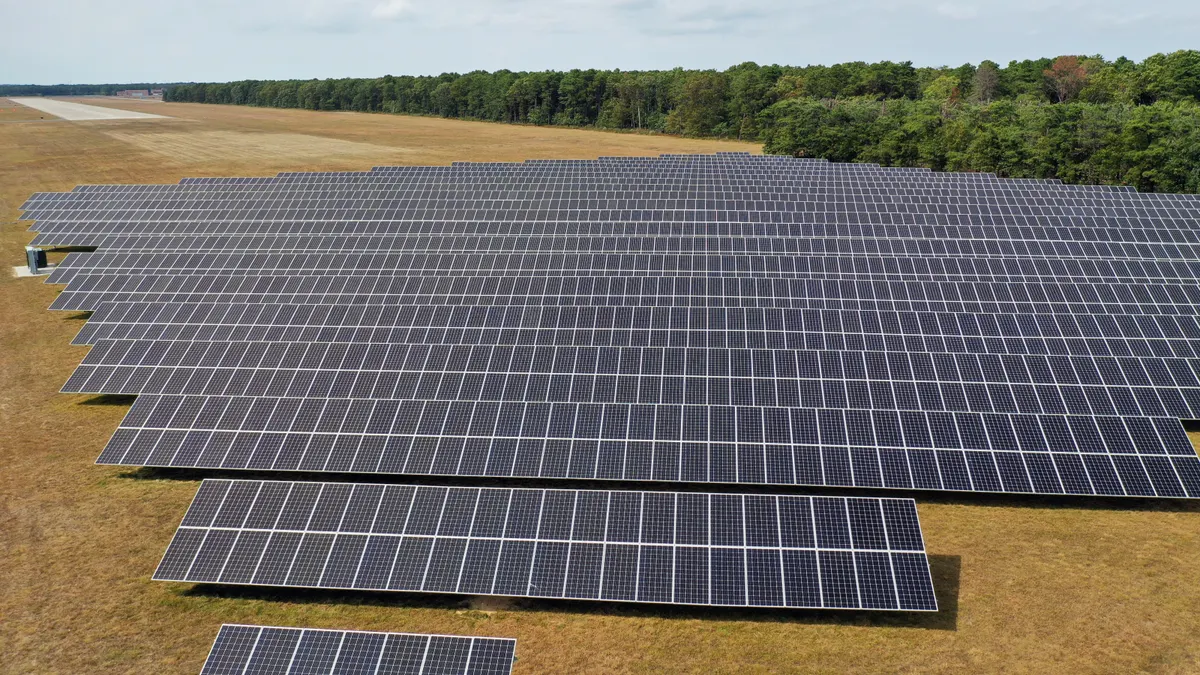
Meanwhile, an entire competitive ecosystem of private developers and financiers with a proven track record of building distributed solar and storage stands ready to meet the demand. These businesses compete in markets for funding and have succeeded, with more than 10 GW of community-scale projects built, another 8 GW under development, and gigawatts of battery storage installed across the country.
Minnesota is now the only state pursuing a distributed storage model that puts everyday customers on the hook for utility spending and performance risk instead of leveraging that competitive private capital.
Sadly, the regulators at the Minnesota Public Utilities Commission also declined to act on stakeholder requests to explore a behind-the-meter virtual power plant program, leaving both front-of-meter and customer-sited solutions without a clear pathway forward.
We've seen this movie before. Back around 2016, when community solar was emerging, utilities argued they could build bigger and better programs themselves. Some proposed utility-owned community solar gardens that would render third-party development unnecessary. A decade later, the scale and cost savings didn't come from utility ownership. It was the open-market model that delivered hundreds of megawatts, attracted billions in private investment, and created the robust supply chain that serves communities across the country today. Capacity*Connect risks repeating a failed paradigm: a utility-controlled pilot that validates a monopoly concept while intentionally slowing the competitive market that would actually deliver benefits at scale.
So where do we go from here? Let's build the 200 MW of storage. Let's collect the data, learn from the deployment, and hold Xcel to the independent evaluation that regulators wisely required. But let's not pretend this is the model for meeting a 100-GW challenge.
For now, the real lessons are being learned outside of Minnesota. CCSA is working with regulators and utilities across states to design front-of-meter distributed solar and storage programs — typically 1–20 MW solar-plus-storage or standalone storage facilities interconnected on the distribution system — that are open, competitive, and built to deploy at the speed and scale this moment requires. Programs where private capital bears the financial risk, where developers can freely participate, and where ratepayers benefit from market discipline rather than subsidizing a single provider's learning curve.
We need competitively procured, third-party owned innovation to set the market standard for utility projects. This is a moment for diversifying strategies and unleashing every tool we have. Capacity*Connect may be one small step in that direction. But the leap this grid needs will come from competition.