Dive Brief:
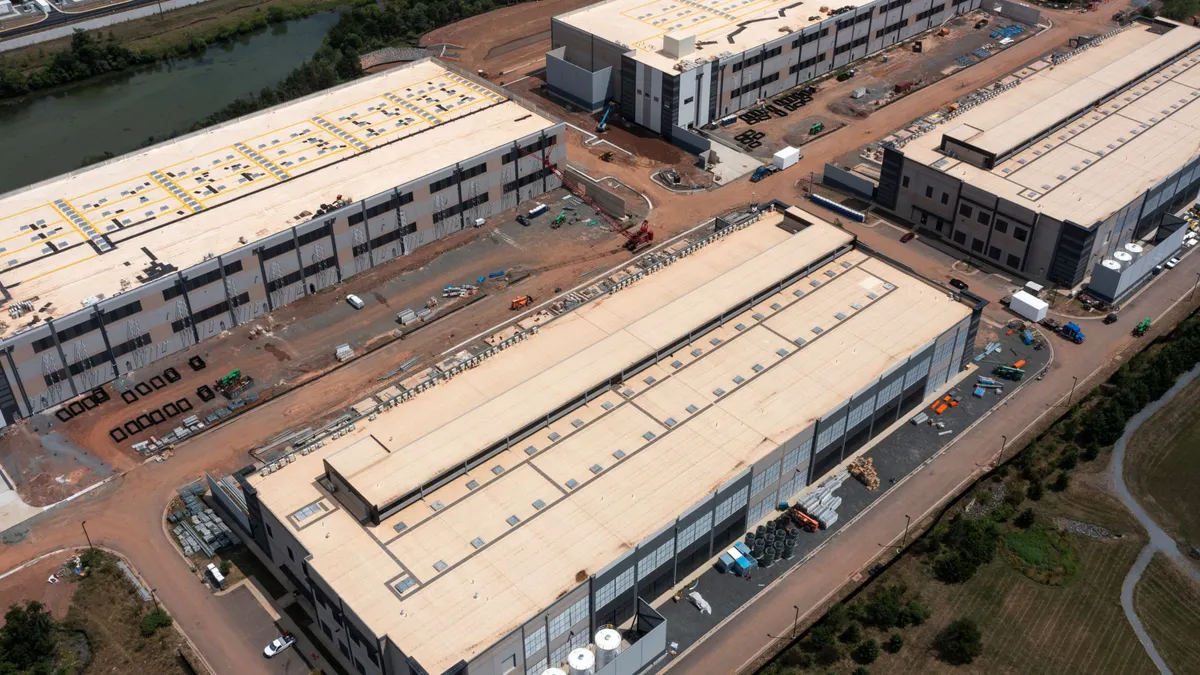
- The Midcontinent Independent System Operator expects its peak load will grow to about 163 GW by 2035, up 35% from its 2025 peak of 121 GW, driven largely by data center development, MISO said in a presentation on its latest long-term forecast.
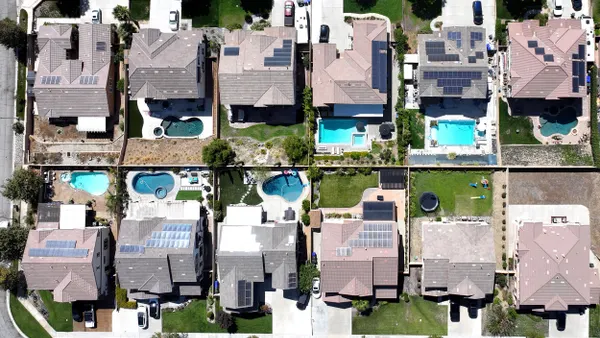
- Other factors pushing up MISO’s load forecast are electric vehicles — although less than previously expected — manufacturing, and the residential and commercial sector, according to the presentation, which was discussed at an April 13 workshop.
- MISO cautioned that future data center power demand is “highly dependent” on the emerging AI industry being able to successfully find routes to profitability. “Limited data transparency and planning visibility — including no centralized data clearinghouse, opaque project pipelines, lack of historical operational/metered data, uncertain project commitments, and rapid technological change — increase forecasting and execution risk,” MISO said.
Dive Insight:
The grid operator added that “rapidly rising announcements and project submissions widen uncertainty around both data center volume and realization timelines, although signs of ‘right-sizing’ are appearing.”
Stephanie Chesnick Cutter, EY Americas power & utilities leader, who has advised utilities, regulators and large load project developers, said forecasts are being refined as utilities require larger deposits and other contractual commitments from hyperscalers to minimize the risk of stranded assets. But changes to load forecasts, supply chains, tariffs, policy and other factors are increasing pressure on utilities to move more quickly than they have in the past, she warned.
“My advice [to utilities] would be that we continue to look at more dynamic planning models,” Cutter told Utility Dive in an interview. “Making sure that they’re sorting through speculative versus more committed load, and then also having more dynamic planning models to make sure that we can adapt our perspective as these areas of uncertainty pop up.”
MISO said that it expects 8 GW to 14 GW of data centers will come online in 2026–2027 — and that the outcome of that forecast will be a key sign of how quickly data center-driven demand can materialize.
Under MISO’s “current” trajectory — a mid-case scenario mainly driven by “high confidence” data center projects — data centers would use a fifth of all MISO’s electricity by 2030 and a quarter of it by 2040, according to the presentation.
MISO defines high confidence data center projects as ones that have interconnection agreements, regulators are aware of them and construction is underway, according to the presentation.
MISO expects that most of the data center growth will occur in the central region, which includes states like Illinois, Indiana and Michigan. Under the mid-case forecast, the region’s energy use grows at a 2.7% annual clip over 20 years. MISO’s northern region, which includes the Dakotas, Iowa and Montana, grows at a 2.6% pace and its southern region grows by 1.9% a year, according to the forecast.
MISO expects it will release a 2026 long-term forecasting white paper later this month. It asked for comments on its forecast by May 8.
MISO manages the grid and power markets across 15 states from Louisiana to Minnesota and in the Canadian province of Manitoba.
Meris Lutz contributed to this story.