Dive Brief:
- Transmission owners, grid operators and policymakers looking to interconnect large loads without straining the system or burdening other customers have many options for increasing grid headroom and flexibility, panelists from major utility and tech companies told attendees at the 2026 BNEF Houston Summit in Texas Wednesday.
- Tyler Norris, head of market innovation for energy and power at Google, said with estimated grid utilization rates between 40% and 60%, the “real whitespace” is how to better enable non-firm transmission service.
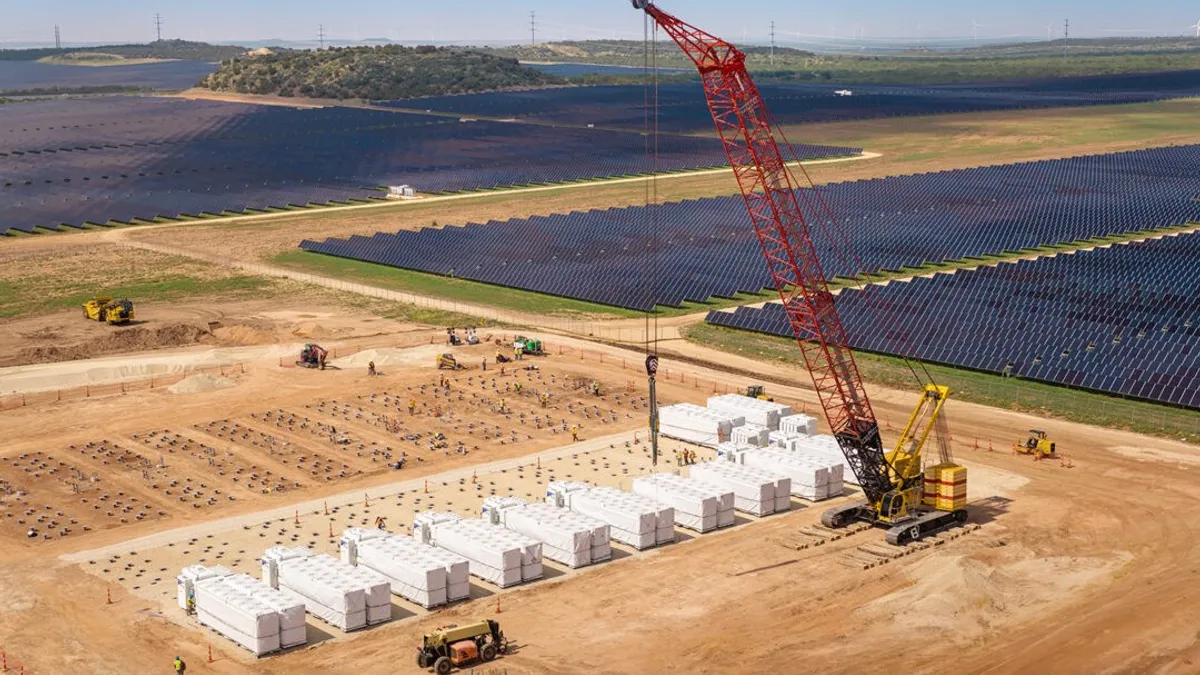
- Large-load customers are eager to contribute flexible capacity if it allows them to interconnect faster, Norris said, citing an agreement between Aligned Data Centers and Portland General Electric in which the developer agreed to deploy a 31 MW/62 MWh battery for a 72-MW data center in Hillsboro, Oregon, to accelerate interconnection. “That allowed them to bypass what would have otherwise required a fully firmed network upgrade,” Norris said, adding: “We will see more” of these types of arrangements.
Dive Insight:
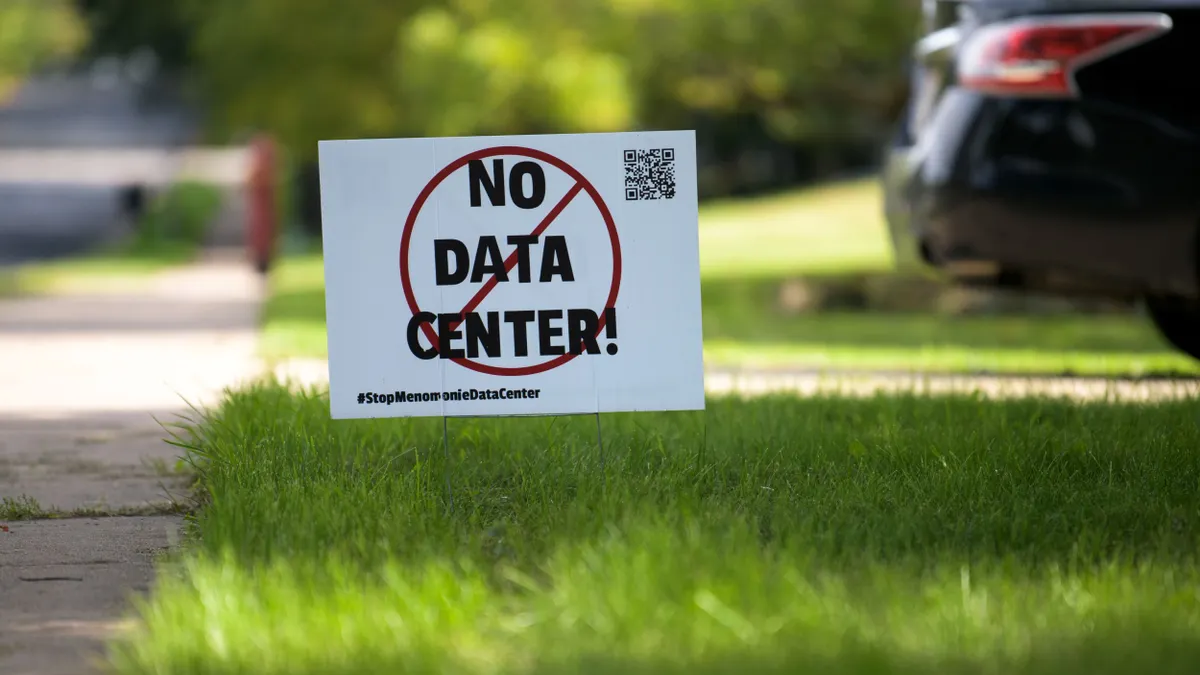
The panel on grid utilization was held as utilities, hyperscalers and regulators are scrambling to accommodate large-load demand amid backlash from ratepayers concerned about affordability.
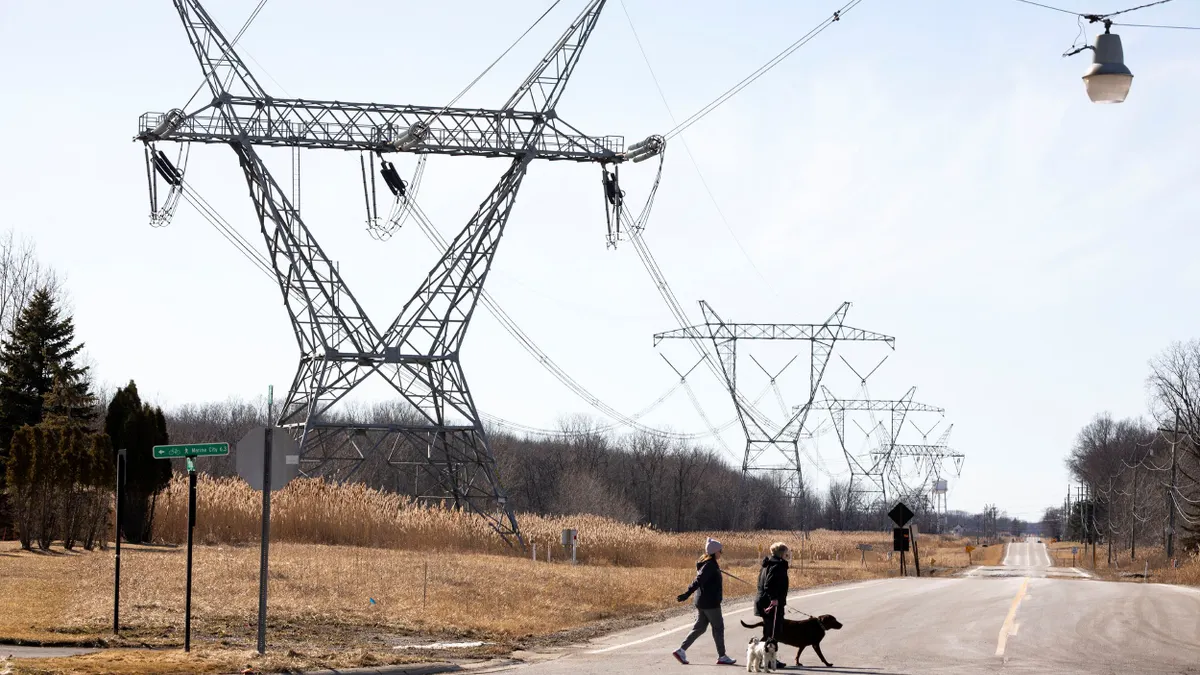
Grid Strategies, a consultancy that publishes a closely-watched annual report on U.S. bulk power supply and demand, said late last year that the systemwide load factor is about 60%, heading to 66% by 2030. Grid Strategies defines load factor as the ratio of average energy usage to peak load.
Some utilities run their systems at even lower load factors.
In response to a first-of-its-kind legislative mandate, Dominion Energy’s Virginia subsidiary revealed last month that its distribution grid runs at an average load factor of 41% and peaks just under 80% utilization. Its transmission system’s “median facility utilization” is about 33%, though individual facilities may approach or exceed rated capacity during outages, demand peaks or “significant power transfers,” Dominion said.
Jessica Hogle, NRG’s vice president of federal affairs, said that utilities should think ambitiously about grid flexibility.
“We should just say: ‘This is our goal and we will get there’,” Hogle said.
NRG, a Texas-based independent power producer and retail energy provider, aims to deliver 25 GW of demand response, energy storage and virtual power plant capacity by 2035, she said, adding that NRG believed the goal was ambitious but achievable.
Hogle joined NRG in June. She began her career in the electricity business with Pacific Gas & Electric Corp. as the San Francisco-based investor-owned utility navigated shifting policy winds, she said.
“We would say, there is no way we could do this in terms of integrating these resources, it is too hard and too expensive,” Hogle said, paraphrasing the company’s message to California legislators mulling ever-stricter renewable energy mandates.
In the end, PG&E’s concerns were overblown, she said, adding: “We exceeded the targets.”
California’s power-sector emissions fell significantly as its renewable generation share grew.
Getting more out of the existing grid — finding “a better way to optimize every dollar” — could likewise have broad-based economic and societal benefits, said Arushi Sharma Frank, a Texas-based energy consultant and strategic advisor to the Utilize Coalition.
“The AI narrative is very important, but underneath that, there is [the] onshoring of everything we need,” she said, referring to efforts to site more heavy and high-tech manufacturing in the United States. “We can’t do any of that if we operate in the same mindset we’ve had for years.”
Grid operators already use tools to improve grid flexibility and increase headroom, like the Remedial Action Schemes common in the Western Interconnection, said Dave Berry, CEO of “powered land” developer Cloverleaf Infrastructure.
A Remedial Action Scheme is, in essence, a logic pathway that defines how the grid responds to a disturbance such as a line or generator outage, Berry said. The drawback is that by curtailing generation or load to protect customers in one area, a RAS may harm their counterparts in another.
“The challenge is getting all the stakeholders aligned,” Berry said.
Sharma Frank, an advisor to the data center flexibility startup Emerald AI, predicted more software-based flexibility solutions too.
Inside utilities, artificial intelligence tools can break down silos between grid planners and operators that have both been hamstrung in different ways by constraints on analytical capacity, she said.
“That is the other interesting part about the AI boom: We have compute that we didn’t have before,” Sharma Frank said. “This unlocks the ability to see [grid] capacity that we didn’t see before.”