Dive Brief:
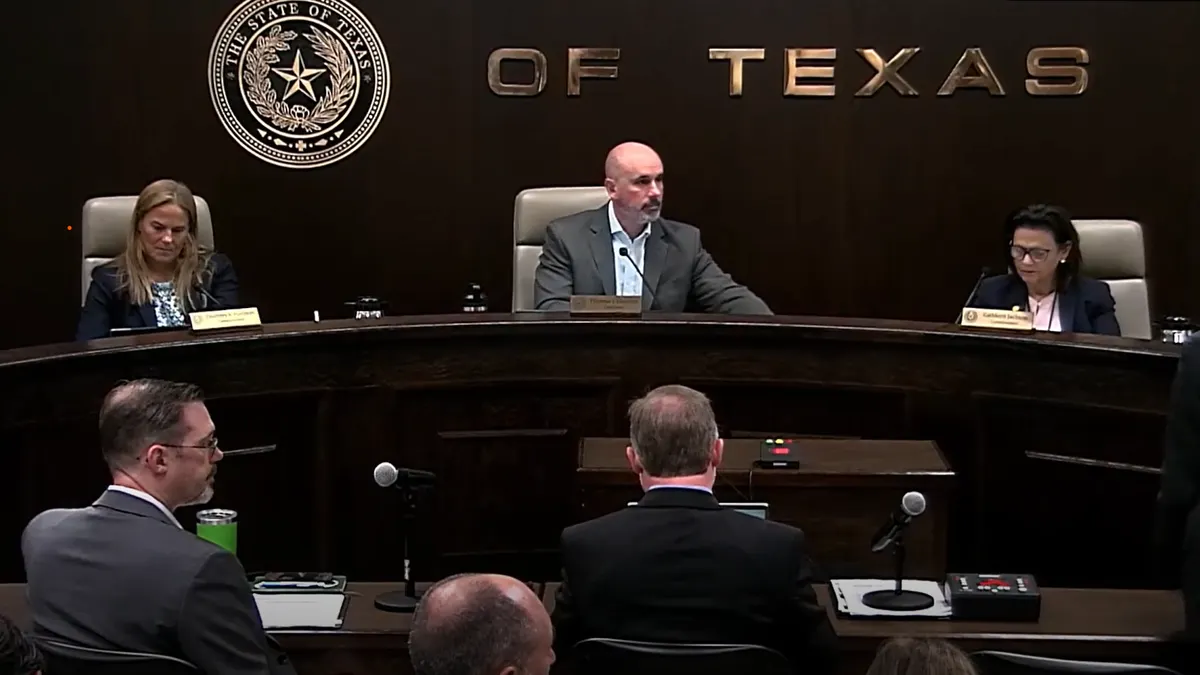
- Virginia Gov. Abigail Spanberger’s office, Meta, Google, Amazon, Microsoft and others weighed in on Dominion Energy’s proposal for allocating the cost of transmission projects driven by data center development at a hearing held by the Virginia State Corporation Commission on Tuesday.
- Louise White, Spanberger’s deputy energy officer, said that the governor’s office wants the SCC to apply three solutions in the case: a “but for” cost causation standard; requiring transmission level-contributions in aid of construction, or CIAC, payments; and transitioning to the summer/winter peak and average cost allocation method.
- Attorney and lobbyist Will Cleveland testified on behalf of Google that Dominion only recently completed its shift to a 12 coincident peak demands allocation factor, and its new GS-5 rate class for large loads hasn’t yet gone into full effect, saying it’s “simply too early in the process” to know whether these changes alone might fairly reallocate the data center cost burden.
Dive Insight:
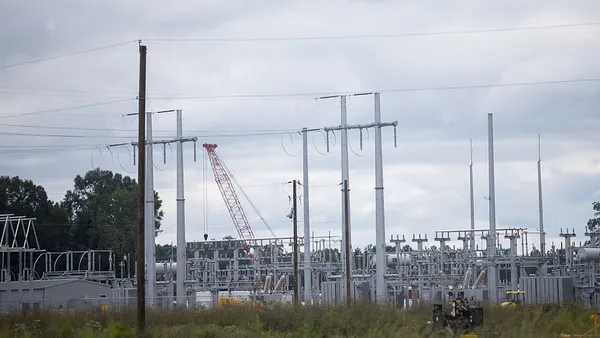
The SCC’s hearing concerns Dominion’s proposed change to its Rider T-1, a line-item charge allocated to cost recovery for transmission investments, which the utility seeks to increase in order to recover around $1.5 billion in transmission costs. Dominion originally estimated that the average residential ratepayer’s bill would increase by around $2.90 a month as a result but lowered that estimate to $0.94 a month based on updated forecasting.
Cleveland said that SCC’s final order in Dominion’s 2025 rate case approved large load provisions like the creation of the GS-5 rate class, with cost shifting as the provisions’ “entire premise ... Why is that not sufficient?” He asked the SCC to direct Dominion to revise its line extension policy to allow for voluntary CIAC payments, which he called a “win-win.”
Andrew Major, an SCC attorney testifying on behalf of commission staff, said that if the commission chooses to adopt a methodology other than 12CP, staff “recommends transitioning over a multi-year period in order to facilitate gradualism and cost responsibility.”
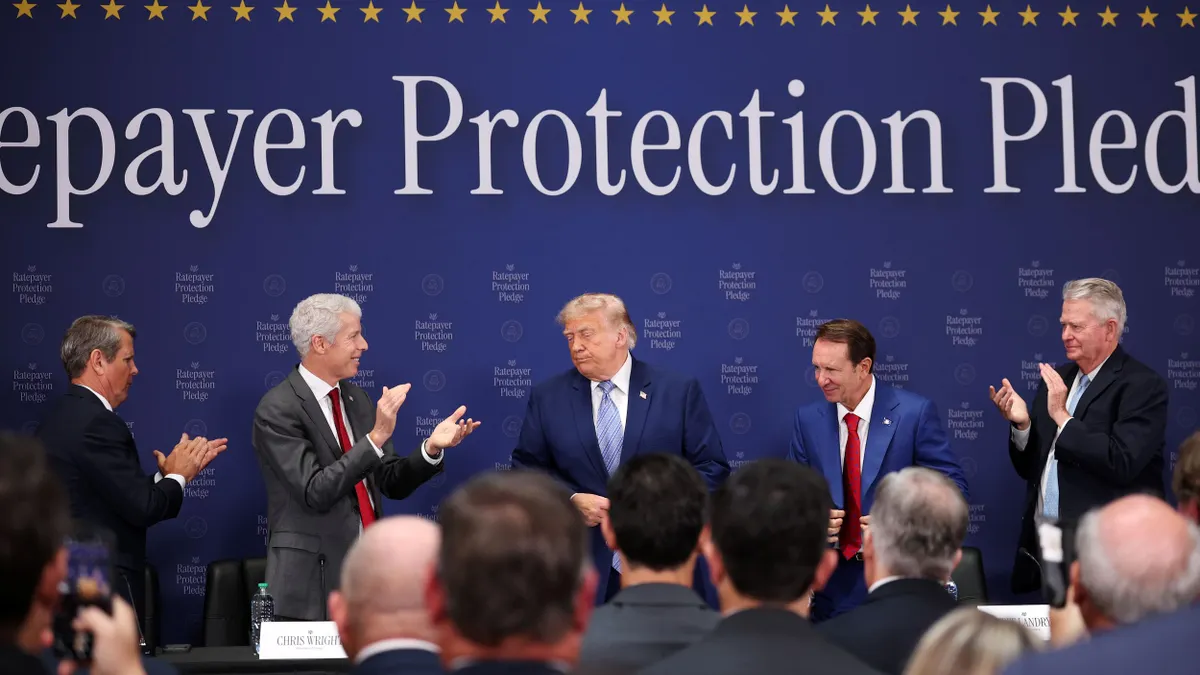
“However, regardless of the cost allocation methodology that is chosen, there remains a glaring cross-class subsidization occurring to the benefit of new GS-5 customers,” Major said. He noted that Google, Amazon, Microsoft and Meta signed a ratepayer protection pledge at the White House in March, adding, “Curiously, none of those companies mentioned this pledge in either pre-filed testimony or opening statements today.”
The SCC continued to hear arguments on Wednesday, and must issue a decision in the case by Aug. 1.
In testimony filed June 11, Amazon witness Cameron Brooks also requested the adoption of voluntary CIAC payments “as a way to reduce ratepayer burden,” saying this would make “the customer’s financial responsibility for the identified facilities … clear, enforceable, and integral to mitigating subsidization and stranded cost risks.”
Jonathan Zader, senior assistant county attorney for Loudoun County — where the bulk of Virginia’s data centers are being developed — testified that “the stakes are particularly high” for Loudoun County, which requests cost recovery under Rider T-1 include direct allocation and CIAC payments for upgrades that are “but for” caused by interconnecting large load customers.
Methodology arguments
Michael Goggin, of Grid Strategies, testified on behalf of Appalachian Voices that concerns about stranded asset risk — enabled by what Brooks called the “socialization of speculative investment” from data center developers — is driving advocacy for CIAC payments as well as direct assignment, which allocates the cost of upgrades directly to the customer or rate class they’re serving.
But Goggin argued that “direct assignment only helps address part of the problem here. Dominion is still far too reliant on supplemental projects and needs to be directed to utilize the PJM regional competitive transmission planning process for the bulk of its transmission investment, so that we can reduce costs for all ratepayers,” he said.
John Farmer, section chief of the insurance and utilities regulatory section within the office of consumer counsel at the Virginia Attorney General’s Office, said the consumer council office “generally supports direct assignment conceptually when it is possible to identify a cost causer,” and “believes that the situations in which we may be able to identify a specific cost causer are growing.”
“But unlike allocating costs among the different classes, something this commission has done with regularity for many many years, there are uncertainties when it comes to the direct assignment of transmission costs that may warrant additional analysis,” Farmer said. For instance, he said, additional analysis on the relative merits of direct assignment to specific customers versus direct assignment to the overall GS-5 rate class “could be helpful.”
Farmer also said that the summer and winter peak average methodology of calculating cost, or an average and excess methodology used alongside 12CP, could be “reasonable alternatives” to the current 12CP methodology.
“Consumer Council does not find [Dominion’s] counterarguments to testimony recommending the SWPA method, in particular, to be persuasive, and expects the evidence that will come before this commission will support a movement to that methodology,” he said.
Dominion uses SWPA for cost-of-service studies and rate structures in North Carolina, but Dominion regulatory analyst Robert Miller said the company “believes that 12CP is the more appropriate allocation methodology for the companies for the Virginia jurisdiction.”
Miller reasoned that Dominion has a much smaller service territory in North Carolina, and he is not aware of any new high load factor customers in that area. He said that 12CP is a preferable methodology for use in Virginia, but agreed with Southern Environmental Law Center senior attorney Nate Benforado that SWPA “is in the zone of reasonableness.”
Correction: This story has been updated to add Dominion's more recent estimate of how much a residential ratepayer's bill would increase.