

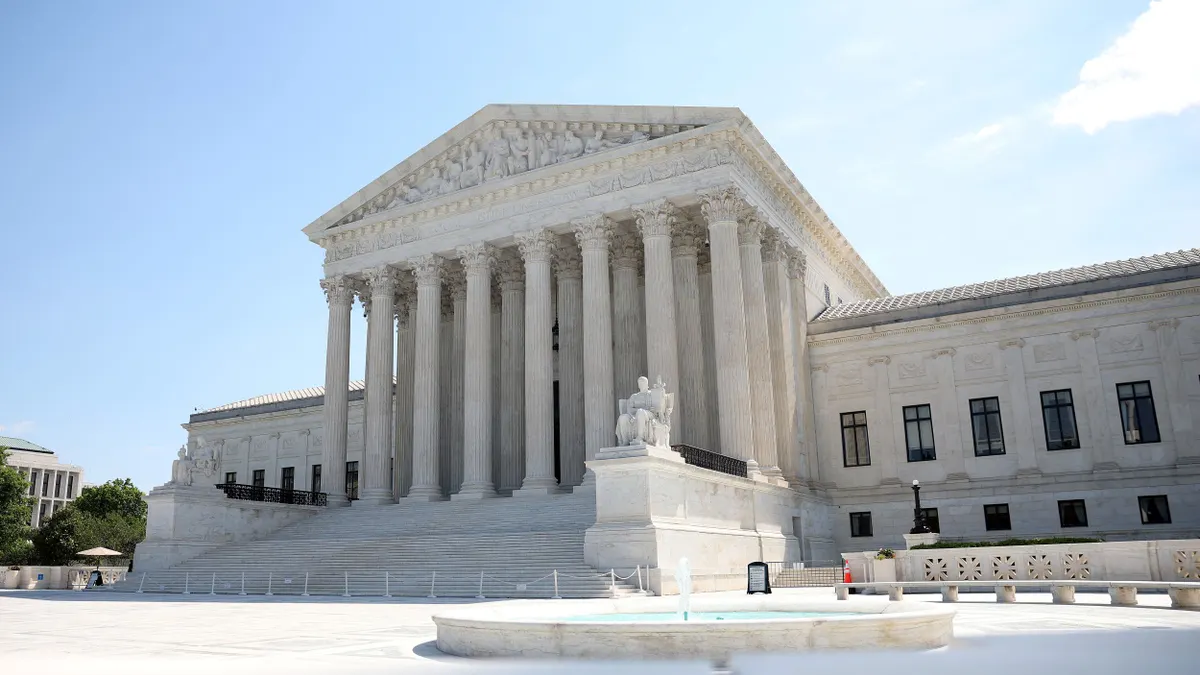
The independence of the Federal Energy Regulatory Commission could be significantly impacted by the Supreme Court’s June 29 decision in Trump v. Slaughter, which significantly expanded the president’s ability to fire regulators at will, former FERC commissioners appointed by both Republican and Democratic presidents told Utility Dive.
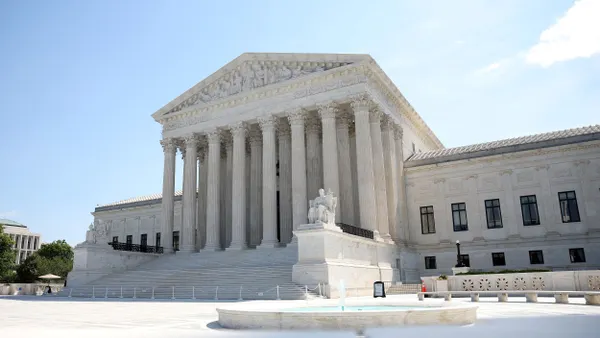
The court’s 6-3 decision found the president’s dismissal without cause of Commissioner Rebecca Kelly Slaughter from the Federal Trade Commission was within his constitutional rights. The decision applies to many other federal agencies, including FERC, legal experts say.
Former FERC commissioners said the ruling could lead to a loss of quorum at the body, leaving it unable to issue substantive orders. The impact could also cause FERC to lurch in different policy directions based on who wins the election every four years, and both impacts could have negative consequences for electricity markets and the broader economy, former commissioners said.
Independent regulatory agencies “provide informed and expert oversight of the competitive companies engaged in providing consumer goods and services in our economy,” said Jon Wellinghoff, who was nominated to FERC by President George W. Bush in 2006 and named chair by President Obama in 2009.
“Stripping those agencies of their independence will leave consumers exposed to the worst aspects of competitive markets without the protections of informed regulatory review,” added Wellinghoff, now chief regulatory officer with distributed energy resource platform Voltus.
FERC has been “a beacon of stability” invaluable for “long-term investment decisions,” said Neil Chatterjee, who was appointed FERC chair by President Trump in 2017 and again in 2018.
“I now worry that FERC and other commissions will add uncertainty in the markets that is not in the country's long-term interests,” Chatterjee said.
What the decision says
“Because no one could ‘execute the laws’ ‘alone and unaided,’ ... the President must be permitted to ‘select those who ... act for him’ and ‘remov[e] those for whom he can not continue to be responsible,’” Chief Justice John Roberts wrote in the majority opinion, quoting a 1926 opinion by Chief Justice William Howard Taft.
In the court’s three-justice minority opinion, Justice Sonia Sotomayor wrote that the majority overlooked the precedential Supreme Court 1935 ruling in Humphrey's Executor v. United States. Humphrey’s has been at “the center of this Court’s separation-of-powers jurisprudence for nearly a century,” she writes, calling the Roberts opinion a “radical theory of unitary executive power” that “is out of step with traditional notions of separation of powers in this country.”
In Humphrey’s, the 1935 court concluded it “cannot well be doubted” that congressional authority established quasi-legislative or quasi-judicial federal agencies “to require them to act ... independently of executive control.” And that need for independence is “hardly open to serious question” because of the Constitution’s “separation of the powers” of the three branches, it added.
“Especially late in a president's term, a FERC position might not be worth going through the colonoscopy that is a Senate confirmation process."

Neil Chatterjee
Former FERC Chair
Chief Justice Roberts disagreed. The Senate confirms presidential appointments to federal agencies, but “neither Congress nor the courts may saddle him with those with whom he cannot work,” Roberts wrote. Executive dismissal of commissioners is the only way “they remain accountable to the President, and the President to the people," he added.
Of central concern to these former FERC commissioners was Congress’ final authority over all federal taxing, spending, and borrowing under Article 1, Section 8 of the Constitution. Congress’ 1935 Federal Power Act delegates to the expertise of FERC the authority to oversee wholesale electric rates and transmission rates.
Without for-cause removal protections, FERC could become a partisan political body whose priorities flip every election cycle, which increases the entire economy’s exposure to political risks, the former commissioners said.
Potential impacts
Both Chatterjee and Richard Glick, nominated to FERC by President Trump and appointed chair by President Biden in 2021, agreed that any near-term impact of the Slaughter ruling is unlikely.
Recent FERC orders, including June’s key orders on large load tariffs, have been unanimous in resolving current issues and provide no reason to dismiss any commissioner, they said.
In the longer term, both expressed concerns that are shared by Cheryl LaFleur, appointed chair in 2013 by President Obama and in 2017 by President Trump. The decision could erode “the willingness of qualified individuals to serve as commissioners” and disrupt FERC operations “as contemplated by Congress,” said LaFleur, who is now ISO New England board chair.
“The ability to fire commissioners on a political whim,” added Trump-nominated former Commissioner Allison Clements, “risks an interminable loss of quorum required to keep the U.S. energy system running.” Just the threat of loss of quorum “decreases the market certainty necessary to ensure critical investment,” said Clements, now a principal with 804 Advisory.
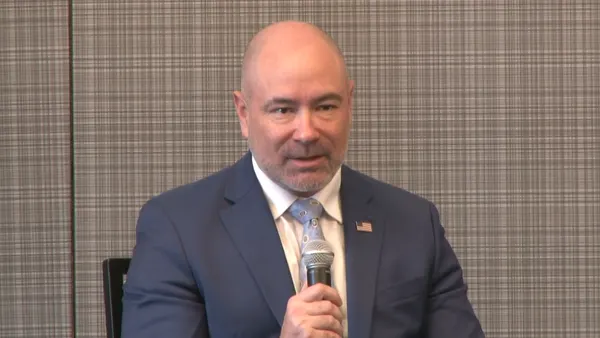
The Slaughter ruling could extend that loss of quorum because candidates for the commission may be unwilling to step up, added Chatterjee, now chief government affairs officer at clean tech company Palmetto.
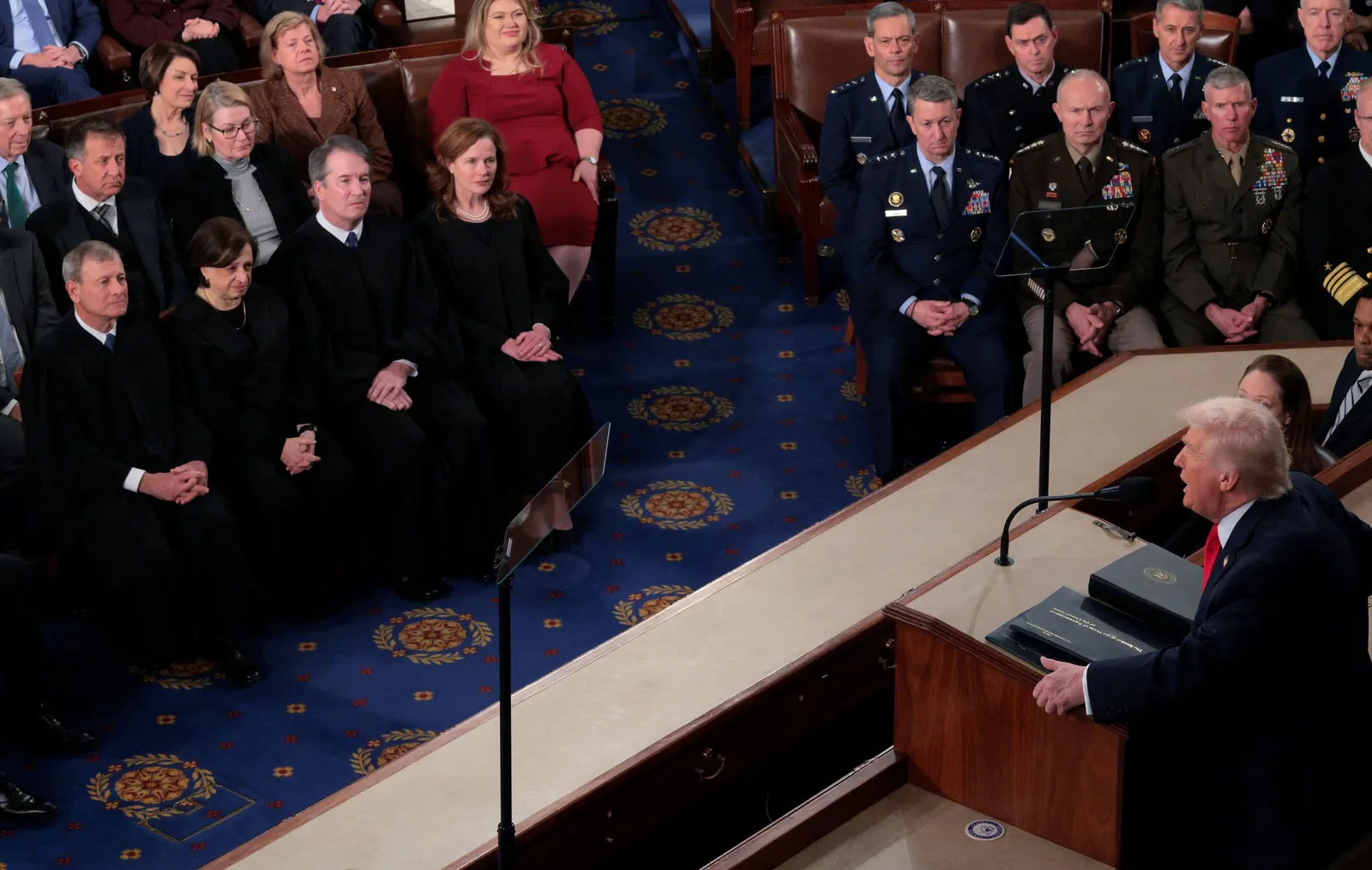
“Especially late in a president's term, a FERC position might not be worth going through the colonoscopy that is a Senate confirmation process,” he said.
In addition, “a party holding the presidency and a Senate majority might ignore the Federal Power Act’s requirement of three commissioners from its party and two from the minority,” Glick said. “That might lead to a president leaving seats open or, eventually, to a full slate of single-party commissioners,” he added.
Slaughter could also diminish the quantity and quality of dissents to FERC rulings vital to representing the full range of commission debates, Chatterjee and Glick said. That could happen because “an aggressive dissent could draw the attention of the White House and get a commissioner removed,” Chatterjee said.
Glick, now a principal with GQS New Energy Strategies, expressed serious concerns about the implications for the economy.
The EPA’s recent history shows how a cabinet-level agency under the president’s full control can lurch in opposite policy directions as presidents change, Glick said. “That could happen at FERC,” and the result could be “drastic regulatory uncertainty.”
“It is hard to reconcile the court's reasoning in the Slaughter decision with the decision blocking Federal Reserve Bank Governor Lisa Cook’s dismissal,” Glick added. In the Cook ruling, the court seemed to protect the banking system, but in the Slaughter case, “it could have thought more clearly about the economic impacts of institutions like FERC.”
Editor's note: This story has been updated to clarify the description of Voltus and to remove quote marks that had improperly been applied to remarks that summarized comments from several sources.