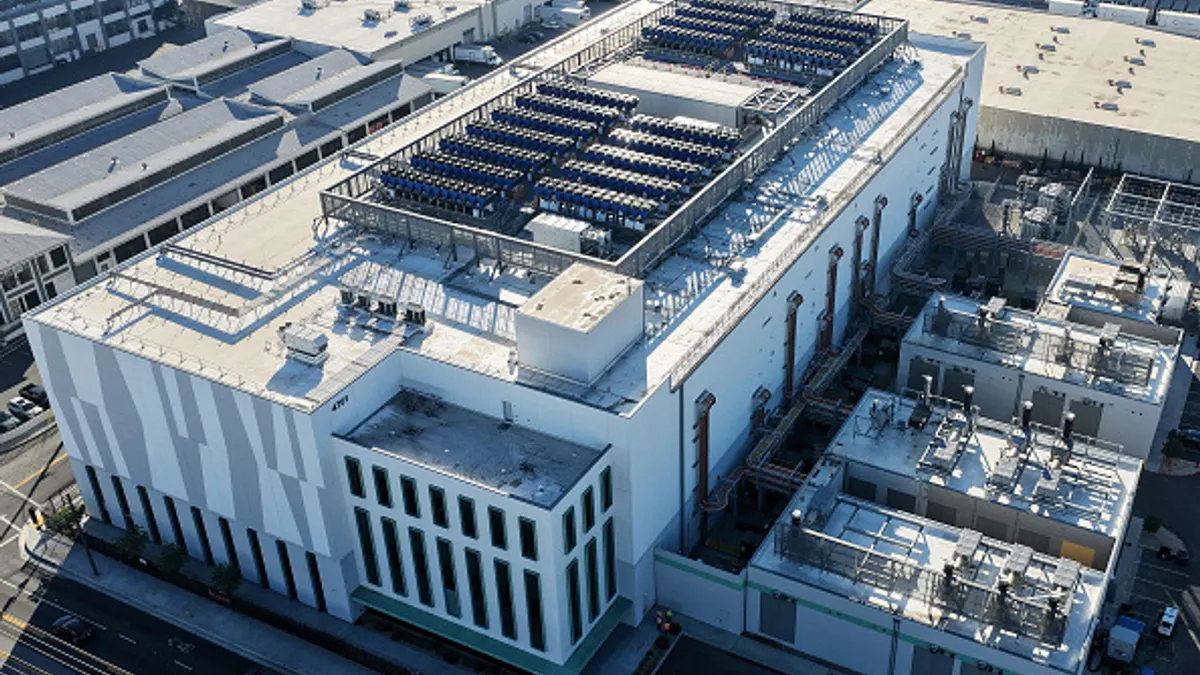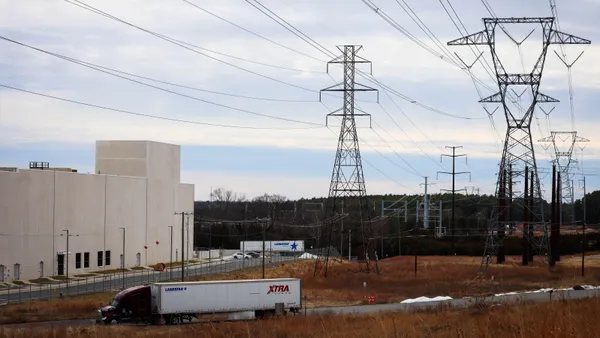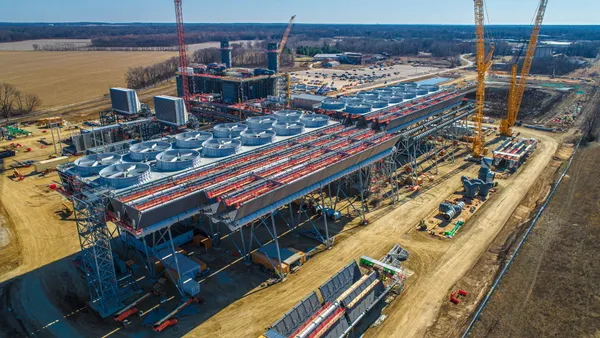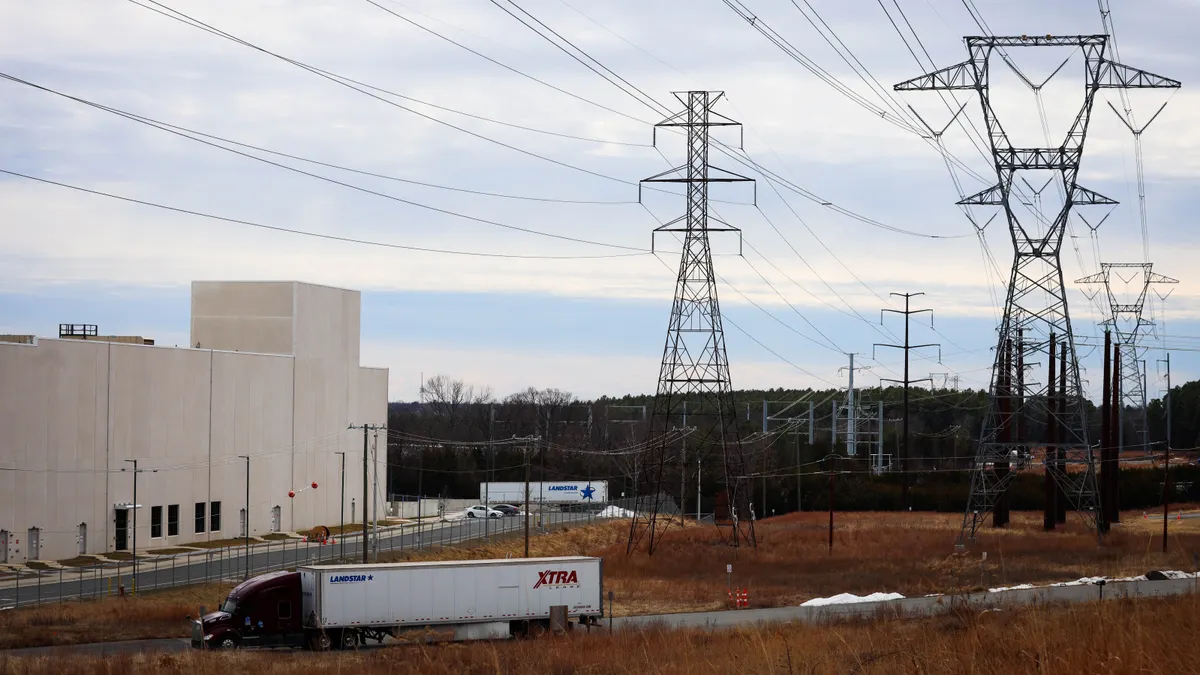
Public Service Enterprise Group’s unregulated power generation arm is exploring opportunities to supply data centers through the PJM Interconnection’s backstop reliability initiative, company officials said Tuesday during an earnings conference call.
PJM has proposed a two-part process for meeting large load demand. It includes a one-time capacity auction that would start Sept. 30 as well as a process that has already started for matching power suppliers with planned large loads, which would lead to long-term bilateral contracts.
Initial bilateral deals could be announced in August, but the entire process could continue into next spring.
PSEG Power, an unregulated PSEG subsidiary, has floated several power supply proposals in New Jersey and other parts of PJM in the bilateral contracting portion of PJM’s initiative, according to Ralph LaRossa, PSEG chair, president and CEO.
“As PJM is moving into this [reliability backstop auction] and there's more opportunities for long-term [power purchase agreement] type or utility-like agreements, we see an opportunity that might present itself,” LaRossa said.
LaRossa declined to provide more details, saying PJM’s plans are in flux, including its load forecast.
PJM, for example, on Tuesday said it was reducing its load forecast for the Commonwealth Edison zone in northern Illinois by 1.3 GW in 2031 and 3.3 GW in 2034 based on the utility’s reduced data center pipeline. The change could affect transmission development in PJM.
PSEG Power is also continuing discussions with potential customers “that see value in our existing nuclear production, future nuclear upgrades and other generation opportunities,” LaRossa said.
PSEG Power owned about 3,760 MW of nuclear generation capacity in New Jersey and Pennsylvania at the start of this year.
PSEG officials were “encouraged” by a report released last month by the New Jersey Bureau of Public Utilities that explores potential changes to the utility business model in the state, according to LaRossa.
The report highlighted several “promising regulatory frameworks,” such as multiyear rate plans, performance-based rates and earnings-sharing mechanisms, LaRossa said.
The options outlined in the report can “further alignment and transparency between the utility business model, state energy policy goals and affordability in the state,” he said.
The BPU is entering the second phase of its review process, which is expected to focus on cost discipline, financing modernization, incentives and shared savings, and performance-based ratemaking, LaRossa said.
Looking ahead, PSEG maintained its previous five-year capital expenditure guidance at $24 billion to $28 billion through 2030, with more than 90% of it focused on regulated investments, mainly to replace aging infrastructure, the Newark, New Jersey-based company said in its earnings presentation.
However, PSEG sees opportunities for additional spending.
“We continue to pursue nuclear revenue opportunities, competitive transmission projects and incremental utility infrastructure projects, including making incremental system investments to connect solar and battery storage resources to the grid to meet new demand, which could provide upside to our current growth outlook through 2030,” Daniel Cregg, PSEG executive vice president and CFO said.
Excluding one-time items, PSEG expects its operating earnings will grow by 6% to 8% a year through 2030.