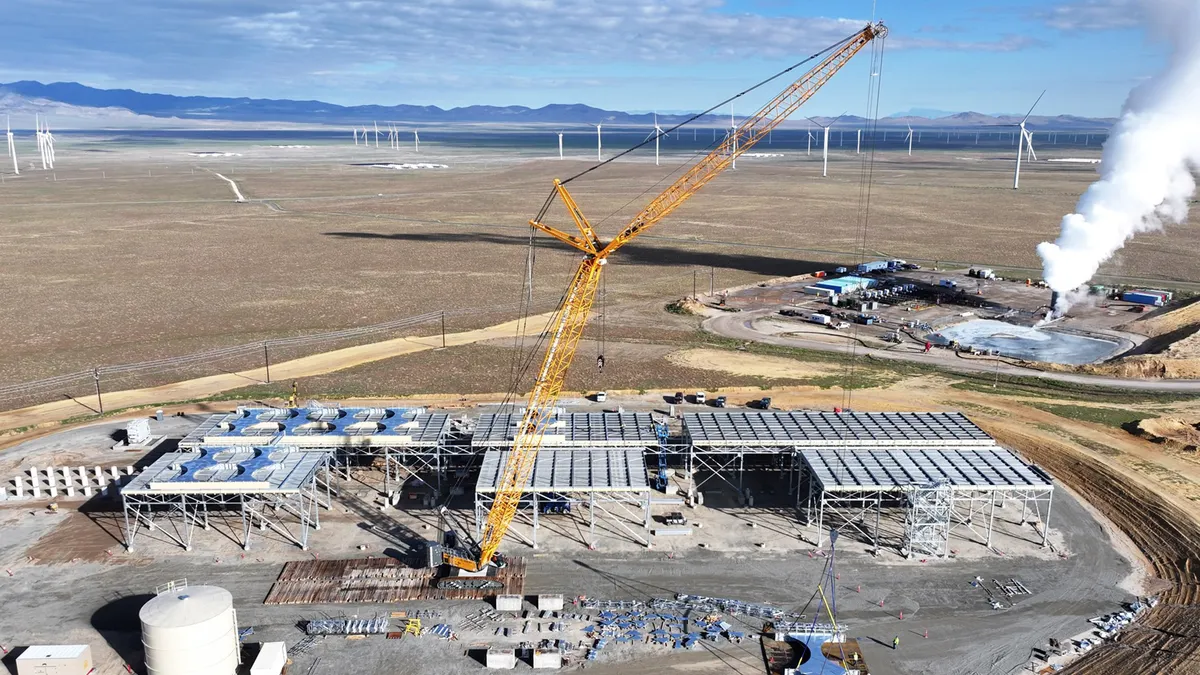
A four-month test of enhanced geothermal systems performance, aimed at derisking the technology to ensure its commercial viability, began in Utah earlier this month, according to the Frontier Observatory for Research in Geothermal Energy.
The test is an “extended circulation” which will allow the FORGE team to “evaluate reservoir performance under continuous flow” over the course of 90 days, potentially extended to 120 days, FORGE said in an Aug. 12 release. FORGE is managed by the University of Utah and funded by the U.S. Department of Energy.
The test will allow FORGE to study “heretofore unknown variables required to ensure long term EGS production remains commercially viable,” Kristie McLin, FORGE’s principal investigator, said in the release. “Although major advancements have been achieved in the past few years, there is still a great deal we do not know about thermal breakthrough and water loss over time.”
An extended circulation test of an enhanced geothermal system “is a significant feat,” DOE said on its website, referring to the August test. “Only a handful of EGS projects worldwide have reached this stage … [The test is the] culmination of years of federally funded work and can hold the key to some of the most important steps to advance EGS.”
Enhanced geothermal systems are still in the early stages of commercialization. EGS startup Fervo Energy’s 500-MW Cape Station is the first commercial-scale EGS project in the U.S., and is anticipated to begin delivering power to the grid later this year.
Fervo Energy went public in a May IPO, and its stock is down 56% from its initial peak. During Fervo’s second quarter earnings call, the company reported “new but temporary, transmission-related curtailment issues for 2027, prompting us to lower FY27 revenue [estimates]” to $63 million from a previous estimate of $79 million, Jefferies equity analyst Julien Dumoulin-Smith said in an Aug. 14 research note.
“The simple fact is, for our projects, there are things within our control and there are things outside our control,” Fervo’s CFO David Ulrey said during the earnings call. “This is not new to power development, and it is not unique to Fervo … We feel really good about the things within our control. Our ability to drill hotter, faster, deeper, and cheaper is an enormous mitigant to a host of factors on our risk register.”
McLin said the positive results FORGE has achieved “over the past few years have been very beneficial to the industry … However, there is still so much we do not know. This extended circulation will provide answers to the pressing questions about thermal decline and water loss, allowing geothermal companies to continue growing and to flourish.”