Purvi Patel is vice president of regulatory strategy for ITC Holdings Corp., where she promotes long-term transmission infrastructure investments by shaping regulatory policies that strengthen grid reliability and enable the efficient interconnection of new generation resources.
As the nation grapples with unprecedented power demand, affordability pressures, and geopolitical tensions, it’s a pivotal moment both for local communities and America’s position in a rapidly intensifying global technology race. The Grid Acceleration Coalition, which includes ITC, recently filed a complaint at FERC that reflects the critical need for speed in building energy infrastructure and the decisive role transmission plays in whether our country can deliver the reliability, affordability, and scale needed to remain in the race.
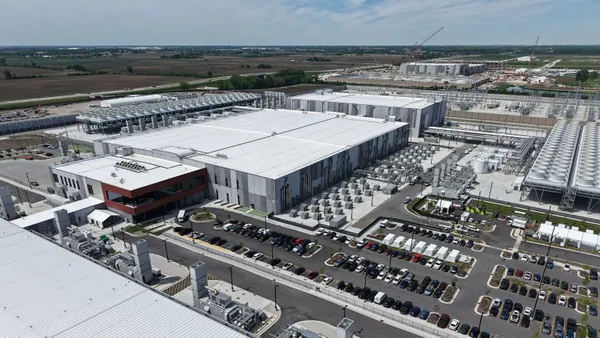
It’s no secret that electricity demand is accelerating nationwide from sources such as data centers and manufacturing. Yet current regulations are struggling to keep pace with this reality. One prime example is FERC Order 1000. It was built for a different time, when load growth was flat, capacity was in excess and time was not of the essence. Well over a decade later, Order 1000 has introduced delay and complexity at exactly the moment the system requires speed and coordination.
At the current rate of transmission growth, outdated regulations carry significant risk. Without exemptions, they automatically impose delays of 16-20 months on many transmission projects. That delay is not abstract. It translates directly into higher costs for customers, slower interconnection of new resources, and missed economic opportunities. While these projects are delayed, so too are customer connections, savings, and U.S. technological progress. The current ineffective and bureaucratic process is threatening our nation’s ability to support increasing demand, the global AI race, and national competitiveness.
Today, we need less red tape holding back progress, not more bureaucratic processes that add time, increase risk and delay benefits to our communities. Order 1000 has failed to deliver any demonstrated cost savings and has instead driven higher costs for customers. It’s a failed experiment, and it’s time to fix it.
The good news? There’s a timely solution. FERC can act now to provide targeted exemptions from Order 1000 solicitation requirements for time-sensitive transmission projects. Doing so would help keep electricity affordable and reliable for households while enabling the grid to keep pace with surging demand. At its core, the coalition’s filing asserts that a rapidly changing energy reality requires regulatory frameworks that reflect those needs and promote future growth. This path forward would not eliminate competition altogether, but rather offer targeted, customer-focused solutions that are built for the future.
By adopting this solution, FERC can deliver immediate and measurable savings for customers nationwide. Eliminating just one year of delay could save customers $150 million to $370 million for every $1 billion in accelerated investment. Delay comes with a price — and ratepayers are the ones who pay it.
Beyond improving affordability, targeted relief from solicitation requirements will also enable our industry to build the needed infrastructure to power increasing electricity demand. Especially as the race to lead in artificial intelligence accelerates, building transmission to interconnect new load growth and generation capacity is critical to U.S. economic competitiveness and independence.
As we look to the future of this country and of our communities, short-term thinking is no longer sufficient. Regulation must be designed to support the long-term energy system on which households, businesses, and the nation will depend for generations to come.
This filing proposes a pivotal step toward preparing our nation for what’s next. But the window for action is narrow. Courageous action by FERC will determine whether we can meet rising demand and maintain U.S. competitiveness or remain constrained by outdated processes that slow progress.
To get this right, FERC must align regulation with reality and move at the speed the grid now demands.