Dive Brief:
- The Tennessee Valley Authority released its preliminary 2026 integrated resource plan on Monday, saying load growth in its footprint is already outpacing the reference case forecast in its draft IRP, and that it has incremental capacity needs for between 7 GW and 26 GW of natural gas between now and 2040.
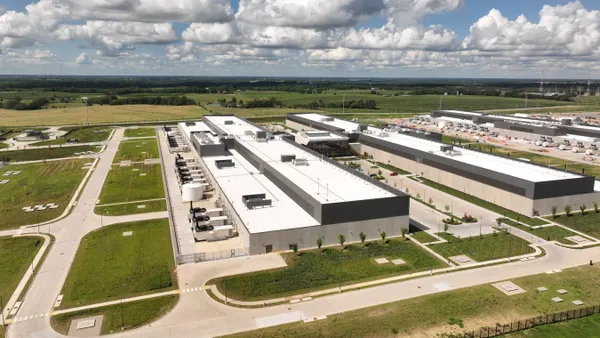
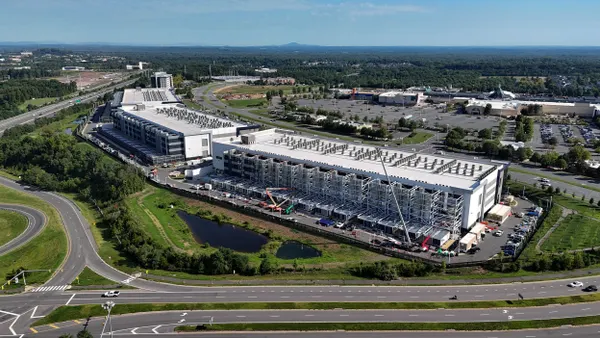
- “TVA’s actual and forecasted electricity demand has increased relative to the draft IRP’s Reference scenario and is approaching the Higher Growth Economy scenario primarily due to data center growth (e.g., artificial intelligence, hyperscaler, etc.),” the IRP said. The higher growth scenario “evaluates a higher gas price environment driven by substantial economic growth.”
- The federally-owned utility also plans to add up to 5 GW of nuclear, 1-5 GW of storage, 2-5 GW of renewables (1-8 GW nameplate) and 2-3 GW of energy efficiency and demand response additions.
Dive Insight:
“New capacity is needed in all scenarios to support load growth or replace expiring and end of life capacity,” the IRP said.
TVA said that gas expansion is necessary to provide “firm, dispatchable capacity,” while new nuclear technologies “support load growth and reduce fuel volatility and regulatory risks” and solar expansion can play a “complementary role, meeting customer needs and providing economic energy.”
“Storage expansion continues, driven by both battery storage and the potential for additional pumped storage,” TVA said. “Energy efficiency deployment reduces energy needs, particularly between now and 2040, and demand response programs grow with the system and the use of smart technologies.”
TVA will take public comment on the preliminary final IRP until July 22, and will hold a public webinar on July 2 to discuss the plan. Final recommendations will be shared at the TVA Board meeting in August.
The IRP noted that the region has “recently experienced extreme winter temperatures in each of the last few years,” with a new winter peak record of 35,319 MW being set in January 2025, and for the 2026 IRP the utility used a 26% planning reserve margin target for winter, compared to its 18% planning reserve margin target for summer.
TVA established three potential strategies in the IRP: Strategy A, which sticks with TVA’s baseline and relies heavily on natural gas generation; Strategy B, which embraces technological innovation and nuclear expansion in particular; and Strategy C, which focuses on distributed energy and would increase renewables and storage.
Strategy A’s higher reliance on natural gas means it has a “higher financial risk exposure than alternative strategies,” while Strategy B is the most expensive overall, and Strategy C “increases the risk of unserved energy or energy curtailment,” TVA said.
The IRP recommends the utility “pursue solar to reduce total system costs or meet customer needs,” but “suspend wind additions given cost and portfolio fit challenges.” It also recommends investment in TVA’s hydro and nuclear fleets and pursuing “nuclear license extensions to maintain low-cost generation.”
In the IRP’s high growth forecast, the scenario which the region is edging closer to, nuclear capacity growth is the highest due in part to increases in the natural gas price forecast.
TVA noted changes in U.S. energy policy since its 2025 IRP, including the One Big Beautiful Bill Act’s curtailment of the investment tax credits available to renewable projects, and the Trump administration’s focus on coal and gas generation.
President Donald Trump has pushed for TVA to turn back toward coal, and fired three Biden appointees from the TVA board in July after the board authorized the retirement of coal units at TVA’s Cumberland and Kingston power plants so natural gas could be developed there. After Trump appointed three replacements to the board, the board voted to operate Cumberland and Kingston’s coal plants past their retirement dates.
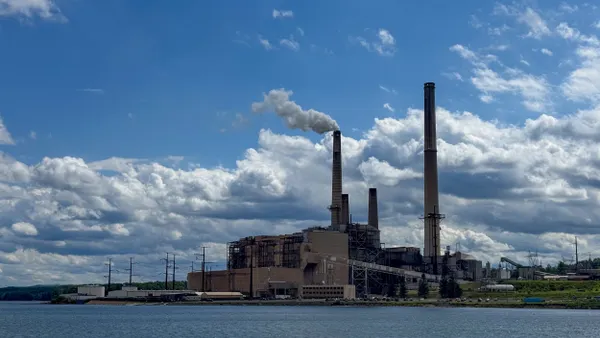
In the IRP, TVA’s forecast for coal involves the “continuing operation of [its] coal fleet, subject to regulatory requirements, as an immediate, cost-effective option to reduce total system cost and system reliability risk.” Through 2040, TVA will “evaluate [the] existing fleet, as needed, considering material condition, system reliability, system cost, regulatory requirements, and replacement generation.”